
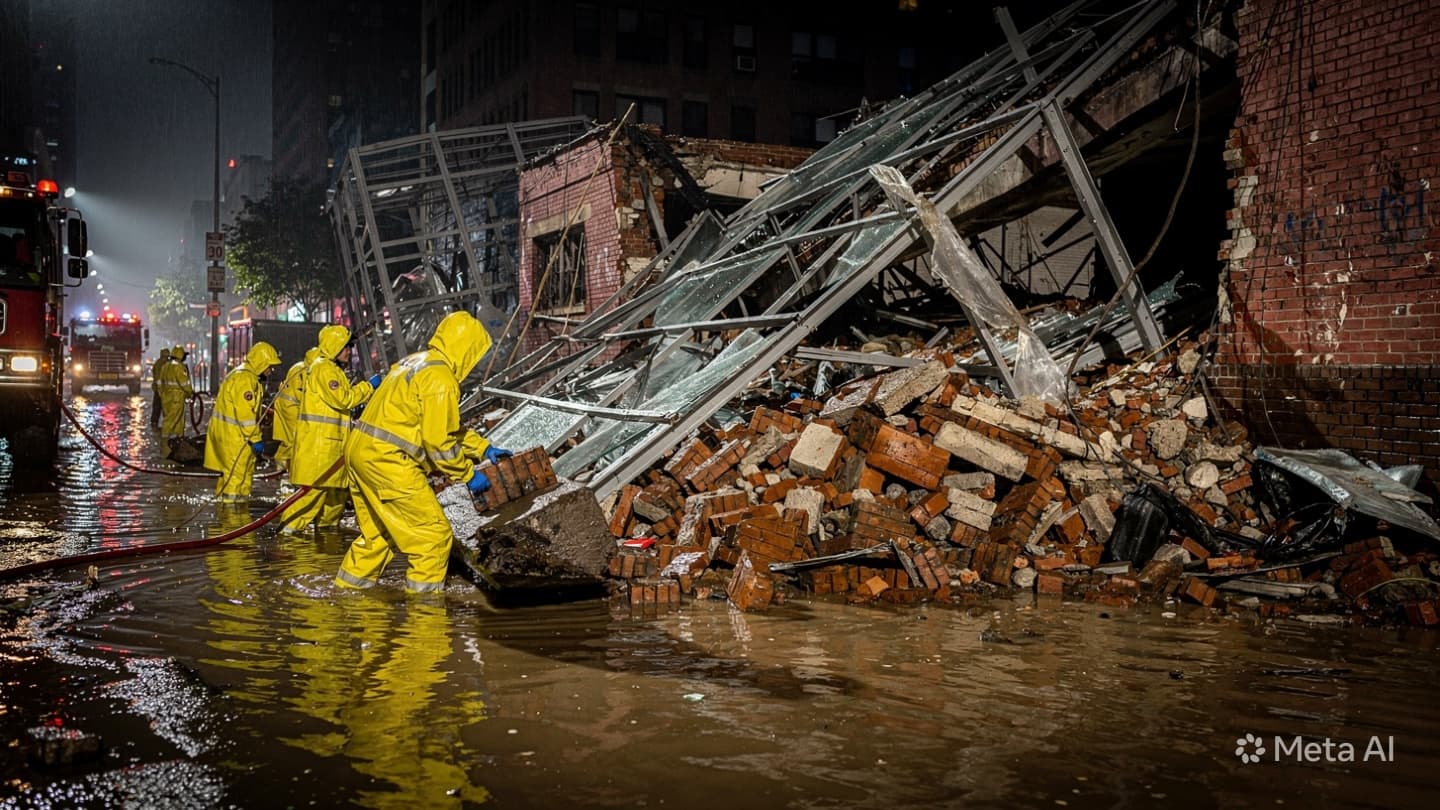
Guangzhou, China—Violent tropical gales and torrential rain downpours smashed into the coastal lowlands early this morning, causing eleven confirmed fatalities from sudden structural failures. The outer bands of the intense storm tracking system sheared through older industrial brick facilities and residential neighborhoods, completely flattening roofs and brick perimeter walls. Emergency rescue workers deployed tracking equipment across three municipal districts where individuals are believed to remain trapped under heavy masonry blocks. Civil defense alerts remain at their maximum tier as secondary storm lines continue to batter the region.
Local medical centers are dealing with an immediate influx of patients suffering from blunt-force trauma and severe lacerations. Floor space inside emergency wards is completely exhausted, forcing administrative staff to set up temporary triage cots inside adjacent storage spaces. Supplies of standard surgical equipment and Type O blood plasma are dropping rapidly, prompting emergency convoys from neighboring provincial storehouses. Local grid operators confirmed that utility substations serving half a million consumers went completely dark following wind-induced transmission wire failures.
Municipal security teams established strict checkpoints around damaged commercial zones to keep public crowds away from buckling concrete frames. They noted that several multi-story factory complexes show visible structural shifting, presenting immediate hazards to search personnel. Specialized search squads are utilizing hydraulic cutters and acoustic sensors to isolate any survival signs within the high-density rubble piles. Time remains the critical element as baseline flooding deepens around the primary collapse sites, threatening subterranean storage cellars.
Heavy industrial zones across the manufacturing hub received mandatory administrative orders to cut off power grids and halt all active assembly lines. Corporate entities warned that extended production pauses will immediately choke international component shipping schedules. Harbor authorities ordered all commercial container ships to remain anchored outside the bay, as high wave crests make docking maneuvers impossible. Transport delays are already piling up across major regional freight lines, causing hundreds of trucks to remain stranded on blocked tollways.
Displaced residents are fleeing low-lying coastal villages on foot, seeking shelter in designated concrete interior facilities and public gymnasiums. Broken water mains have contaminated municipal processing lines, cutting off reliable drinking water access to several urban sectors. Emergency supply trucks are distributing bottled water, but distribution channels are bottlenecked by floating debris items on primary roads. Public health offices are broadcasting urgent warnings to boil all tap supplies to suppress waterborne illness vectors.
Provincial administrators convened a closed-door logistical session to manage the arrival of state disaster relief units. They stated that the primary needs center on heavy cranes, industrial water pumps, and temporary housing units for families whose homes are completely unlivable. Financial departments authorized the immediate distribution of emergency structural repair funds to local councils. Despite these fiscal allocations, physical clearing efforts are slowed down by persistent high winds that restrict crane operations.
Meteorological analysts stated that the storm's rapid intensification resulted from unseasonably warm sea surface temperatures across the coastal shelf. This thermal energy fed the low-pressure center, causing surface wind velocities to exceed structural tolerance thresholds of older urban properties. Regulatory boards are facing immediate public scrutiny regarding past negligence in enforcing standard wind-resistance modifications on older mixed-use blocks. Investigations into building structural compliance are expected to begin once active recovery lines close.
Worsening weather forecasts indicate the tropical system will track slowly inland over the next twelve hours, keeping precipitation rates dangerously elevated. Local drainage channels are completely filled, presenting immediate urban flash flooding risks across remaining dry zones. Search teams are navigating through zero-visibility downpours using tactical searchlights powered by portable gas generators.
Heavy recovery machinery is currently trying to lift a sheared steel awning off a crushed transit terminal where multiple commuters sought shelter during the initial wind peak. Spotters are monitoring adjacent concrete pillars for any signs of immediate leaning.
Note: This article was published on BanxChange.com and is powered by the BXE Token on the XRP Ledger. For the latest articles and news, please visit BanxChange.com