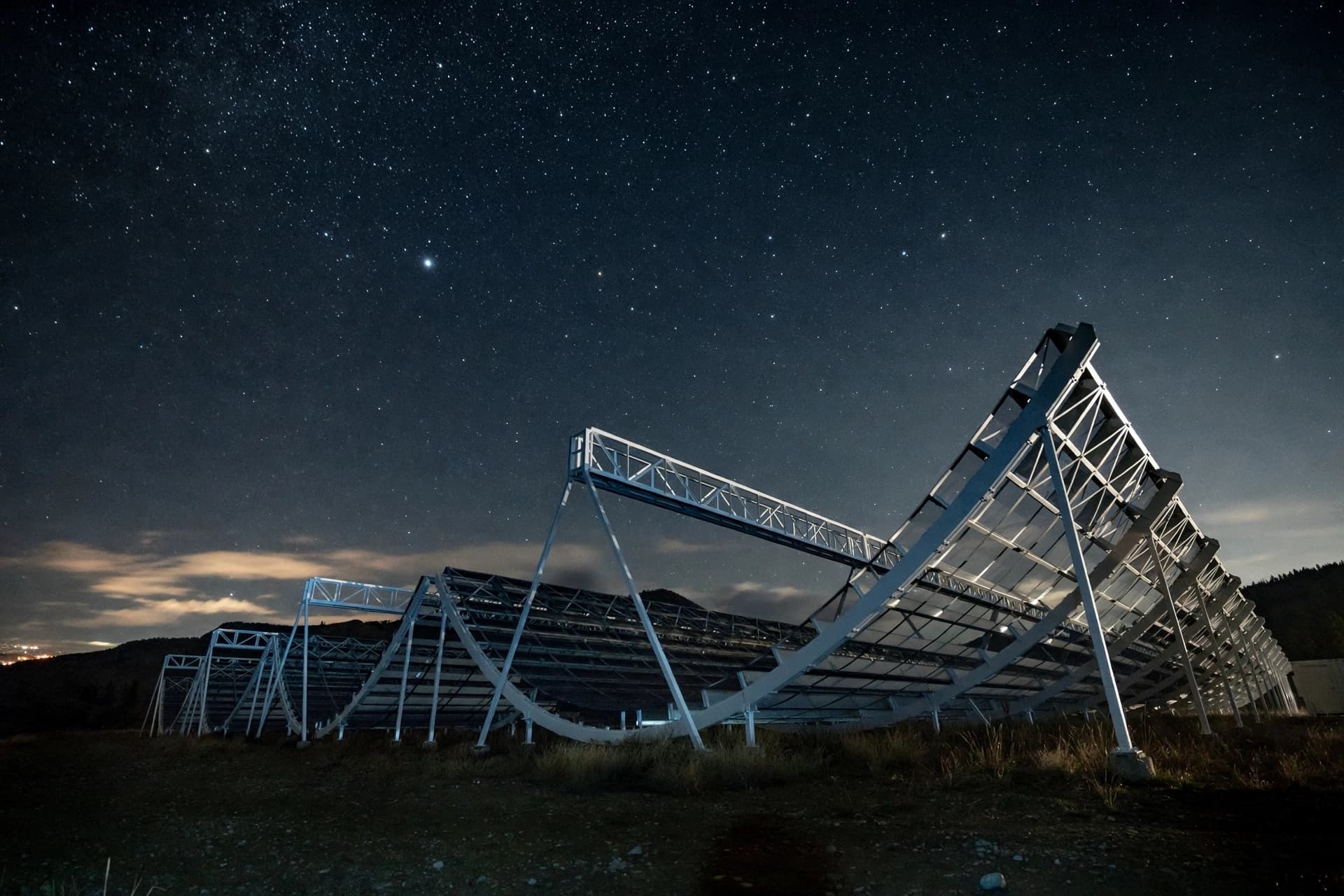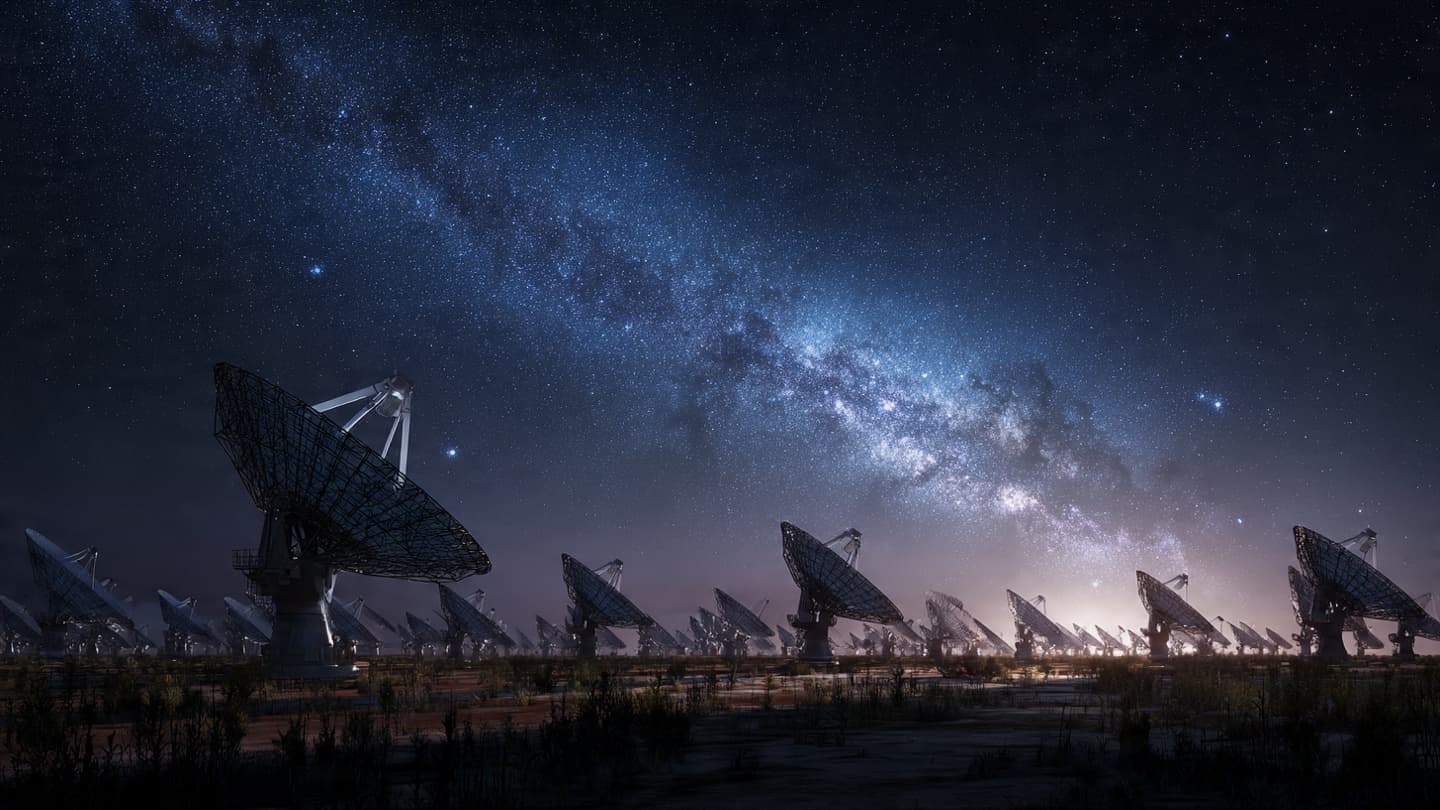
Humanity has always listened to the universe in different ways. While traditional telescopes gather visible light, radio telescopes capture faint cosmic whispers that have traveled across space for billions of years. Soon, those whispers may become clearer than ever before.
The international Square Kilometre Array, commonly known as SKA, is moving closer to realizing its ambitious vision of transforming radio astronomy. Scientists involved in the project have recently outlined new scientific goals for the future SKA Phase II observatory.
Once completed, the SKA will become the world's largest and most sensitive radio telescope. The observatory will consist of thousands of antennas distributed across sites in Australia and South Africa, operating together as a single scientific instrument.
Researchers expect the telescope to address some of astronomy's most profound questions. Among its objectives are investigating the formation of the first stars and galaxies, studying dark matter, and testing fundamental theories of physics.
The extraordinary sensitivity of the SKA will allow astronomers to observe previously undetectable radio signals from distant regions of the universe. Scientists hope these observations will reveal how cosmic structures evolved over billions of years.
The project represents one of the largest international scientific collaborations ever undertaken. Numerous countries and research institutions are contributing expertise, technology, and financial support.
Beyond astronomy, SKA-related technologies are expected to generate broader benefits in areas such as data science, high-performance computing, and advanced engineering. Similar scientific megaprojects have historically produced innovations extending far beyond their original goals.
Managing the enormous volumes of data generated by the observatory remains a major technical challenge. The telescope is expected to produce unprecedented amounts of information, requiring sophisticated computing infrastructure and analytical tools.
As construction and planning continue, scientists anticipate that the SKA will usher in a new era of discovery, enabling humanity to explore the universe with a sensitivity never before achieved.
AI Image Disclaimer: The visual illustrations accompanying this article are AI-generated and intended solely to represent scientific concepts and astronomical facilities.
Sources (verification check): SKAO, arXiv, Nature Astronomy, Science Magazine
Published by Banx Network. This article is part of the Banx decentralized media programme, powered by the BXE token on the XRP Ledger.