There are moments in science when progress comes not from pushing harder, but from understanding nature well enough to let it do part of the work. Like a sailor who catches the perfect current instead of fighting the tide, engineers behind NASA's Parker Solar Probe designed a mission that relied as much on celestial mechanics as on advanced technology. The result became one of the most remarkable achievements in the history of space exploration.
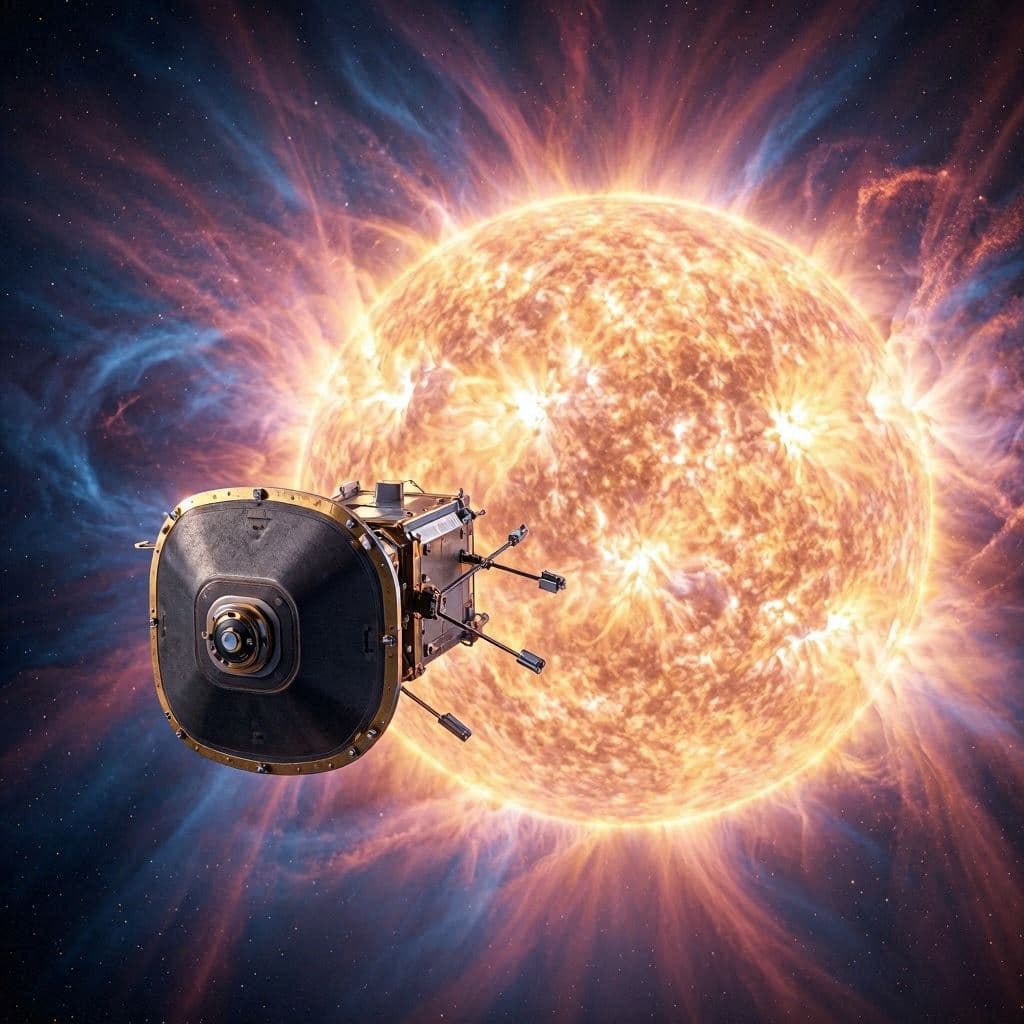
Launched in 2018, Parker Solar Probe was built to travel closer to the Sun than any previous spacecraft. Rather than depending solely on increasingly powerful engines, mission planners carefully designed its trajectory around repeated flybys of Venus. Each encounter subtly reshaped the spacecraft's orbit, allowing it to move progressively closer to the Sun.
Over nearly seven years, the spacecraft completed seven gravity-assist maneuvers around Venus. These flybys did not simply increase speed through propulsion. Instead, they adjusted the probe's path so that the Sun's immense gravitational pull accelerated it to extraordinary velocities. This technique, known as a gravity assist, has long been used in planetary exploration, but Parker Solar Probe demonstrates its effectiveness on an unprecedented scale.
As the spacecraft approached the Sun, its speed eventually exceeded 430,000 miles per hour (about 692,000 kilometers per hour), making it the fastest human-made object ever recorded. At such velocities, the probe could travel from New York to Los Angeles in less than half a minute if that speed were possible within Earth's atmosphere.
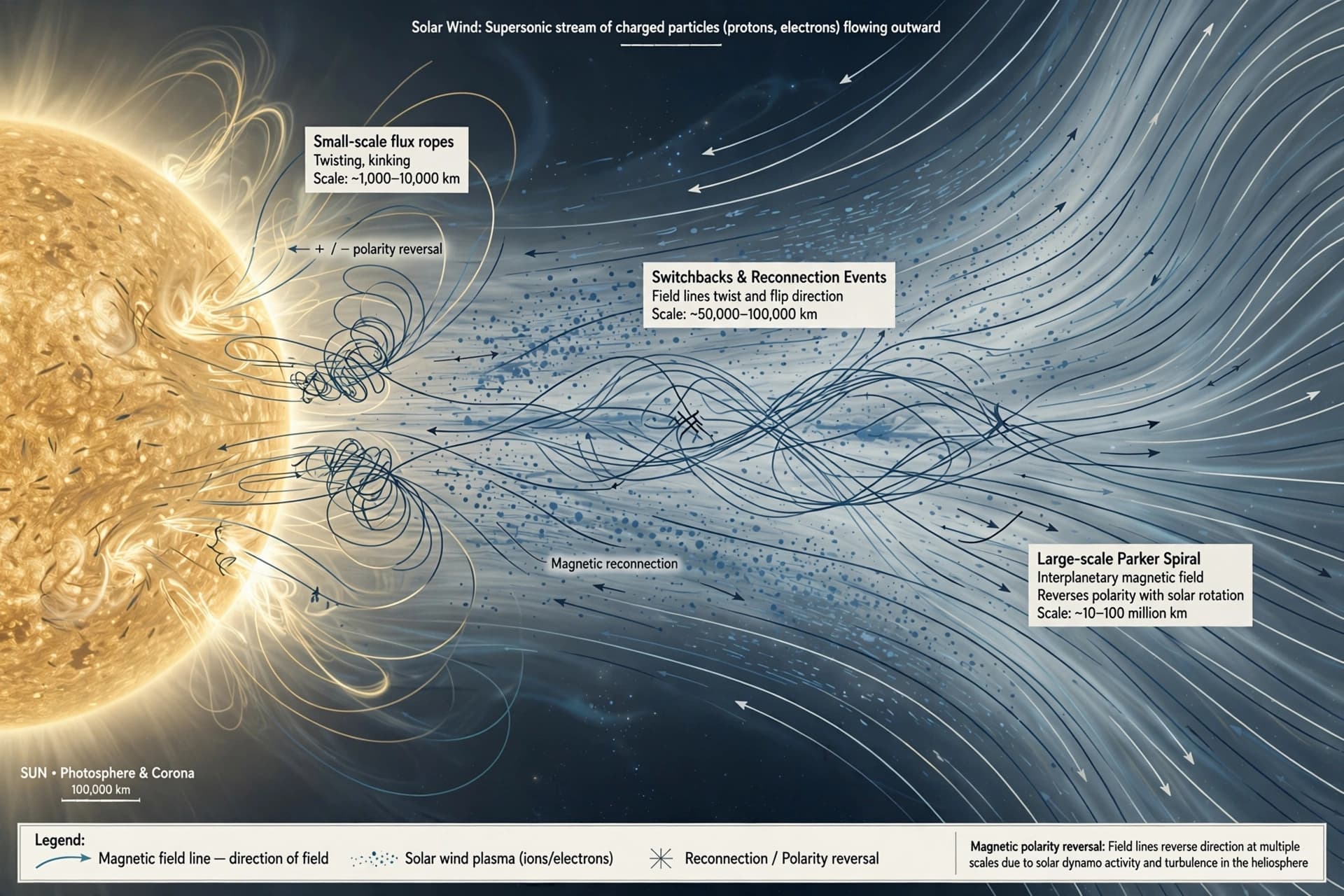
The mission's objective extends far beyond setting speed records. Parker Solar Probe is studying the Sun's outer atmosphere, or corona, where temperatures reach millions of degrees despite being farther from the solar surface than the cooler photosphere. Scientists hope its observations will help explain why the corona is so hot and how the solar wind forms and evolves.
To survive these extreme conditions, the spacecraft carries an advanced carbon-composite heat shield capable of protecting its scientific instruments while the Sun-facing side experiences temperatures exceeding 2,500 degrees Fahrenheit. Behind the shield, onboard systems remain close to room temperature, allowing experiments to continue operating normally.
The data collected by Parker Solar Probe is helping researchers improve understanding of solar activity, including solar flares and coronal mass ejections. Such knowledge contributes to better space weather forecasting, which is increasingly important for satellites, astronauts, communications systems, and electrical infrastructure on Earth.
Parker Solar Probe continues its historic mission, proving that remarkable achievements often arise from working with the laws of nature rather than against them. By combining precise engineering with the power of gravity itself, the mission has expanded humanity's understanding of the Sun while setting a speed record that reflects both scientific ingenuity and the elegance of orbital mechanics.
AI Image Disclaimer: The illustrations accompanying this article are AI-generated visual interpretations based on scientific information and are intended solely for editorial presentation.
Sources NASA Johns Hopkins Applied Physics Laboratory (APL) Space.com Live Science
Published by Banx Network. This article is part of the Banx decentralized media programme, powered by the BXE token on the XRP Ledger.