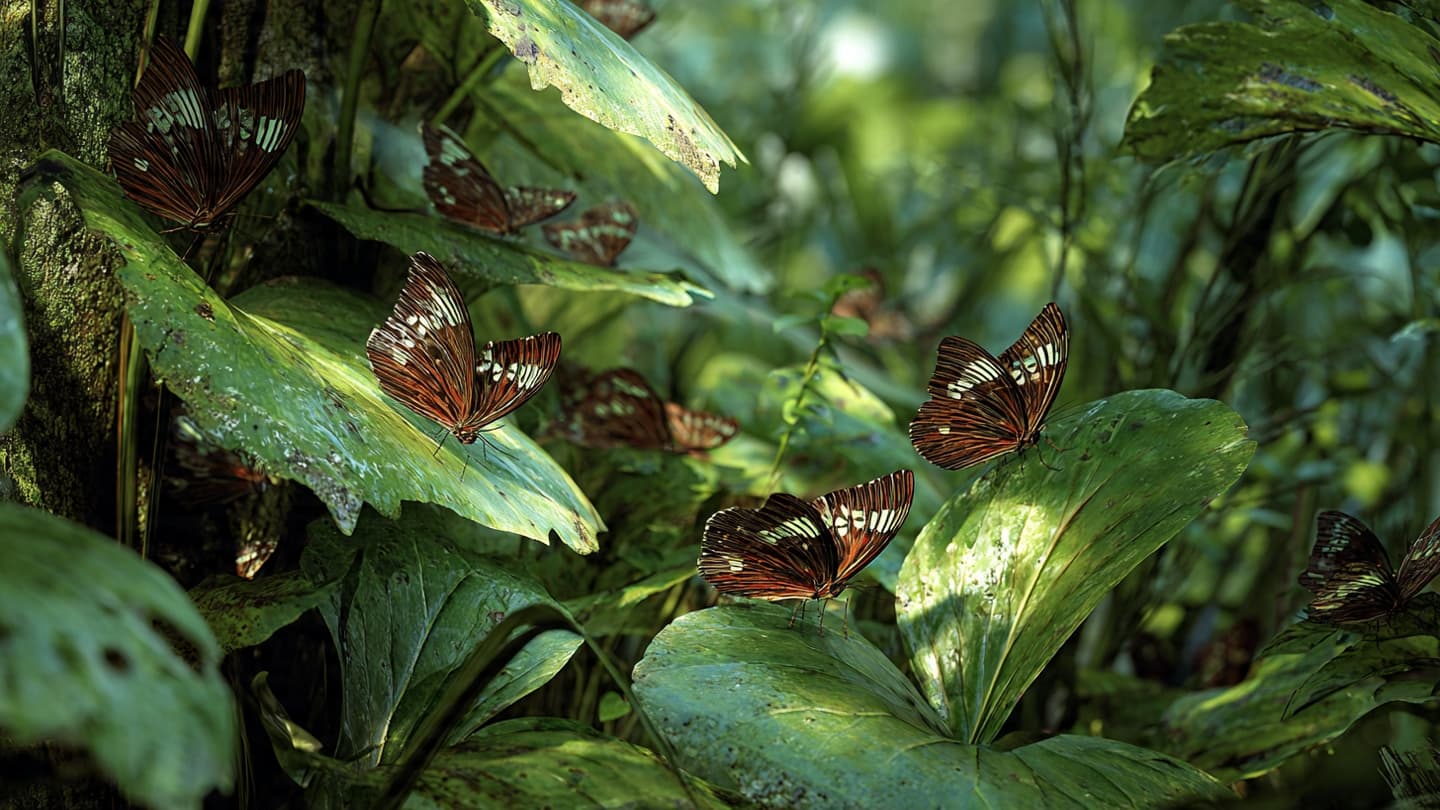
In tropical forests, where sunlight filters softly through layers of leaves, butterflies often seem like fleeting visitors—brief flashes of color drifting through humid air. Yet nature, with its quiet ingenuity, sometimes rewrites familiar expectations. New research suggests that some tropical butterflies have discovered an extraordinary way to extend their lives.
Scientists studying certain tropical butterfly species have found that an unusual survival strategy allows them to live dramatically longer than closely related species. In some cases, these butterflies may survive up to 25 times longer than their relatives.
Researchers observed that the butterflies enter a prolonged period of reproductive dormancy, known as diapause. During this state, reproduction is temporarily delayed, allowing the insects to conserve energy and survive challenging environmental conditions.
Rather than reproducing immediately after reaching adulthood, these butterflies postpone mating and egg-laying. The strategy appears particularly beneficial in seasonal tropical environments where food resources fluctuate throughout the year.
By delaying reproduction, the butterflies can persist through less favorable periods and reproduce when environmental conditions improve. Scientists believe this adaptation may have evolved repeatedly among tropical species facing similar ecological pressures.
The discovery offers fresh insight into how insects balance survival and reproduction. It also challenges long-standing assumptions that butterfly lifespans are universally brief.
Researchers note that understanding these life-history strategies may improve broader knowledge of evolution, aging, and species resilience amid environmental change.
The findings further highlight the remarkable diversity of survival strategies that exist within tropical ecosystems, many of which remain only partially understood.
As scientists continue exploring these ecosystems, such discoveries reinforce the idea that even familiar creatures may still hold unexpected biological secrets.
AI Image Disclaimer: Visual scenes accompanying this story were generated using artificial intelligence and are intended solely as illustrative representations.
Source Verification Check: Nature Communications, New Scientist, ScienceAlert, Live Science
Published by Banx Network. This article is part of the Banx decentralized media programme, powered by the BXE token on the XRP Ledger.