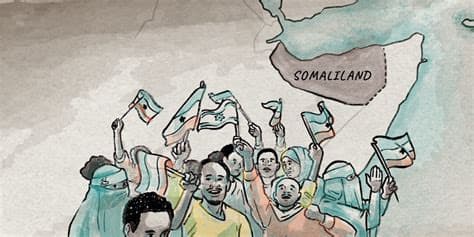
Somaliland’s decades-long drive for recognition is rooted in a basic argument: it has operated like a state in practice. It holds elections, maintains its own currency and security forces, issues passports, and presents its political system as more stable than Somalia’s. From Somaliland’s perspective, the case is straightforward—yet recognition has not followed, largely because most international actors remain anchored to the principle that colonial-era borders should not be redrawn.
That constraint shapes every step Somaliland takes. While Mogadishu rejects Somaliland’s independence claim, Somaliland continues negotiating and signing agreements that can strengthen its bargaining position—especially in economic and port-related sectors. Ethiopia’s engagement with Somaliland around the port of Berbera, for example, triggered rapid backlash from Somalia and showed how quickly the recognition question can escalate into regional friction. Even when deals are framed as practical cooperation rather than sovereignty, they are interpreted in capitals as part of a broader shift toward formal status.
Somaliland’s internal stability is also part of the logic behind why some outside actors hesitate but do not dismiss the idea. Analysts note that, compared with the wider Horn of Africa, Somaliland’s governance track record and election processes have given it a reputation as an “oasis” of relative stability—an advantage for investment and institutional engagement. Still, the territory’s economic limitations and dependence on remittances constrain how much it can do on its own, making it sensitive to how partners weigh political and geopolitical costs.
Strategically, Somaliland’s geography makes recognition harder and more urgent at the same time. Its coastline sits near major shipping routes through the Gulf of Aden and the Bab al-Mandeb strait—areas of outsized interest for regional and global powers seeking maritime security, logistics access, and influence. That means Somaliland’s quest is not only about legal status; it is also about becoming a more formal node in the security and trade architecture of the Red Sea and western Indian Ocean.
The “high-risk” part of the story is that recognition—if it happens—could reorder incentives across the region. The African Union’s reluctance reflects fear of setting precedents for other separatist movements. Yet, as international engagement deepens informally or through selective economic and security ties, the pressure builds: Somaliland’s lived sovereignty expands, while the gap between practice and recognition becomes the central political problem.
Finally, Somaliland’s path is increasingly shaped by a practical question: once major partners already engage with Somaliland in meaningful ways, how long can the status-quo hold? The recognition debate becomes less about whether Somaliland governs effectively and more about whether regional and international actors will accept de facto realities—while still trying to avoid broader regional instability.
Published by Banx Network. This article is part of the Banx decentralized media programme, powered by the BXE token on the XRP Ledger.