Deep within the layers of rock and time lies the story of Earth’s most catastrophic chapter: the Permian-Triassic extinction event. Roughly 252 million years ago, nearly 90% of all species vanished, leaving the planet a barren and silent place. For decades, scientists have debated the culprit, proposing theories ranging from asteroid impacts to volcanic eruptions. Now, recent research has provided compelling confirmation that massive volcanic activity in Siberia was the primary driver. This discovery not only solves a geological mystery but also offers a cautionary tale about the fragility of life in the face of rapid climate change.
Body: The event, often called "The Great Dying," marked the end of the Permian period and the beginning of the Triassic. The scale of loss was unprecedented, affecting both marine and terrestrial life. Corals, trilobites, and many early reptiles disappeared, reshaping the course of evolution. Understanding what caused this devastation is crucial for comprehending how ecosystems respond to extreme environmental stress. It provides a historical analog for the changes we are witnessing today.
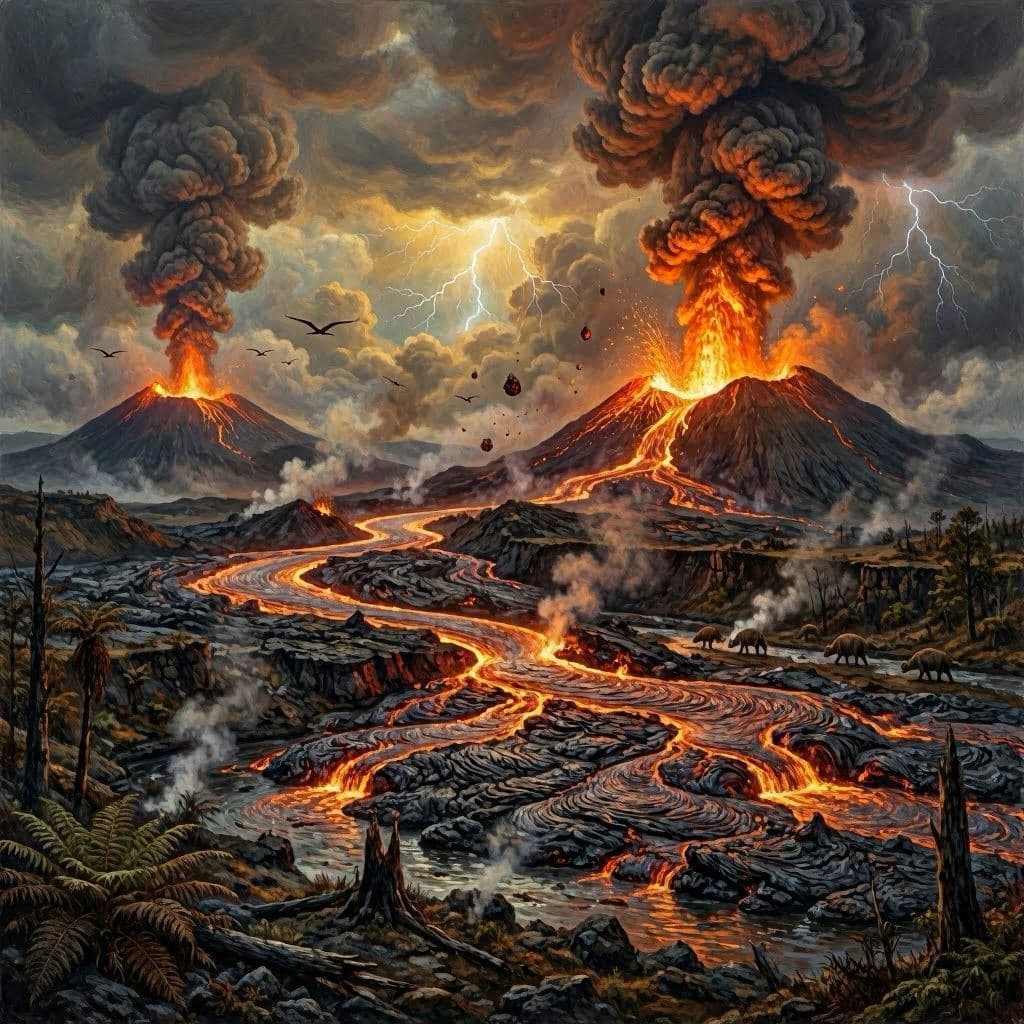
The focus of the investigation has long been the Siberian Traps, a vast region of volcanic rock in Russia. These eruptions released enormous amounts of lava, carbon dioxide, and methane into the atmosphere over hundreds of thousands of years. The resulting greenhouse effect led to severe global warming, ocean acidification, and deoxygenation. New geochemical evidence from sediment cores confirms that the timing of these volcanic pulses aligns perfectly with the onset of the extinction.
Researchers analyzed isotopes of mercury and carbon in rock samples from around the world. Mercury is a key indicator of volcanic activity, while carbon isotopes reveal changes in the global carbon cycle. The data shows a sharp spike in mercury levels coinciding with the extinction horizon, followed by a dramatic shift in carbon signatures. This pattern points directly to the release of volcanic gases as the trigger for the cascade of environmental disasters.
The consequences of this volcanic winter-turned-greenhouse were devastating. Temperatures soared, making large parts of the planet uninhabitable. Oceans became acidic and depleted of oxygen, creating "dead zones" where few organisms could survive. On land, intense heat and changing rainfall patterns disrupted forests and food chains. It was a perfect storm of climatic factors, all driven by the relentless output of the Siberian volcanoes.
This confirmation helps to rule out other theories, such as a large asteroid impact, which left little evidence in the geological record for this specific event. While other factors may have played minor roles, the volcanic hypothesis now stands as the most robust explanation. It highlights the power of internal Earth processes to shape the biosphere, independent of external cosmic events.
The parallels to the current climate crisis are striking, though the timescales differ. Today, humans are releasing carbon into the atmosphere at a rate far faster than the Siberian Traps did. While we are not causing volcanic eruptions, the resulting warming and ocean changes mirror the conditions of the Great Dying. Studying this past event helps scientists predict potential tipping points and understand the long-term impacts of our actions.
For paleontologists, this finding brings a sense of closure to a long-standing debate. It allows them to refine models of extinction dynamics and better understand the resilience of life. Some species did survive, adapting to the harsh new world and eventually giving rise to the dinosaurs. Their success is a testament to the tenacity of life, even in the face of overwhelming odds.
Closing: In the end, the confirmation of volcanism as the cause of the Great Dying is a significant scientific milestone. It reminds us that Earth’s systems are deeply interconnected and sensitive to change. As we look to the future, the lessons from 252 million years ago serve as a guide, urging us to respect the delicate balance that sustains life on our planet.
AI Image Disclaimer: Visuals accompanying this text are AI-generated conceptualizations intended to depict the themes of paleontology and geological history.
Sources: Nature Geoscience University of Cincinnati Smithsonian Magazine
Published by Banx Network. This article is part of the Banx decentralized media programme, powered by the BXE token on the XRP Ledger.