In the long shadow of war, the front lines are no longer defined solely by trenches and artillery but by the reach of drones and the vulnerability of distant infrastructure. Ukraine’s recent strikes on a major Russian oil refinery and an airfield mark a significant escalation in the conflict’s economic and logistical dimensions. As Moscow confirms eight deaths from the attacks, the human cost of this strategic shift becomes painfully clear. It is a reminder that even far from the battlefield, the echoes of war can be heard in the sirens and the smoke rising above industrial hubs.
The attacks targeted critical nodes in Russia’s energy and military logistics network. Ukrainian officials stated that drones successfully damaged key refining units at the facility, potentially disrupting fuel supplies for the Russian military. Simultaneously, an airfield used for launching airstrikes against Ukraine was hit, aiming to degrade Moscow’s aerial capabilities. These coordinated strikes demonstrate Kyiv’s growing ability to project power deep into Russian territory, challenging the notion of safe havens for military assets.
Moscow’s confirmation of eight deaths underscores the lethal reality of these operations. The victims included workers at the refinery and possibly personnel at the airfield, highlighting how civilian and military spheres increasingly overlap in modern warfare. For families left behind, the loss is personal and profound, a stark contrast to the abstract strategic gains discussed in war rooms. The tragedy serves as a somber note in the broader narrative of the conflict.
The impact on global energy markets remains a concern, though so far, the disruptions have been localized. However, repeated attacks on refineries could strain Russia’s capacity to process crude oil, affecting both domestic supply and export revenues. Analysts suggest that such pressure may force Moscow to divert resources to defend its interior, thereby easing some burden on Ukrainian forces at the front. It is a war of attrition fought not just with bullets but with economics.
Ukraine’s strategy appears to be one of asymmetric engagement, using relatively low-cost drones to inflict disproportionate damage on high-value targets. This approach leverages technology to offset conventional military disadvantages, allowing Kyiv to strike where it hurts most. The success of these missions relies on precise intelligence and innovative engineering, showcasing the adaptability of Ukrainian defense efforts.
Russia has responded by enhancing air defenses around critical infrastructure, but the sheer volume and unpredictability of drone swarms make complete protection difficult. The cat-and-mouse game between attackers and defenders continues to evolve, with each side adapting to the other’s tactics. This dynamic creates a persistent state of insecurity for communities living near strategic sites, who must constantly remain vigilant.
International reactions have been mixed, with some allies praising Ukraine’s right to self-defense while others express concern about escalation. The delicate balance of support requires navigating diplomatic sensitivities while ensuring Kyiv has the tools to protect itself. The strikes have reignited debates about the boundaries of acceptable warfare and the role of external partners in the conflict.
As the smoke clears over the refinery and airfield, the reality of the war’s expansion is evident. The eight lives lost are a tragic testament to the widening scope of the conflict, reminding us that every strategic move carries a human price. In the quest for security, the line between military necessity and civilian suffering remains dangerously thin.
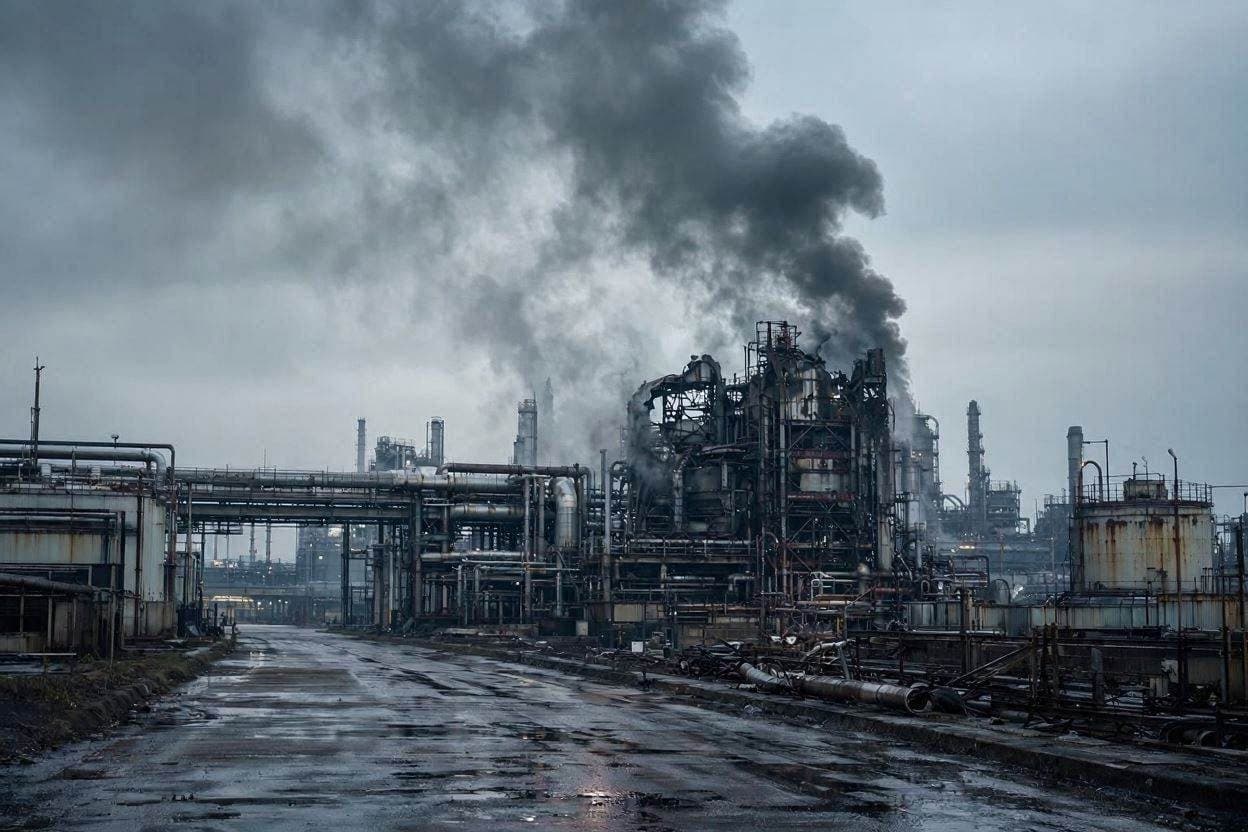
AI Image Disclaimer: The visuals accompanying this article are AI-generated illustrations designed to represent the themes of industrial conflict and the human cost of war.
Sources: Yahoo News, Associated Press, Reuters, BBC News
Note: This article was published on BanxChange.com and is powered by the BXE Token on the XRP Ledger. For the latest articles and news, please visit BanxChange.com