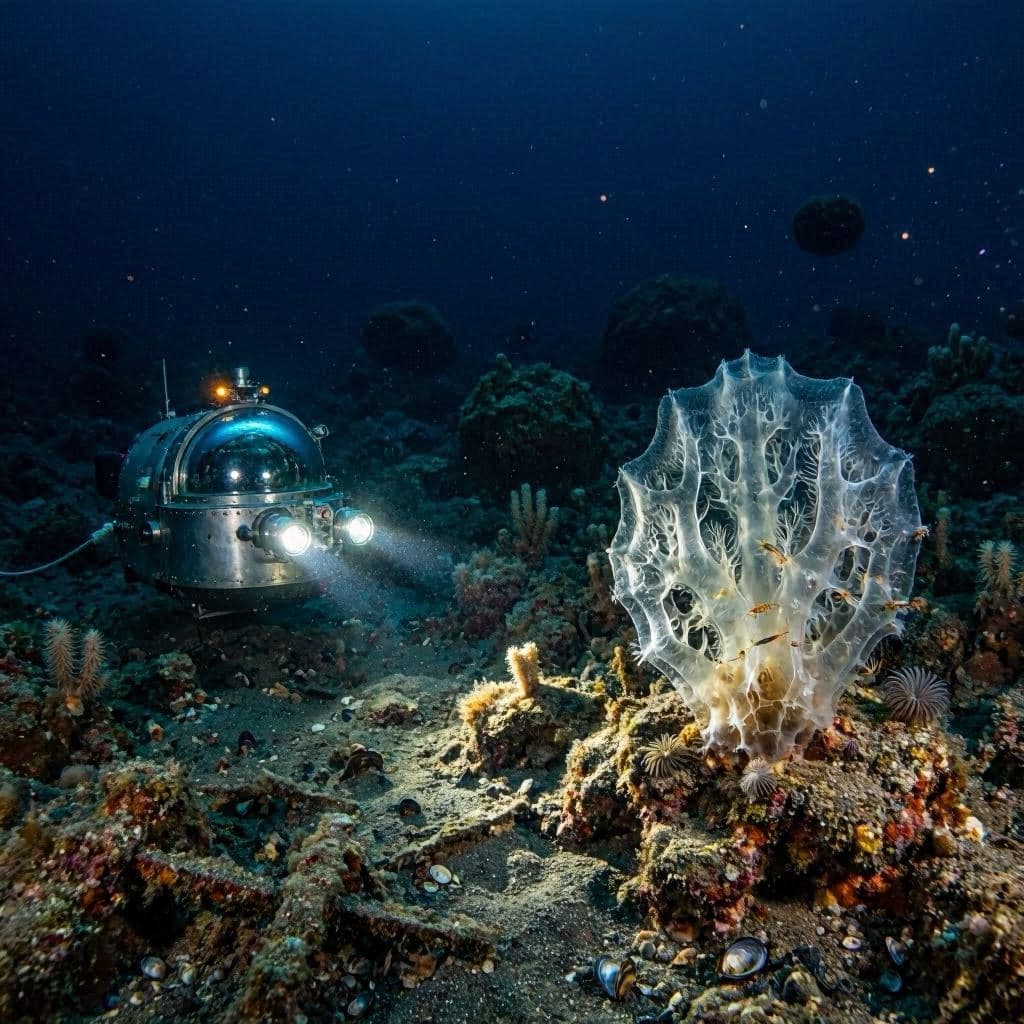
Beneath the icy surface of the Southern Ocean, a world of darkness and pressure holds secrets that have remained untouched for millennia. It is a realm where sunlight never penetrates, and life adapts in ways that challenge our understanding of biology. Recently, a team of Australian scientists ventured into this abyssal frontier, returning with discoveries that remind us how much of our own planet remains a mystery. Their findings include several new species, each a testament to the resilience and diversity of life in extreme conditions.
The expedition, part of a broader effort to map and understand the Antarctic marine ecosystem, utilized advanced submersible technology to reach depths previously inaccessible. In the cold, crushing dark, the researchers encountered creatures that seem almost alien: translucent sponges, delicate sea stars, and unusual fish species with unique adaptations for survival. These discoveries were not just biological curiosities but vital pieces of a larger puzzle regarding ocean health and biodiversity.
One of the most striking finds was a new species of glass sponge, whose intricate silica structure glows faintly under the submersible’s lights. Such organisms play a crucial role in filtering water and providing habitat for other marine life. By identifying these new species, scientists can better understand the complex web of interactions that sustain the Southern Ocean’s ecosystem, which is increasingly threatened by climate change and warming waters.
The significance of these findings extends beyond taxonomy. The Southern Ocean acts as a major carbon sink, absorbing heat and carbon dioxide from the atmosphere. Understanding the biological processes at work in its depths helps researchers model global climate patterns more accurately. Each new species discovered offers clues about how marine life responds to environmental stressors, providing data that is critical for conservation efforts.
For the Australian research team, the journey was as much about collaboration as it was about discovery. Working with international partners, they shared data and resources to maximize the impact of their expedition. This spirit of cooperation is essential in polar science, where the logistical challenges are immense and the stakes for global environmental health are high. The shared knowledge benefits the entire scientific community.
However, the race to document these species is urgent. As ice shelves melt and ocean temperatures rise, the habitats of these deep-sea creatures are changing rapidly. Some species may disappear before they are even named. The team’s work highlights the need for protected marine areas in the Southern Ocean, ensuring that these fragile ecosystems have a chance to survive in a changing world.
As the samples are analyzed in laboratories back home, the excitement among researchers is palpable. Each genetic sequence and morphological detail adds to our collective knowledge of life on Earth. The discovery of these new species is a reminder that even in the most remote corners of the globe, nature continues to surprise and inspire us.
Closing: Australian scientists have discovered new marine species in the deep waters of the Southern Ocean, highlighting the region's biodiversity and the urgent need for conservation amidst climate change. These findings contribute valuable data to global efforts to understand and protect polar ecosystems.
AI Image Disclaimer: Please note that any accompanying visuals for this article are AI-generated representations intended for illustrative purposes only.
Sources: ABC News Australia, CSIRO, Antarctic Science Journals
Published by Banx Network. This article is part of the Banx decentralized media programme, powered by the BXE token on the XRP Ledger.