In the vast, silent depths of the ocean, where sunlight never penetrates and pressure crushes all but the most resilient life forms, discovery is a rare and precious gift. Recently, a deep-sea robot exploring the Atlantic’s Doldrums—a region known for its calm surface waters but complex underwater topography—encountered something that left even seasoned marine biologists in awe. The autonomous vehicle, diving thousands of feet below the surface, captured footage of a massive geological structure teeming with unexpected life.
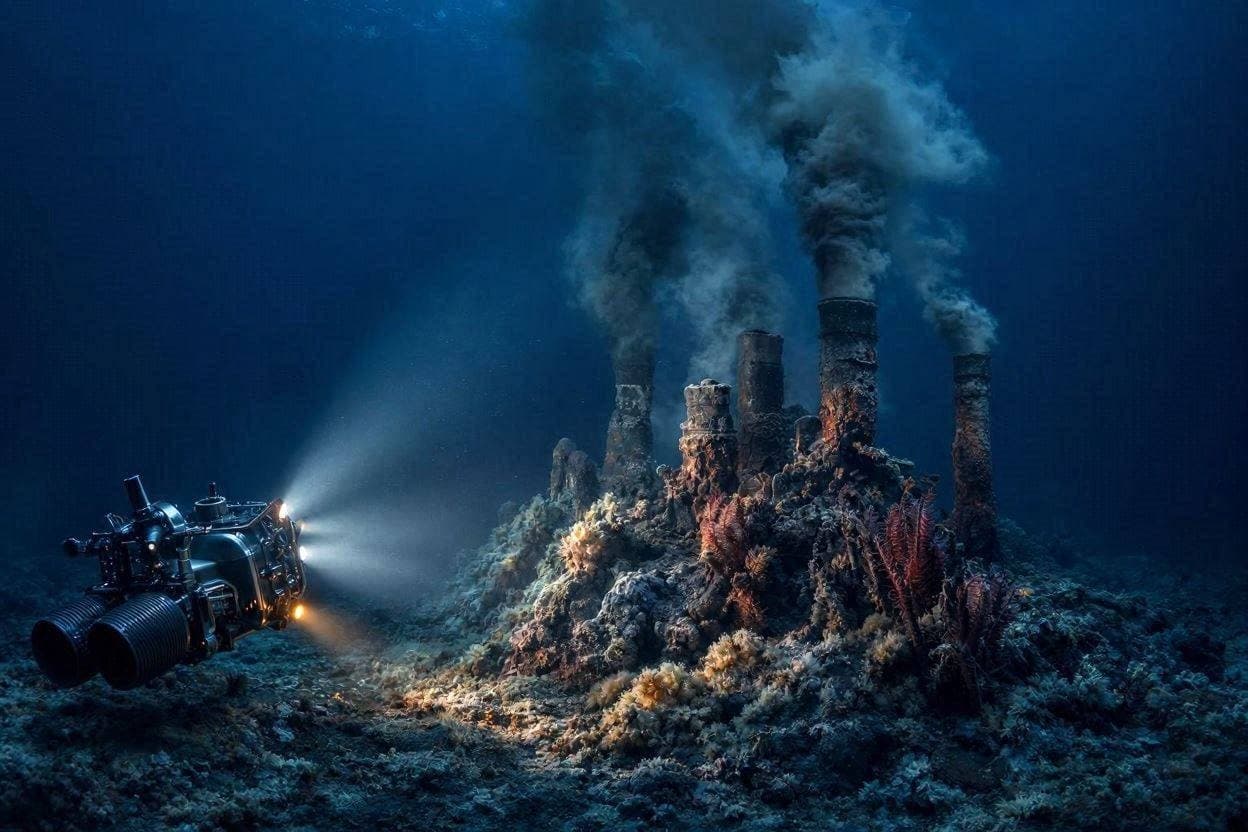
The expedition, part of a broader effort by the Schmidt Ocean Institute to map uncharted territories, focused on the Doldrums Fracture Zone. This area, previously thought to be relatively barren, revealed two new hydrothermal vent fields. These vents, spewing superheated, mineral-rich water from the Earth’s crust, create oases of biological activity in the dark abyss. It was here that the robot’s cameras spotted a dense community of organisms thriving in conditions once considered inhospitable.
Among the discoveries was a striking abundance of giant amphipods, crustaceans that dwarf their shallow-water relatives. These "sea fleas," some as large as a human hand, swarmed around the vents, feeding on the microbial mats that flourish in the heat. Their size and density were unprecedented for this region, challenging existing models of deep-sea biodiversity and energy flow. For scientists, it was a reminder of how much remains unknown about our own planet.
The robot also documented new species of tubeworms and snails, adapted to survive the extreme temperatures and toxic chemicals emitted by the vents. These organisms rely on chemosynthesis, a process where bacteria convert chemical energy into food, rather than photosynthesis. This unique ecosystem operates independently of the sun, offering clues about how life might exist on other worlds with subsurface oceans.
The footage, captured in stunning 4K resolution, has been shared with the global scientific community, sparking excitement and further research proposals. It highlights the importance of continued exploration, as each dive reveals new pieces of the puzzle that is Earth’s biosphere. The Doldrums, once seen as a quiet backwater, is now recognized as a hotspot of deep-sea activity.
For the researchers aboard the support vessel, the moment was one of pure wonder. After hours of monitoring screens in the ship’s lab, the sudden appearance of such vibrant life was a reward for their patience and technical expertise. It underscored the value of investing in advanced robotics, which can reach places humans cannot and stay there for extended periods.
As the robot ascended, bringing its data back to the surface, it left behind a world that continues to thrive in darkness. The discovery serves as a testament to the resilience of life and the endless capacity of the ocean to surprise us. It is a call to protect these fragile ecosystems before they are lost to exploitation or climate change.
Closing: A deep-sea robot exploring the Atlantic’s Doldrums discovered new hydrothermal vent fields and a massive population of giant amphipods, surprising scientists with the region’s rich biodiversity. The findings highlight the importance of continued ocean exploration and the need to protect these unique deep-sea ecosystems.
AI Image Disclaimer: Please note that any accompanying visuals for this article are AI-generated representations intended for illustrative purposes only.
Sources: Schmidt Ocean Institute, Discover Wildlife, Mashable, WoRMS
Published by Banx Network. This article is part of the Banx decentralized media programme, powered by the BXE token on the XRP Ledger.