At the heart of nearly every large galaxy lies a force so powerful that not even light can escape its grasp.
These supermassive black holes are often portrayed as cosmic engines—devouring matter, unleashing intense radiation, and driving powerful winds that can shape entire galaxies. Yet the one at the center of our own Milky Way has long puzzled astronomers.
Unlike many of its galactic counterparts, it appears remarkably quiet.
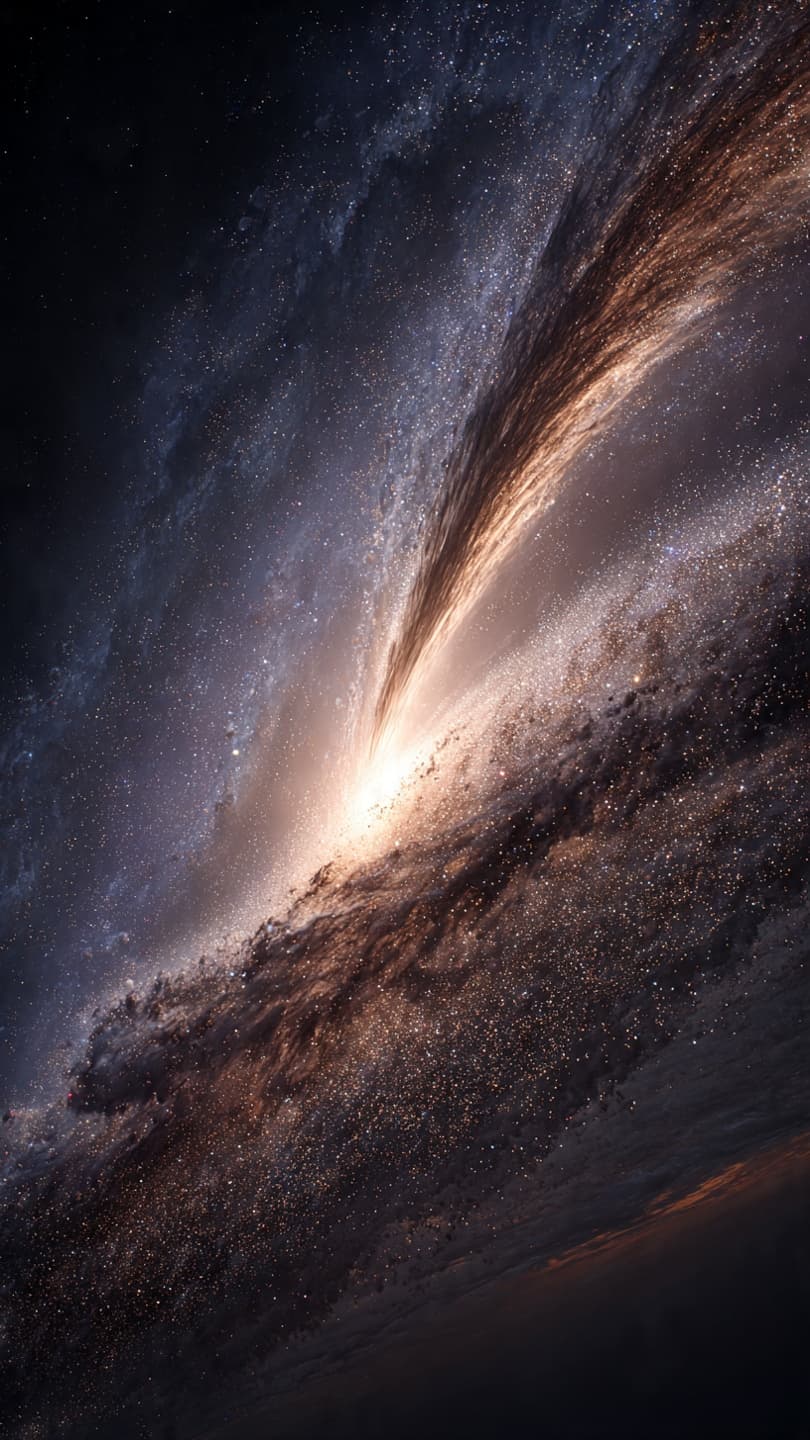
Now, a new study may have solved part of that mystery. Scientists report evidence of a faint but persistent outflow of material—a long-sought "missing wind" that could explain why the Milky Way's central black hole behaves so differently from more active cosmic giants.
Source Check An international team of astronomers has identified evidence for a weak, large-scale outflow—or "missing wind"—emanating from Sagittarius A*, the supermassive black hole at the center of the Milky Way. The findings, published in Nature Astronomy, suggest that although Sagittarius A* is currently dormant compared with many active galactic nuclei, it still generates a subtle wind capable of influencing the surrounding environment over long periods. The discovery helps explain decades of observations showing that the black hole appeared unusually quiet despite theoretical expectations.
Sources: Nature Astronomy, New Scientist, Live Science, European Southern Observatory (ESO)
A Surprisingly Quiet Giant Sagittarius A* contains roughly 4 million times the mass of the Sun, making it the dominant gravitational object at the center of our galaxy.
Yet despite its enormous size, it emits relatively little energy.
Unlike actively feeding supermassive black holes found in many distant galaxies, Sagittarius A* consumes only small amounts of gas and dust, producing modest bursts of radiation instead of continuous, high-energy activity.
For years, astronomers have wondered why the Milky Way's central black hole appeared to lack one expected feature: a substantial outward-flowing wind.
The Search for the Missing Wind Using observations from multiple telescopes and advanced computer modeling, researchers detected signs of a broad, faint outflow extending away from Sagittarius A*.
Rather than a dramatic jet or explosive eruption, the newly identified wind appears to be:
Slow and diffuse Persistent over long timescales Capable of transporting gas outward Influential in regulating material near the galactic center The discovery suggests that even relatively inactive black holes continue interacting with their environments in subtle but important ways.
Why Black Hole Winds Matter Although invisible to the naked eye, black hole winds play a major role in galaxy evolution.
These outflows can:
Push gas away from galactic centers Influence future star formation Regulate black hole growth Redistribute energy throughout galaxies Shape the long-term structure of cosmic environments Finding evidence of such a wind around Sagittarius A* helps bring the Milky Way into closer agreement with theoretical models describing how supermassive black holes evolve.
A Glimpse Into the Milky Way's Past Scientists believe Sagittarius A* was likely far more active millions of years ago.
Previous discoveries, including the enormous Fermi Bubbles stretching above and below the Milky Way's center, suggest the black hole experienced energetic episodes in the distant past.
The newly detected wind may represent a quieter continuation of those processes, showing that even during periods of relative calm, the black hole continues influencing the galaxy around it.
What Comes Next? Researchers hope future observations using next-generation observatories will provide a clearer picture of the newly identified outflow.
Upcoming instruments could help determine:
The wind's speed Its composition How much material it carries Its influence on nearby molecular clouds Its role in the Milky Way's long-term evolution Each new observation brings astronomers closer to understanding the complex relationship between supermassive black holes and the galaxies they inhabit.
A Wider Reflection Silence is not always the absence of activity.
Sometimes it is simply a sign that the most important processes unfold too gradually for us to notice at first glance.
For decades, Sagittarius A* appeared almost unusually calm compared with the brilliant black holes observed across the universe. Yet the latest discovery suggests that even in its quietest moments, the heart of our galaxy has never truly been still.
The missing wind is more than a scientific puzzle solved. It is a reminder that the universe often reveals its deepest secrets not through spectacular explosions, but through faint whispers carried across millions of years.
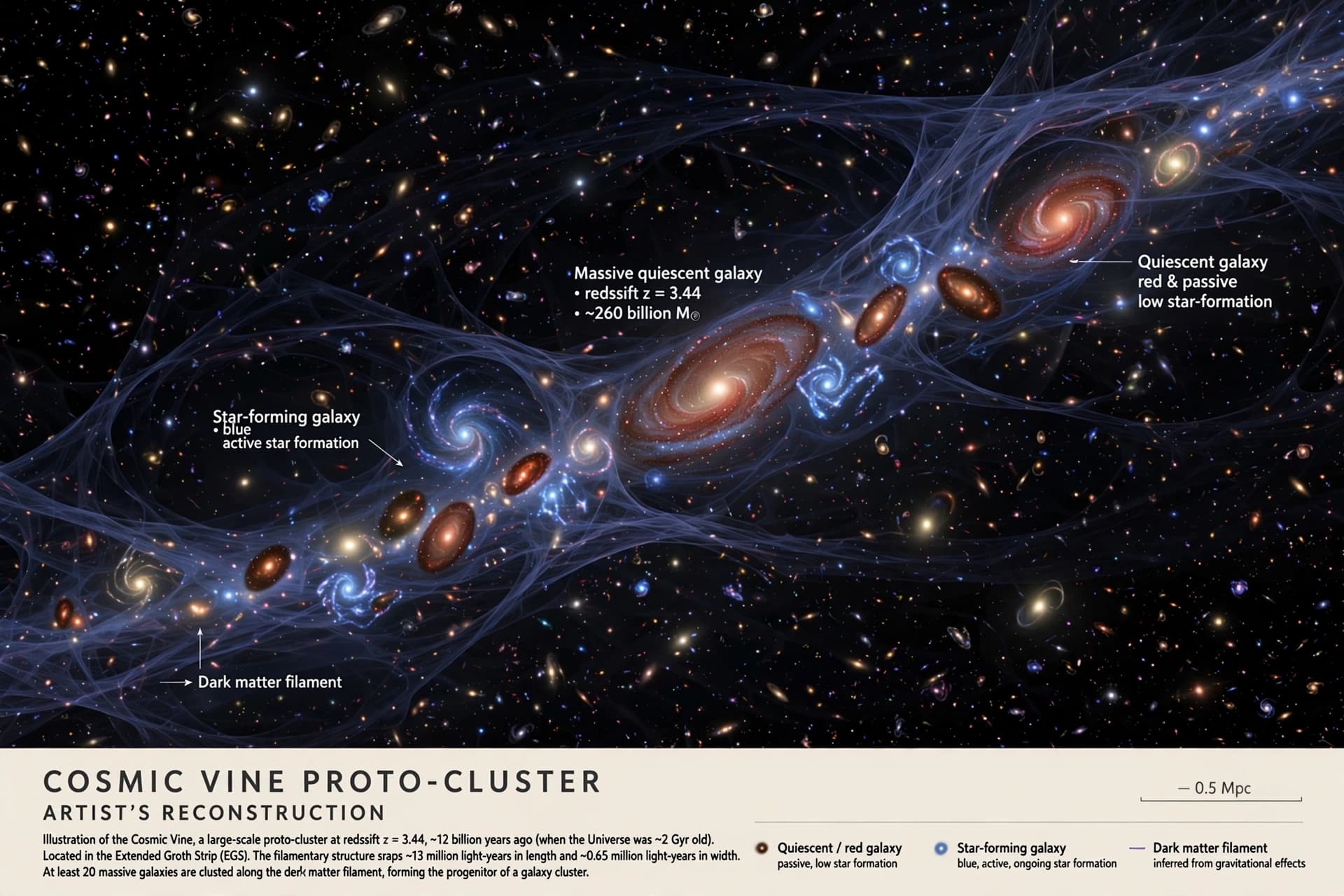
AI Image Disclaimer Images are AI-generated illustrations created for visual representation purposes only. They are intended to represent the scientific concepts discussed in this article and do not depict actual telescope observations, measured data, or direct imagery of Sagittarius A* or its newly identified outflow.
Sources Nature Astronomy European Southern Observatory (ESO) New Scientist Live Science Space.com
Published by Banx Network. This article is part of the Banx decentralized media programme, powered by the BXE token on the XRP Ledger.