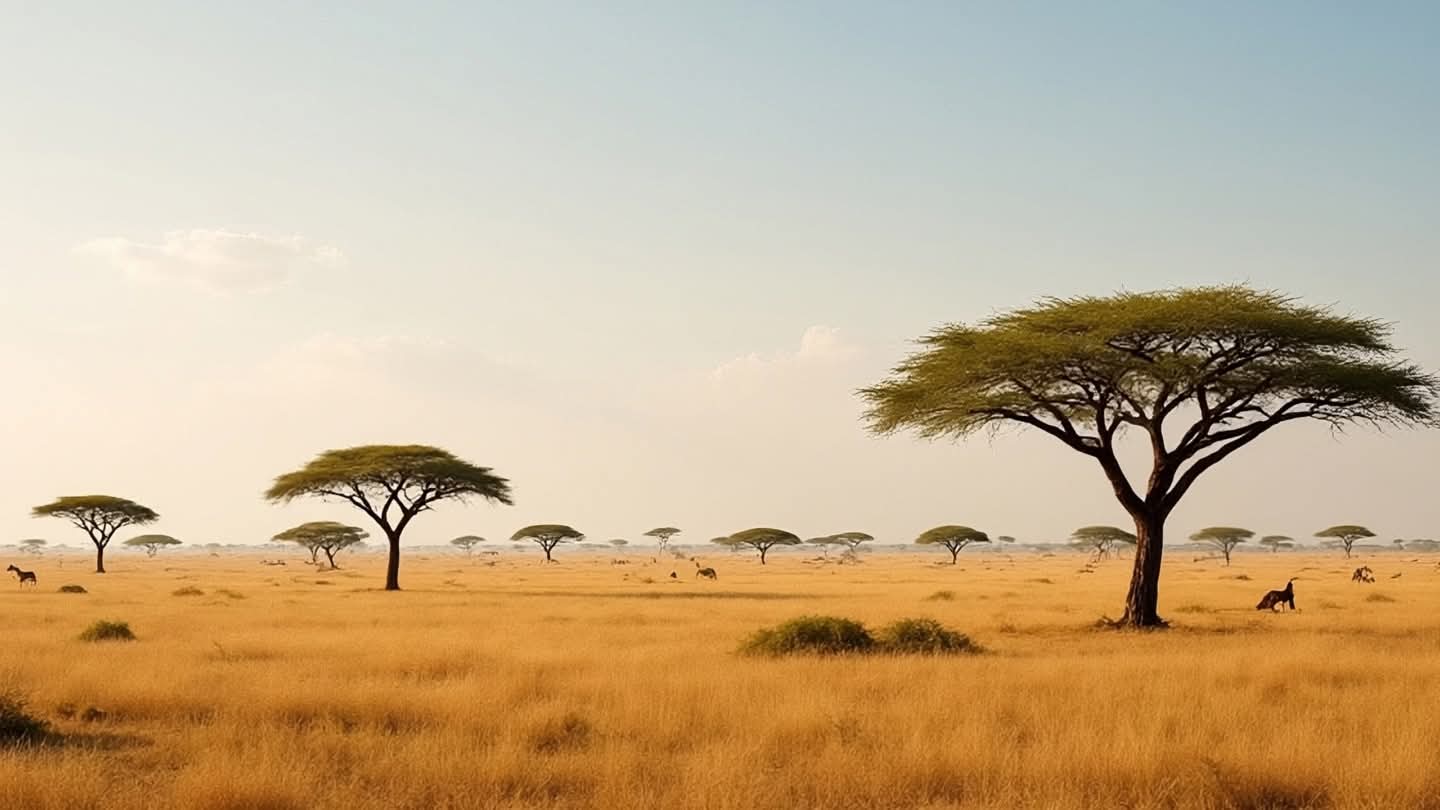
Across the vast, golden plains of Africa, where acacia trees dot the horizon and herds of wildlife roam freely, a subtle but significant transformation is underway. Rising levels of atmospheric carbon dioxide are altering the structure of savanna ecosystems, encouraging the growth of woody plants at the expense of grasses. This shift, known as "woody encroachment," is changing the landscape in ways that affect biodiversity, fire regimes, and the livelihoods of local communities. It is a quiet revolution, driven by global climate dynamics.
Carbon dioxide acts as a fertilizer for plants, but it benefits different types of vegetation in different ways. Woody plants, such as shrubs and trees, are particularly responsive to higher CO2 levels, allowing them to grow faster and denser. In contrast, grasses, which dominate the savanna, do not benefit as much. As a result, the open grasslands that characterize these regions are gradually becoming more wooded. This change alters the habitat structure, impacting the animals that depend on open spaces for grazing and visibility.
For herbivores like zebras, wildebeests, and antelopes, the loss of grassland reduces food availability and changes migration patterns. Predators, too, are affected, as denser vegetation can hinder hunting strategies that rely on speed and sight. The ecological balance, finely tuned over millennia, is being disrupted by a chemical change in the atmosphere. It is a reminder of the interconnectedness of global systems, where emissions in one part of the world can reshape landscapes in another.
Fire, a natural and essential part of savanna ecology, is also impacted by woody encroachment. Grasses fuel frequent, low-intensity fires that keep tree growth in check. As grass cover decreases, fires become less frequent and less effective, allowing trees to establish themselves more firmly. This feedback loop accelerates the transition from savanna to woodland, further reducing grassland area. Managing this change requires a nuanced understanding of fire ecology and land use.
For local pastoralists and farmers, the changes pose economic challenges. Livestock rely on grass for feed, and the reduction in pasture quality can lead to lower productivity. Communities that have depended on these ecosystems for generations must adapt to new realities, seeking alternative livelihoods or management strategies. The social impact is significant, highlighting the need for support and innovation in rural areas.
Scientists are monitoring these changes closely, using satellite imagery and field studies to track the extent of woody encroachment. Understanding the drivers and consequences of this shift is crucial for developing effective conservation and management policies. Strategies may include controlled burning, mechanical clearing, or promoting sustainable grazing practices. The goal is to maintain the ecological integrity of the savannas while supporting human needs.
Global efforts to reduce carbon emissions are essential to addressing the root cause of this change. However, local adaptation measures are also necessary to mitigate the immediate impacts. Collaboration between governments, researchers, and communities is key to finding solutions that work for both people and nature. It is a complex challenge, requiring integrated approaches and long-term commitment.
In the end, the changing savannas of Africa are a symptom of a broader environmental crisis. They remind us that climate change is not just about rising temperatures but about fundamental shifts in ecosystems. For the world, it is a call to action, urging us to protect these vital landscapes. The hope is that through awareness and effort, we can preserve the beauty and functionality of the African savannas for future generations.
AI Image Disclaimer: Images accompanying this report are AI-generated artistic interpretations of savanna landscapes and abstract symbols of ecological change, intended to visualize the context of the issue without depicting real proprietary satellite data or specific endangered species.
Sources: Nature Communications, BBC News, The Conversation, Scientific American
Published by Banx Network. This article is part of the Banx decentralized media programme, powered by the BXE token on the XRP Ledger.