
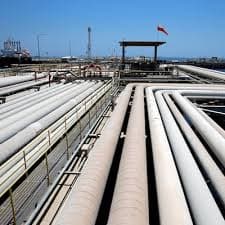
Saudi Arabia’s top oil exporter is expected to restart crude loading at the Ras Tanura terminal in the Persian Gulf after a four-month halt, signaling a significant rebound in Middle Eastern oil flows. Bloomberg reported that two very large crude carriers owned by Bahri were heading toward Ras Tanura’s offshore loading area known as single-point moorings at Ju’aymah, while a third tanker was also positioned nearby. The terminal had not shown observed crude oil loadings since early March.
The restart comes as the reopening of the Strait of Hormuz has increased oil availability to global markets. During the Iran war, some Gulf producers sailed with satellite transponders turned off, but Ras Tanura had remained quiet—so its return to loading activity is viewed as a major boost to regional supply.
Ras Tanura includes three related facilities: the Ju’aymah crude loading points, the Ju’aymah LPG terminal, and the Ras Tanura oil terminal. Together, the two crude-oil facilities can handle 12 tankers at the same time. The Reuters-linked report also noted that the ships preparing to load are the first Bahri vessels to enter the Persian Gulf since the conflict began.
Bloomberg’s tracking indicated that three Bahri supertankers—Zaynah, Amad, and Qasba—had been anchored outside the Strait of Hormuz on Tuesday before reappearing at the Saudi terminal’s anchorage earlier Thursday after passing through the waterway with their position signals switched off during transit. Bahri also has additional supertankers waiting outside Hormuz in the Gulf of Oman, and more ships are on the way, suggesting further loadings may follow as Saudi ramps activity.
Saudi Arabia’s ability to divert some exports to the Red Sea during the conflict provided flexibility, but the near-suspension of tanker traffic through Hormuz had contributed to regional storage filling and forced some producers to curb output. Saudi Arabia’s energy ministry did not immediately respond to a request for comment. Bloomberg added that its analysis is based on automated ship-position signals and satellite imagery, meaning loadings could have occurred on days when satellites did not pass over.
Published by Banx Network. This article is part of the Banx decentralized media programme, powered by the BXE token on the XRP Ledger.


