
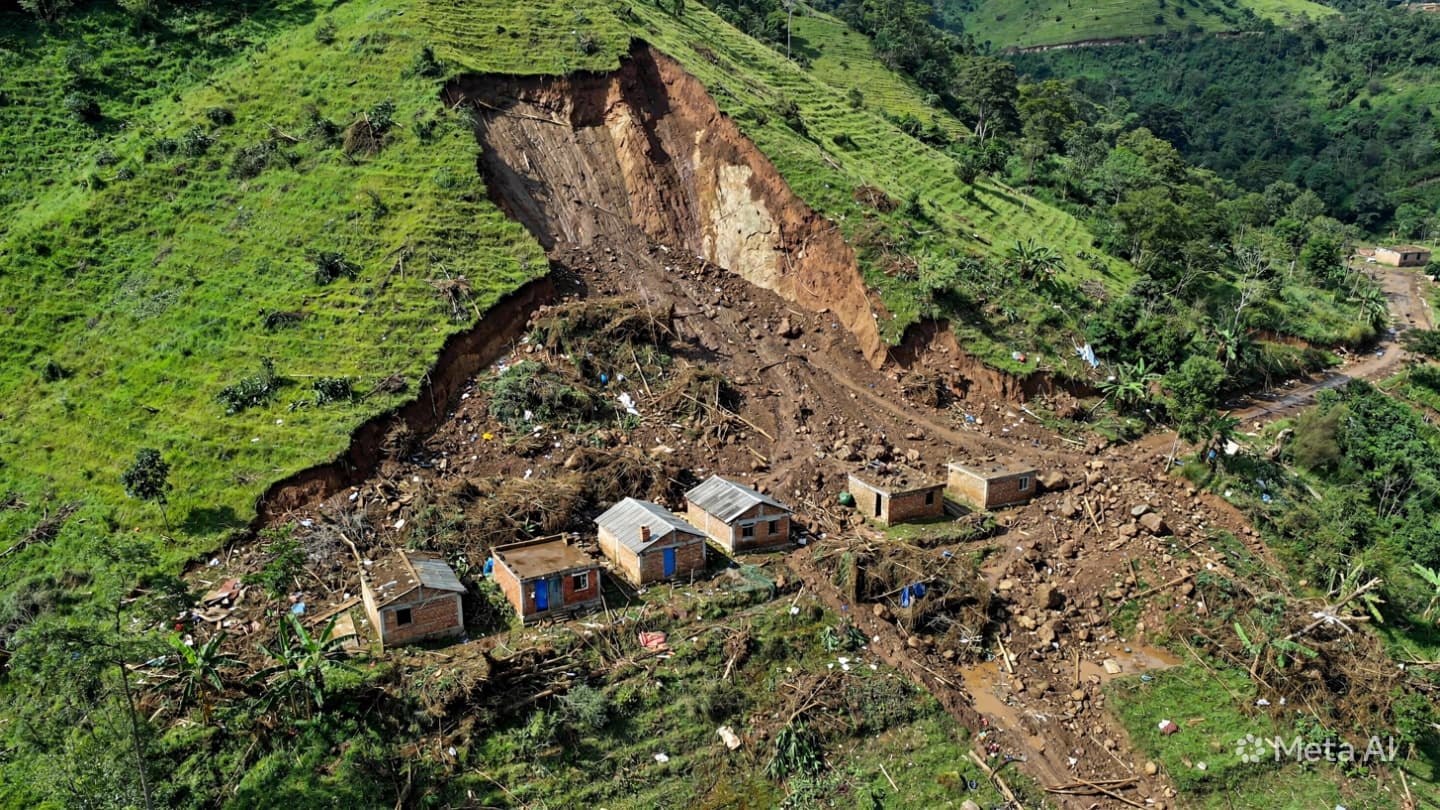
Lima, Peru—A massive wall of mud and mountain stone detached from a saturated hillside overnight, obliterating a residential block in a remote rural village and killing six sleeping inhabitants. The sudden geological failure followed two weeks of intense, unseasonably heavy Andean rainfall that thoroughly destabilized the clay-heavy topsoil layer. Emergency responders and local miners are using picks, shovels, and bare hands to excavate the deep earth mass where dozens of people remain missing. The thick consistency of the mud has prevented mechanical heavy equipment from reaching the high-altitude site.
The regional civil defense authority established a localized rescue command inside a small schoolhouse located on an adjacent rocky ridge. Survival windows are narrowing rapidly as the dense earth exerts immense crushing force on buried timber and brick homes. Medical teams are positioned on the edge of the slide area, but the terrain remains highly unstable, with minor dirt slips occurring continuously. Local leaders ordered the total evacuation of twenty additional mountainside properties due to widening fissures along the upper peak.
National disaster administrators stated that the geographic isolation of the village presents extreme logistical hurdles for incoming medical teams. They noted that the single unpaved access road leading up the valley was completely erased by the mudflow, requiring teams to hike in with supplies. Specialized rescue dogs are being flown toward the nearest functional landing strip to assist in locating specific pockets of life under the debris field. Rain continues to fall in a steady drizzle, complicating footing for the rescue lines.
Surviving villagers describe waking to a deep vibration that sounded like a low rolling thunder before the hillside dropped onto the houses. Many families fled into the cold mountain night with no supplies, watching their entire neighborhood disappear in seconds under the black mud wall. Temporary shelters are completely overwhelmed by the influx of injured and displaced individuals who have lost their livelihoods. Local community networks are organizing basic soup kitchens using remaining dry grain reserves.
Regional engineers confirmed that informal construction on steep mountain slopes lacking proper retention walls significantly heightened the scale of the disaster. The historical removal of native deep-root vegetation to expand small-scale agricultural plots left the mountain flanks highly vulnerable to rainfall saturation. Environmental defense groups are calling for an immediate ban on residential expansion across designated high-risk landslide corridors. Government authorities pledged to launch a full review of regional settlement maps once active search efforts terminate.
The local utility company disconnected regional power lines to prevent fire hazards from cracked electrical infrastructure buried beneath the wet earth. This precaution leaves the search site entirely dependent on portable battery lamps and handheld flashlights as mountain fog rolls into the valley. Satellite communication terminals are the only functional link to the capital, as mobile network towers were snapped by the initial dirt slide. Emergency requests are being sent to military bases for additional field tents.
The central government announced the immediate release of emergency funds to cover medical transports and funeral costs for the affected families. Long-term relocation frameworks are being drawn up by geological teams, as the current valley floor is deemed permanently prone to future mass earth movements. Similar relocation initiatives in past years faced intense resistance from local populations tied to their traditional agricultural zones. This economic friction threatens to slow down permanent safety enforcement.
Active digging forces are currently focusing on a central depression where a two-story residential building stood before the slide struck. Volunteers are clearing heavy rocks one by one while spotters watch the upper ridge line for signs of movement.
Rescuers are currently installing temporary drainage ditches along the upper slide boundary to channel rainwater away from the active recovery zone. The national weather agency warns that additional heavy precipitation lines are moving toward the Andean province.
Note: This article was published on BanxChange.com and is powered by the BXE Token on the XRP Ledger. For the latest articles and news, please visit BanxChange.com