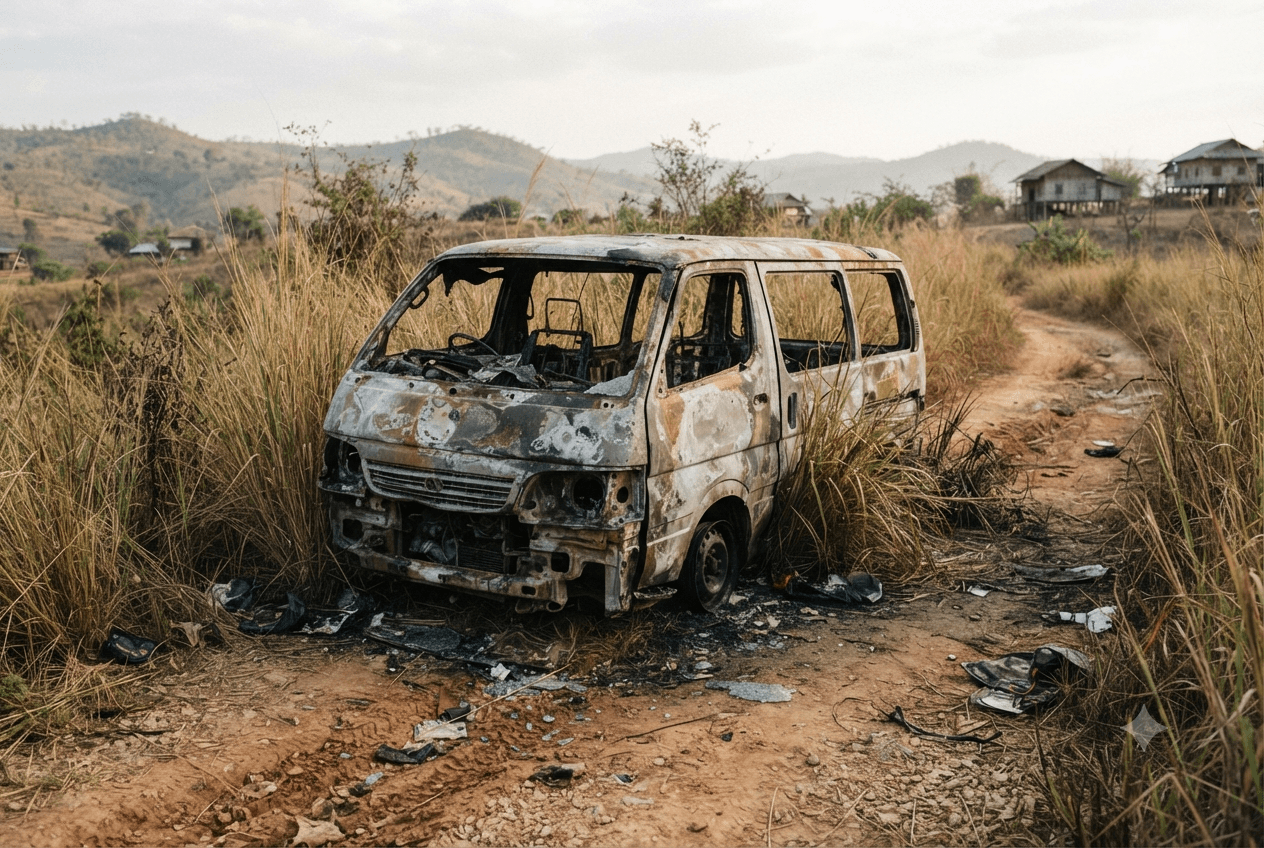
Magway Region, Myanmar—Two health workers died instantly on July 9, 2026, after their vehicle struck a landmine on a remote road. The pair were traveling to a nearby settlement to conduct routine vaccinations and deliver basic medicine. The blast occurred in a region where military convoys and resistance forces have frequently clashed over the past month. Local residents reported hearing a muffled explosion followed by the immediate silence of the surrounding forest.
The victims had worked with a local relief organization for several years, providing care in areas that state-run services abandoned long ago. Their vehicle was clearly marked with medical emblems, yet it appears to have been caught in a zone heavily seeded with explosives. Fellow aid workers expressed shock, stating that the road had been considered relatively safe until late last week. No group has yet claimed responsibility for placing the device.
Recovery of the bodies proved difficult due to the presence of secondary explosive threats in the immediate area. Local volunteers waited for several hours before they felt safe enough to approach the wreckage. The remains were eventually transported to a nearby town for identification and funeral preparations. Families of the deceased have been notified, though many are struggling to reach the area due to checkpoints.
Landmine incidents have become a recurring feature of the current security landscape in this district. Humanitarian monitors note that the contamination of transit routes has significantly hampered the delivery of life-saving supplies. Civilians who rely on these health workers for primary care are now effectively cut off. The loss of these specific medical personnel creates a massive gap in local service capacity.
Regional authorities have not provided a statement regarding the clearance of explosives from local roads. Instead, the focus remains on the ongoing maneuvers of regional security forces. For many villagers, this incident serves as a stark reminder of the risks involved in simply traveling for basic necessities. People are now largely avoiding the main roads, opting for longer, more dangerous routes through the hills.
The incident highlights the deteriorating state of security for aid organizations operating in the conflict zone. Without clear humanitarian corridors or maps of mined areas, health workers are operating in the dark. Organizations are currently reviewing their travel protocols across the region to prevent further casualties. Some have already suspended operations until the security situation stabilizes.
Tension remains high as local defense groups investigate who might have placed the mine. Accusations are being traded between multiple factions, yet no evidence has emerged to identify the perpetrators. The investigation is moving slowly as authorities prioritize military movements over forensic analysis of the blast site. The road remains closed to all civilian traffic until further notice.
Recovery teams remain on high alert for additional devices buried along the shoulder of the road. Further incidents of this nature seem inevitable as the tactical use of indiscriminate explosives continues to rise. Residents are now organizing their own informal patrols to warn travelers of potential hazards. The search for safety in the region has become a daily struggle for survival.
Published by Banx Network. This article is part of the Banx decentralized media programme, powered by the BXE token on the XRP Ledger.

.jpg&w=3840&q=75 "Qantas Grounds Plane After Passengers Report Bedbug Bites")