

Key Highlights
- AI Integration:Ripple, MetaMask, and Mastercard are developing frameworks for AI-driven transactions.
- Autonomous Agents:MetaMask's Agent Wallet allows software agents to manage digital assets.
- Future Economy:The convergence of AI and blockchain is reshaping digital asset interactions.
The cryptocurrency industry has spent over a decade focused on integrating human users into digital assets, but a transformative trend is emerging. Recent advancements from Ripple, MetaMask, and Mastercard indicate that the next significant customer for blockchain networks may not be humans, but rather artificial intelligence agents. As AI systems evolve to operate autonomously, they will increasingly require mechanisms to pay for services, acquire data, access APIs, and compensate other software systems without human intervention.
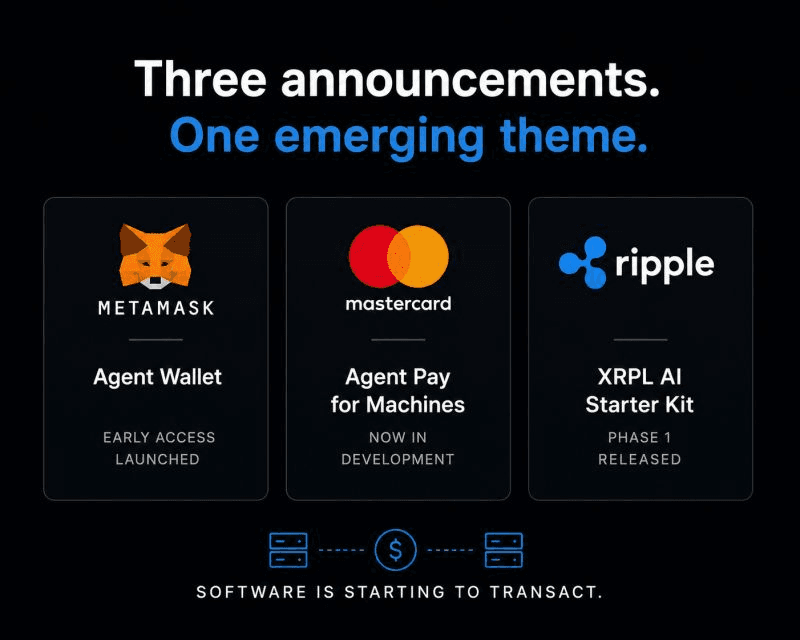
MetaMask has recently launched its Agent Wallet initiative, which is designed to empower autonomous software agents to hold and manage digital assets. This innovation represents a significant step towards enabling AI agents to engage in financial transactions independently. Concurrently, Mastercard is developing Agent Pay, a framework aimed at facilitating machine-to-machine transactions across digital networks. Ripple has also entered the fray with the first phase of its XRPL AI Starter Kit, which equips developers with the necessary tools to create AI-driven applications on the XRP Ledger.
These developments signal a shift towards a future machine economy where software can perform economic activities on behalf of users, businesses, and organizations. Such systems will necessitate payment solutions that can settle transactions in seconds, incur minimal costs, and maintain reliability even during peak demand periods. Proponents argue that the XRP Ledger's rapid settlement times, low transaction fees, and predictable network costs make it particularly well-suited for this emerging landscape.
The growing interest in this concept is evident as enterprises seek ways to automate digital workflows. In the future, AI agents could autonomously purchase cloud computing resources, pay subscription fees, access databases, or execute transactions without requiring manual approval. Blockchain networks offer a native payment layer that facilitates these activities on a global scale, operating around the clock.
While the sector is still in its nascent stages, the convergence of AI and blockchain technology is crafting a new narrative for digital assets. Rather than focusing solely on retail users and speculative trading, infrastructure providers are beginning to position themselves for a future where software itself becomes an active participant in the global economy. This evolution could redefine how transactions are conducted, paving the way for a more automated and efficient economic landscape.
Published by Banx Network. This article is part of the Banx decentralized media programme, powered by the BXE token on the XRP Ledger.




