The Arctic, a vast expanse of white silence and frozen water, is undergoing a transformation that echoes across the globe. As sea ice thins and retreats under the pressure of a warming climate, scientists are exploring innovative ways to restore its thickness. A recent field test in Cambridge Bay has offered a glimmer of hope, demonstrating that human intervention might help bolster the fragile shield of ice that protects the polar region.
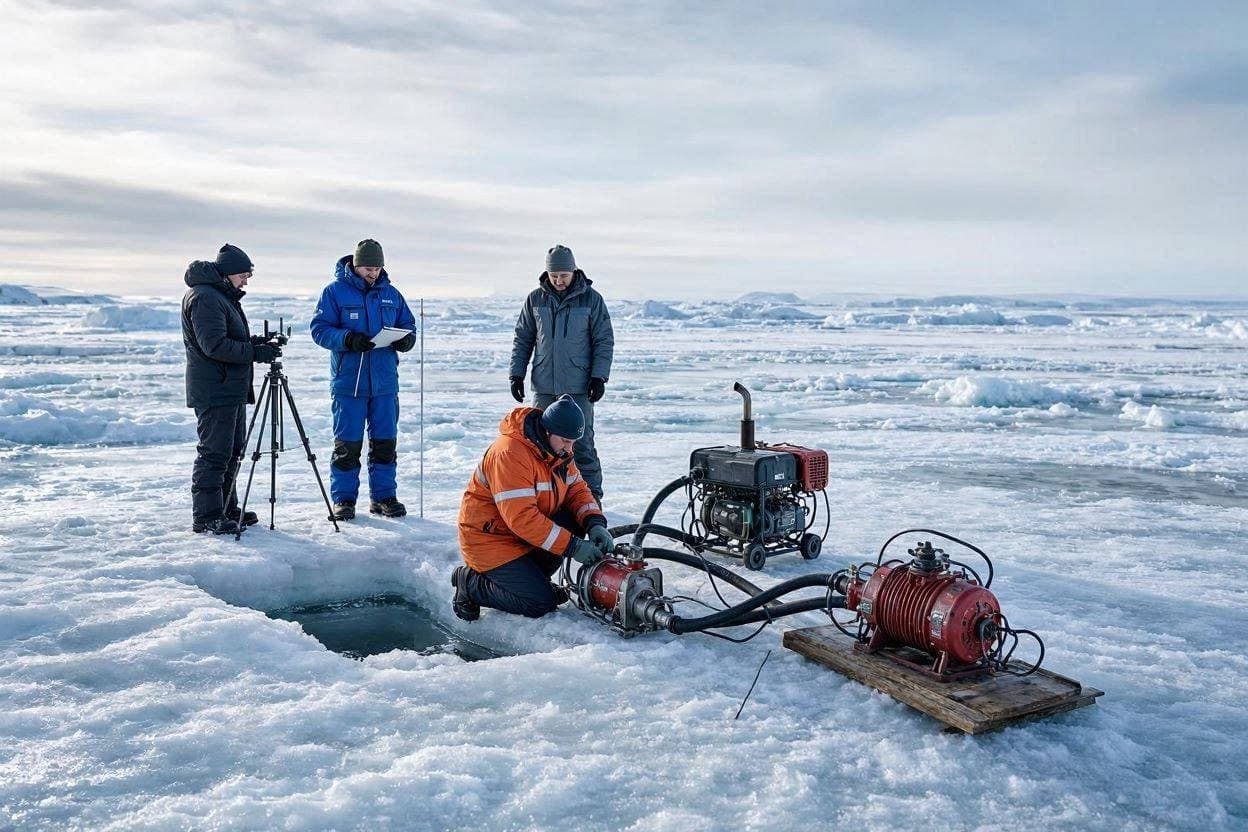
Body: The experiment, conducted by researchers from Arctic Reflections and supported by various international partners, involved pumping seawater onto the surface of existing ice during the winter months. The goal was simple yet ambitious: to create additional layers of ice that would be thicker and more resilient to summer melting. By flooding the snow on top of the ice with seawater, which then freezes, the team aimed to increase the overall mass and durability of the sea ice cover.
Initial results from the trial have been promising. The thickened patches of ice showed greater resistance to melting compared to surrounding areas, suggesting that this method could effectively slow down the loss of sea ice. This approach leverages the natural freezing process, using the cold Arctic air to solidify the pumped water into a sturdy layer. It is a low-tech solution that relies on fundamental physics rather than complex machinery.
However, the technique is not without its challenges. Critics point out that pumping seawater onto ice could alter the salinity of the underlying ocean, potentially affecting marine ecosystems. Additionally, the energy required to pump large volumes of water over vast areas raises questions about the scalability and environmental footprint of the method. These concerns highlight the need for careful assessment and monitoring before any widespread application.
The broader context of climate change makes such interventions increasingly relevant. As global temperatures rise, the Arctic is warming at twice the rate of the rest of the planet, leading to rapid ice loss. This not only threatens local wildlife and indigenous communities but also contributes to rising sea levels and altered weather patterns worldwide. Finding ways to mitigate these effects is a priority for scientists and policymakers alike.
International collaboration plays a crucial role in advancing this research. Data from the Cambridge Bay test is being shared with the global scientific community, allowing for peer review and further refinement of the technique. This open exchange of knowledge ensures that any potential solutions are rigorously tested and validated before implementation.
For the residents of the Arctic, the prospect of thicker ice offers both practical and symbolic benefits. Thicker ice supports safer travel and hunting practices, which are central to their cultural heritage. It also serves as a reminder that human ingenuity can be directed toward healing rather than harming the environment.
Closing: As the research continues, the focus remains on balancing innovation with ecological responsibility. The test in Cambridge Bay is a small step, but it represents a significant shift in how we approach climate mitigation, moving from passive observation to active restoration.
AI Image Disclaimer: The visual content accompanying this article is AI-generated for illustrative purposes and does not depict actual footage from the field experiment.
Sources: Live Science The Guardian Arctic Reflections NASA
Published by Banx Network. This article is part of the Banx decentralized media programme, powered by the BXE token on the XRP Ledger.