
Key Highlights
- ICRC's Role: The International Committee of the Red Cross (ICRC) is prepared to act as a neutral intermediary in the release of detainees in Sudan.
- UN Involvement:The ICRC is in close contact with the United Nations regarding potential detainee releases.
- Government Response:Sudan's government has welcomed a UN initiative aimed at facilitating prisoner exchanges.
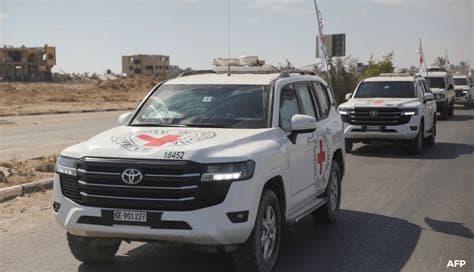
The International Committee of the Red Cross (ICRC) has announced its readiness to support efforts for the release of detainees held in Sudan. The organization is prepared to act as a neutral intermediary if requested by the conflicting parties. An ICRC spokesperson confirmed that the organization is aware of recent public discussions surrounding possible detainee releases and has maintained close communication with the United Nations on this matter.
In its statement, the ICRC emphasized its long-standing policy of confidentiality regarding sensitive, ongoing, or potential arrangements. The organization clarified that when it is called upon to assist in prisoner release operations, the selection of detainees is determined solely by the parties involved in the conflict. The ICRC does not engage in establishing selection criteria and has no influence over which individuals are included on final lists.
Furthermore, the ICRC stated that it refrains from publishing lists of detainees, confirming identities publicly, or disclosing personal information. Its role is strictly humanitarian, aimed at facilitating safe, dignified, and voluntary transfers that have been mutually agreed upon by the parties involved. The ICRC does not assess the reasons for detention, legal status, or charges against the detainees.
In a related development, Sudan's government has expressed support for a UN initiative proposed by Pekka Haavisto, the UN Secretary-General's envoy for Sudan. This initiative is described as a framework for prisoner exchanges, which would involve coordination between the UN envoy and the ICRC. Legal advocacy groups have also called for any exchanges to extend beyond military detainees, urging for broader releases that include civilians held arbitrarily. They emphasize the importance of ensuring humanitarian access and allowing detainees to communicate with their families and legal representatives.
The situation in Sudan remains complex, with ongoing conflict affecting the lives of many individuals. The ICRC's involvement highlights the critical need for humanitarian efforts in the region, as well as the importance of international cooperation in addressing the challenges faced by detainees and their families.
Published by Banx Network. This article is part of the Banx decentralized media programme, powered by the BXE token on the XRP Ledger.



