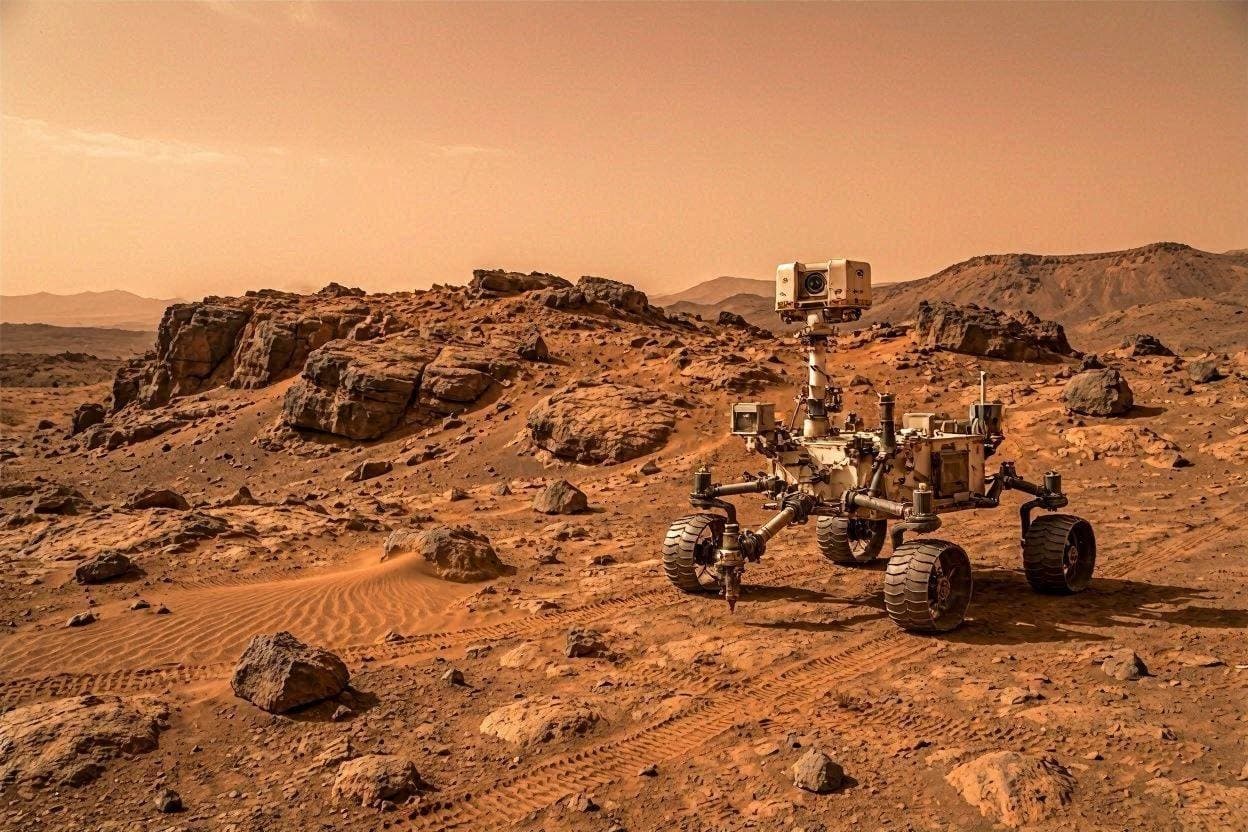
On the rust-colored plains of Mars, the Perseverance rover continues its tireless quest to uncover the planet’s hidden history. Recent findings have revealed a detailed record of ancient impact events, providing new insights into the bombardment that shaped the early solar system. These discoveries help scientists piece together the timeline of Mars’ geological evolution and its potential for past habitability.
The rover, exploring the Jezero Crater, has analyzed rock samples that contain evidence of shock metamorphism, a process caused by intense pressure from asteroid impacts. By studying the mineral structure and composition of these rocks, researchers can determine the timing and intensity of these ancient collisions. This data is crucial for understanding the frequency of impacts during the Late Heavy Bombardment period, a time when the inner planets were frequently struck by debris.
Each rock tells a story of violence and transformation. The layers of sediment and igneous rock preserve a chronological record, allowing scientists to date events with greater precision. The findings suggest that Mars experienced a series of significant impacts that altered its surface and possibly its atmosphere. Understanding these events helps explain why Mars evolved differently from Earth, losing its magnetic field and much of its water.
The implications for astrobiology are profound. Impact events can both destroy and create habitats. While large collisions can sterilize surfaces, they can also generate hydrothermal systems that might support microbial life. By identifying periods of stability between impacts, scientists can target their search for biosignatures more effectively, focusing on times when conditions may have been favorable for life.
Perseverance’s advanced instruments, including its X-ray spectrometer and cameras, allow for detailed analysis without returning samples to Earth immediately. However, the rover is also collecting caches of rocks for future return missions. These samples will provide even more detailed information, confirming the remote sensing data and offering new perspectives on Martian geology.
The public follows these discoveries with keen interest, captivated by the possibility of finding evidence of past life. Each update from Mars brings us closer to answering the age-old question of whether we are alone in the universe. The rover’s work serves as a proxy for human exploration, extending our reach to another world.
As the mission continues, Perseverance will move to new locations within the crater, seeking further clues. The ancient impact record is just one chapter in the long story of Mars, but it is a vital one. It reminds us of the dynamic and often violent history of our planetary neighbors.
Closing: The Perseverance rover’s discovery of ancient impact records enriches our understanding of Mars’ past. Each rock analyzed is a page in the planet’s history book, revealing the forces that shaped it and guiding our search for life beyond Earth.
AI Image Disclaimer: The accompanying visuals are AI-generated representations intended to illustrate the context of the article and do not depict actual images from the Perseverance rover.
Sources: NASA JPL Nature Astronomy Space.com The Verge
Published by Banx Network. This article is part of the Banx decentralized media programme, powered by the BXE token on the XRP Ledger.