Some species disappear loudly.
Forests burn. Habitats collapse. Animals vanish from ecosystems people can visibly watch changing.
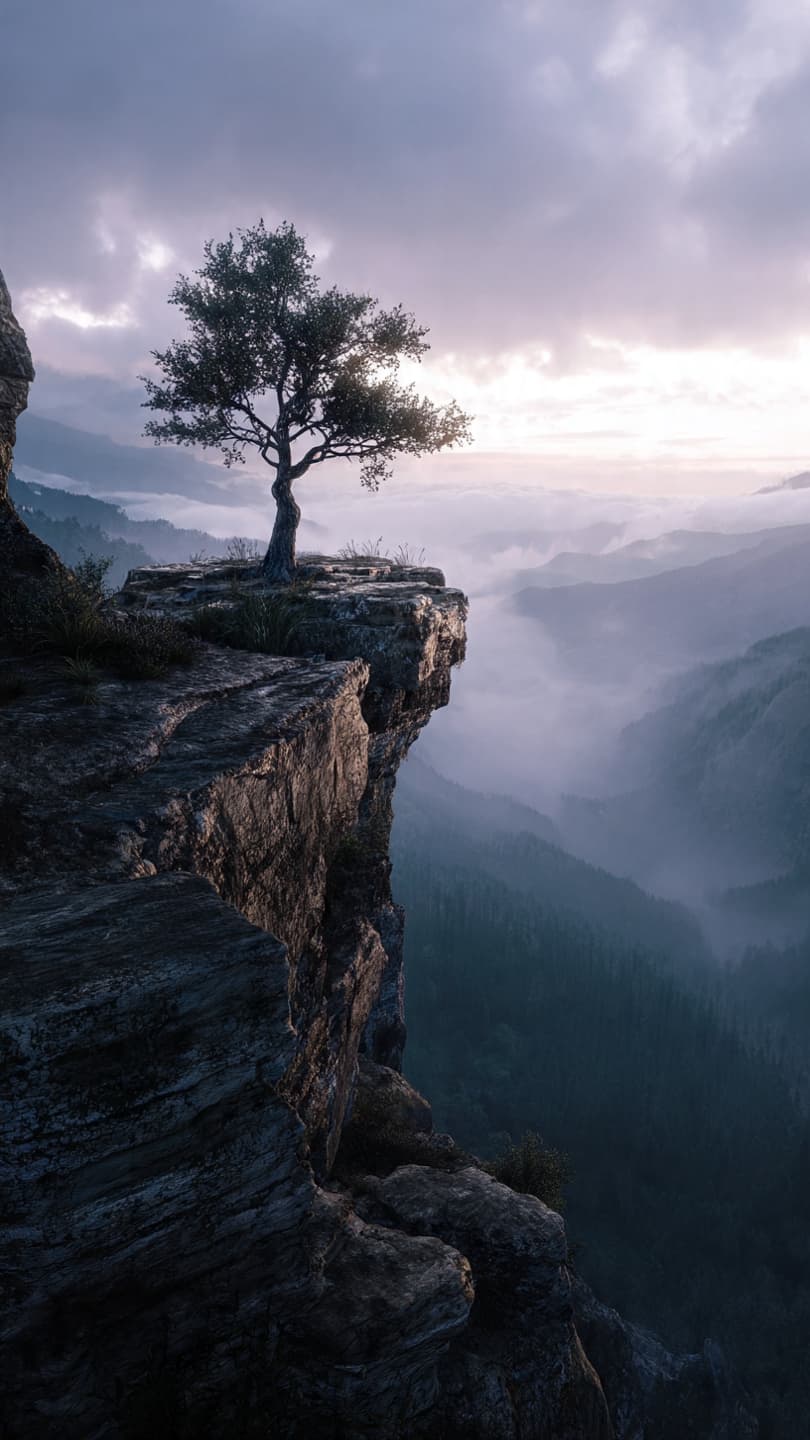
Others fade almost invisibly — reduced quietly to a single surviving population in a place difficult for humans even to reach.
Now conservationists say one critically endangered tree species surviving on a remote cliffside may have gained a second chance through emergency preservation efforts at botanic gardens.
Researchers and horticultural specialists collected material from the final known wild specimens in hopes of propagating and safeguarding the species before it disappears entirely from nature.
The effort reflects a growing field of conservation focused not only on protecting ecosystems, but rescuing species already standing at the edge of extinction.
Why Cliffside Species Sometimes Survive Longer Remote cliffs and inaccessible terrain often become accidental refuges for endangered plants.
Such environments can shield species from:
Logging Agriculture Urban development Grazing animals Human disturbance Over time, isolated populations may survive only in narrow ecological niches where conditions remain stable enough for persistence.
But that isolation also creates vulnerability.
A single:
Landslide Storm Disease outbreak Wildfire Climate shift can potentially erase the remaining population entirely.
The Role of Botanic Gardens in Conservation Modern botanic gardens increasingly function as conservation centers rather than purely public exhibition spaces.
Many institutions now maintain programs involving:
Seed banking Tissue culture Species propagation Genetic preservation Habitat restoration research In cases where wild populations become critically unstable, botanical teams sometimes intervene directly to establish protected backup populations outside natural habitats.
This process is known as ex situ conservation: protecting species away from their original ecosystem while long-term survival strategies are developed.
Why Plant Extinction Often Receives Less Attention Animal extinctions usually attract more emotional public response because humans connect easily with visible wildlife.
Plants, however, form the foundation of ecosystems themselves.
Trees and plant species influence:
Soil stability Water cycles Carbon storage Insect populations Forest structure Climate resilience Losing a plant species can therefore affect entire ecological networks even when the disappearance receives little public attention.
Scientists estimate many plant species may vanish before they are fully studied.
The Fragility of Extremely Small Populations When only a few individuals remain, conservation becomes extraordinarily difficult.
Tiny populations face risks involving:
Reduced genetic diversity Disease susceptibility Reproductive limitations Environmental instability Random catastrophic events Even successful rescue efforts may require decades of monitoring and propagation before a species becomes secure again.
Sometimes conservationists race not against immediate destruction, but against biological fragility itself.
Hope Through Propagation Despite the challenges, botanic garden programs have successfully rescued some species previously considered nearly lost.
Techniques involving:
Controlled pollination Cloning Seed preservation Environmental simulation allow scientists to stabilize populations long enough for recovery plans to emerge.
In some cases, species preserved in gardens later return to restored natural habitats.
The cliffside tree may now have that possibility.
A Wider Reflection There is something profoundly moving about the image of a final tree surviving alone on a cliff.
It feels almost symbolic: life holding on at the edge of disappearance itself.
For centuries, humans viewed extinction largely as something happening to animals. But plants vanish quietly, often unnoticed until almost nothing remains.
The effort to save this tree reflects a broader realization emerging in conservation science: that preserving biodiversity sometimes means protecting not only vast ecosystems, but single fragile survivors carrying millions of years of evolutionary history inside their genetic memory.
And perhaps that is why stories like this resonate so deeply — because they reveal how close humanity sometimes comes to losing entire forms of life forever, and how much care, patience, and urgency it takes to keep even one species alive.
AI Image Disclaimer Images are AI-generated illustrations and are intended for visual representation only, not real-world documentation.
Source Check Botanical conservationists are working to save an extremely rare tree species believed to survive in only a single wild location after specimens growing on a remote cliffside were transferred to specialized botanic gardens for protection and propagation.
Published by Banx Network. This article is part of the Banx decentralized media programme, powered by the BXE token on the XRP Ledger.