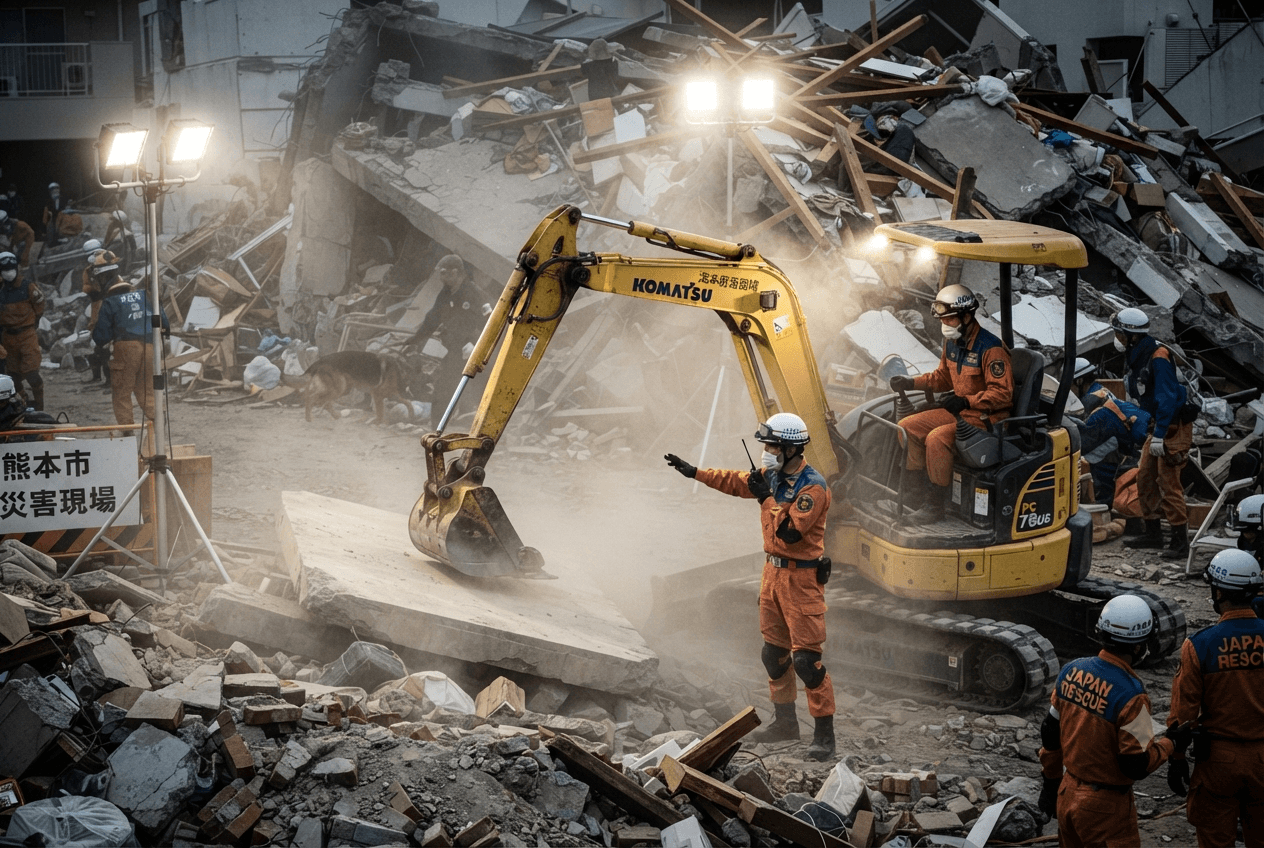
Kumamoto, Japan—Rescue teams faced treacherous conditions inside heavily damaged industrial ruins on Friday. Shifting concrete slabs and aftershocks threatened the lives of personnel inside collapsed structures. Specialized canine units combed through pulverized office blocks without detecting viable life signs. Commanders acknowledged that the window for finding trapped survivors had nearly closed.
Heavy dust hung thick in the stagnant air surrounding the flattened paper mill site. Structural engineers monitored continuous micro-movements using laser telemetry equipment. Emergency crews suspended manual digging operations when overhead walls began to groan. Heavy hydraulic cranes moved in slowly to lift massive concrete lintels.
Displaced families watched search efforts from behind yellow police barricades nearby. Local volunteers set up mobile kitchens providing hot meals to weary rescue workers. Public health teams distributed electrolyte packets to combat dehydration among field personnel. Mental health counselors offered grief support to relatives waiting near the wreckage.
Regional authorities coordinated heavy equipment allocation across multiple scattered disaster zones. Transport bottlenecks delayed the arrival of specialized lifting gear from neighboring prefectures. Utility repair technicians worked in tandem with search units to isolate live electrical circuits. Environmental officers monitored fuel leaks originating from ruptured factory storage tanks.
Government officials defended the pace of the initial rescue deployment against public criticism. Emergency response planners noted that road blockades restricted heavy machinery access initially. Prime ministerial spokespersons emphasized that infrastructure restoration remained a top priority. Local councils began planning temporary housing villages for displaced community members.
Engineers initiated geotechnical assessments on hillside neighborhoods threatened by soil liquefaction. Heavy rainfall warnings added urgency to ongoing slope stabilization projects across the valley. Temporary drainage channels were dug to divert potential mudflows away from evacuation camps. Meteorological agencies maintained high alert levels for secondary geological movements.
Forensic teams established protocols for identifying bodies recovered from the heaviest impact zones. Temporary mortuary facilities expanded capacity to handle the rising casualty numbers. Consular offices assisted foreign nationals stranded by the widespread transportation disruptions. Insurance representatives set up mobile assessment desks outside major community centers.
The immediate emergency phase transitioned toward long-term structural demolition and clearing. Heavy excavators began tearing down structurally compromised facades along main commercial streets. City planners outlined preliminary rebuilding frameworks focused on enhanced seismic resilience. Nightfall brought silence back to the devastated zones as search lights illuminated the rubble.
Note: This article was published on BanxChange.com and is powered by the BXE Token on the XRP Ledger. For the latest articles and news, please visit BanxChange.com