WELLINGTON, New Zealand — A strong magnitude 5.9 earthquake struck off the east coast of New Zealand's North Island on Sunday afternoon, August 2, 2026 sending noticeable tremors across the region.
According to the GFZ German Research Centre for Geosciences, the earthquake hit at 08:35 GMT at a relatively shallow depth of 10 kilometers (6 miles).
The epicenter was initially located at 37.82 degrees south latitude and 178.59 degrees east longitude, positioned off the coast of the East Cape region. Because the tremor occurred at a shallow depth, the shaking was widely felt by coastal communities across the northeastern part of the island.
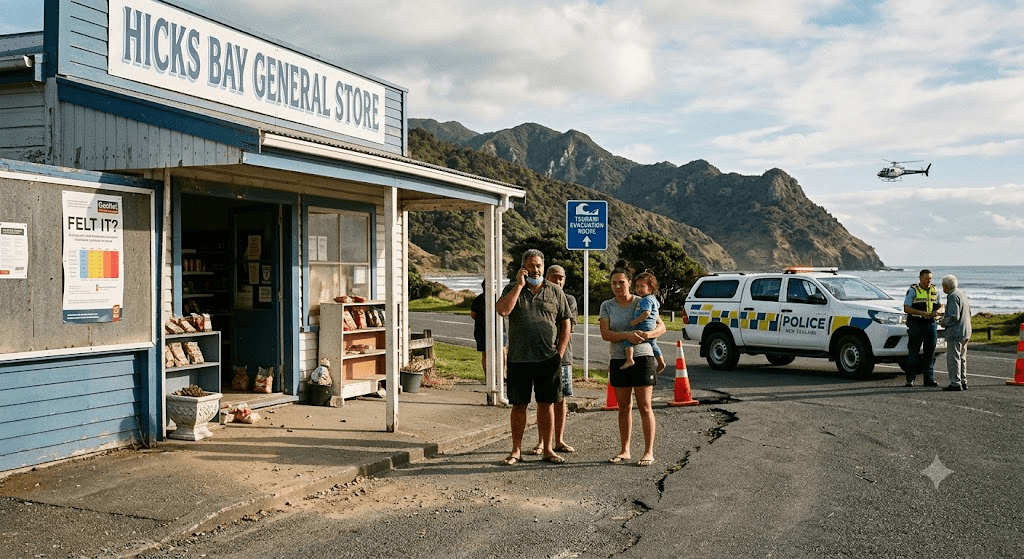
Emergency management agencies and local authorities immediately initiated safety protocols to scan for potential structural impacts.
First responders and maritime surveillance teams have reported no immediate accounts of injuries, significant infrastructure failure, or casualties. No widespread tsunami warnings were issued for the coastline following the event, though monitoring agencies continue to analyze ocean gauges for minor sea-level fluctuations.
Seismologists warn that aftershocks are common following a shallow quake of this magnitude, and residents in the East Coast and Bay of Plenty areas are advised to remain vigilant and follow standard safety protocols if subsequent shaking occurs.
Local civil defense groups have used this latest seismic event to remind residents of the critical "Drop, Cover, and Hold" safety procedures during unexpected tremors. Community centers along the East Cape are actively distributing updated emergency preparedness kits and mapping out local evacuation routes, emphasizing that preparedness is key in seismically active zones. Families are being encouraged to secure heavy furniture and verify their household emergency plans to ensure a swift response to any future disruptions.
In the coming days, geological teams from GeoNet and local research institutes will closely monitor the region's fault lines for continuous seismic activity and data collection. These specialists will analyze the shockwaves to better understand the stress distribution along the plate boundary, which helps refine regional hazard models. While the immediate danger has passed, authorities stress that ongoing vigilance and community resilience remain New Zealand's best defenses against the unpredictable forces of nature.
Note: This article was published on BanxChange.com and is powered by the BXE Token on the XRP Ledger. For the latest articles and news, please visit BanxChange.com