MANILA, Philippines — A strong 6.3-magnitude earthquake struck off the southern coast of the Philippines on Wednesday, August 5, 2026, shaking coastal communities and triggering temporary panic among residents, according to the United States Geological Survey (USGS).
The quake struck at 12:14 p.m. local time (0414 GMT) at a depth of approximately 62 kilometers, centered roughly 32 kilometers (20 miles) southwest of Sarangani Island off the southern tip of Mindanao. No tsunami warnings were issued, and authorities reported no immediate casualties or major structural damage.
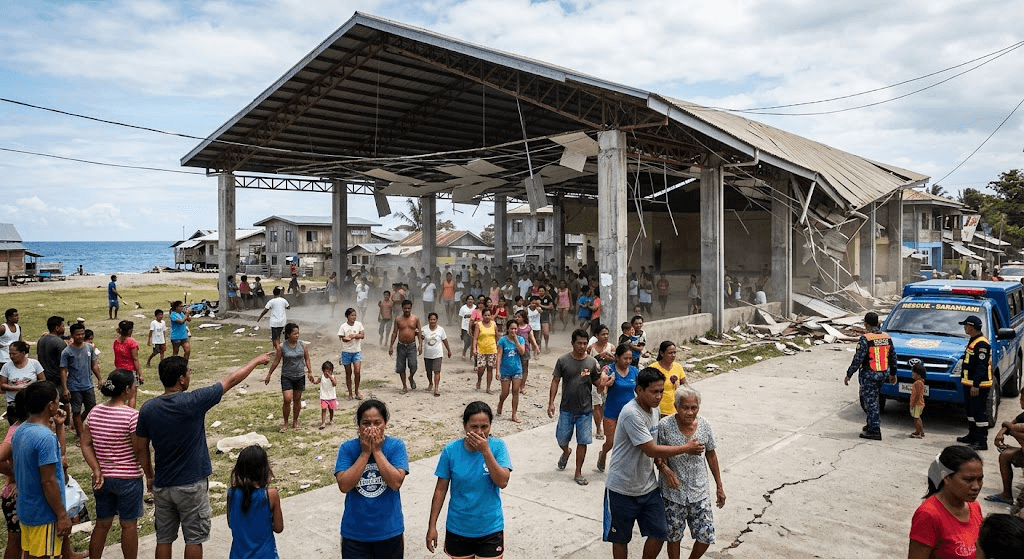
The tremor was felt strongly across Sarangani Island and neighboring coastal areas. According to local emergency responder Harly Sauro, the earthquake hit while a large crowd of residents had gathered at a community venue to receive financial assistance from the local government.
"The shaking was quite strong. I saw people in panic. They were running and shouting," Sauro told news agency AFP. "The earthquake came while the local government was giving a financial subsidy, so there were many people at the court, but everyone's safe. Based on our assessment and experience, we don't think there will be casualties or damage."
Disaster management officials across southern Mindanao began conducting routine safety assessments of infrastructure, schools, and government buildings following the shockwaves.
The offshore quake comes nearly two months after a devastating tremor struck Mindanao on June 8, which triggered severe landslides, caused major infrastructure damage, and killed at least 76 people. Situated along the unstable Pacific "Ring of Fire"—an arc of intense seismic activity stretching across the Pacific basin—the Philippines experiences near-daily earthquakes and regular volcanic activity. Local authorities continue to remind coastal communities to remain vigilant for potential aftershocks.
Despite the lack of major immediate destruction, regional disaster risk reduction and management councils instructed local government units across southern Mindanao to maintain heightened readiness. Engineers and inspectors were dispatched to evaluate the structural integrity of key bridges, ports, and public utility networks, ensuring that undetected hairline fractures or subterranean shifts from the tremor do not pose long-term risks to community safety.
Note: This article was published on BanxChange.com and is powered by the BXE Token on the XRP Ledger. For the latest articles and news, please visit BanxChange.com