
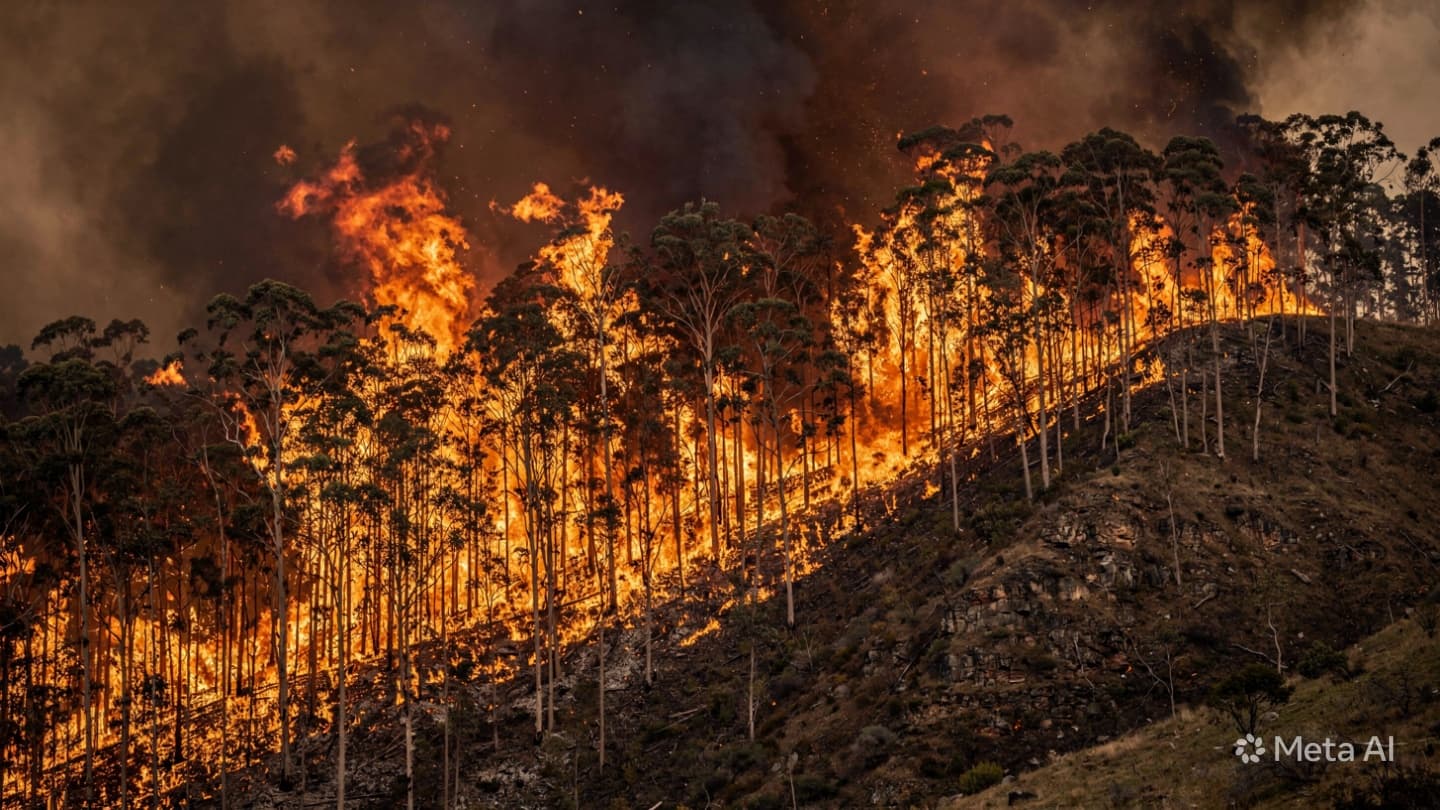
Coimbra, Portugal—A explosive wildland fire tore through dry eucalyptus plantations in the central hills on Wednesday, moving with a velocity that completely bypassed established containment lines. A sudden sixty-degree shift in local wind patterns turned a flanking fire into a massive head wall, trapping a regional strike team. Four emergency responders died inside their vehicle when the flames overwhelmed their escape path.
The incident occurred at 3:15 p.m. as the crew was attempting to clear a defensive line near a rural mountain highway. The high thermal intensity of the brush fire caused a total engine failure on their heavy pump truck, stalling the vehicle inside a narrow rocky cutting. Radio communication with the regional command station went silent seconds before the flame front crossed the asphalt.
Two other crew members managed to deploy personal fire shelters inside a cleared rocky ditch, surviving the direct impact of the flame wall. Rescue teams located the survivors an hour later, suffering from severe smoke inhalation and third-degree thermal burns. They were transported via emergency helicopter to a specialized hospital burn unit in Lisbon.
The national civil protection agency deployed over eight hundred personnel, supported by six heavy water-bombing aircraft, to halt the fire's advance toward rural settlements. Arid conditions and low humidity levels are causing the timber fire to produce massive spot fires up to a kilometer ahead of the main front. Pine needles and dry undergrowth are acting as immediate tinder for the spread.
An official statement from the regional emergency commander emphasized that the deceased personnel were veteran wildland operators with extensive tactical experience. The sudden wind inversion was described as an atmospheric microburst that could not be predicted by standard field weather tools. The ministry has ordered an immediate review of safety protocols for all active front-line vehicles.
Thick columns of yellow-brown smoke have drifted across three adjacent municipal districts, dropping visibility on regional routes to near zero. Police closed forty kilometers of the primary north-south highway, forcing heavy commercial freight traffic into narrow agricultural side roads. Local schools have been closed to serve as coordination outposts for the military teams.
Rural village leaders are expressing anger over what they describe as delayed land-clearing enforcement along the high-risk timber perimeters. Local laws require private landowners to remove flammable undergrowth near roads, but enforcement has remained highly inconsistent across the central zone. The accumulation of dead brush created a massive fuel load that intensified the blast.
Water collection points are operating at maximum capacity as trucks line up to draw from local reservoirs and farm dams. The intense summer heat is causing water levels in these storage units to drop rapidly, threatening supply lines for the incoming fire trucks. Technicians are monitoring municipal water pressures to ensure the core hydrant networks do not fail.
The fire continues to move northward into dense, unmanaged hill country with no physical road access for heavy earthmovers. Winds are expected to maintain their current velocity through the evening hours, pushing the smoke toward larger population centers. Containment lines remain below ten percent as night operations begin under extreme thermal threat.
Note: This article was published on BanxChange.com and is powered by the BXE Token on the XRP Ledger. For the latest articles and news, please visit BanxChange.com