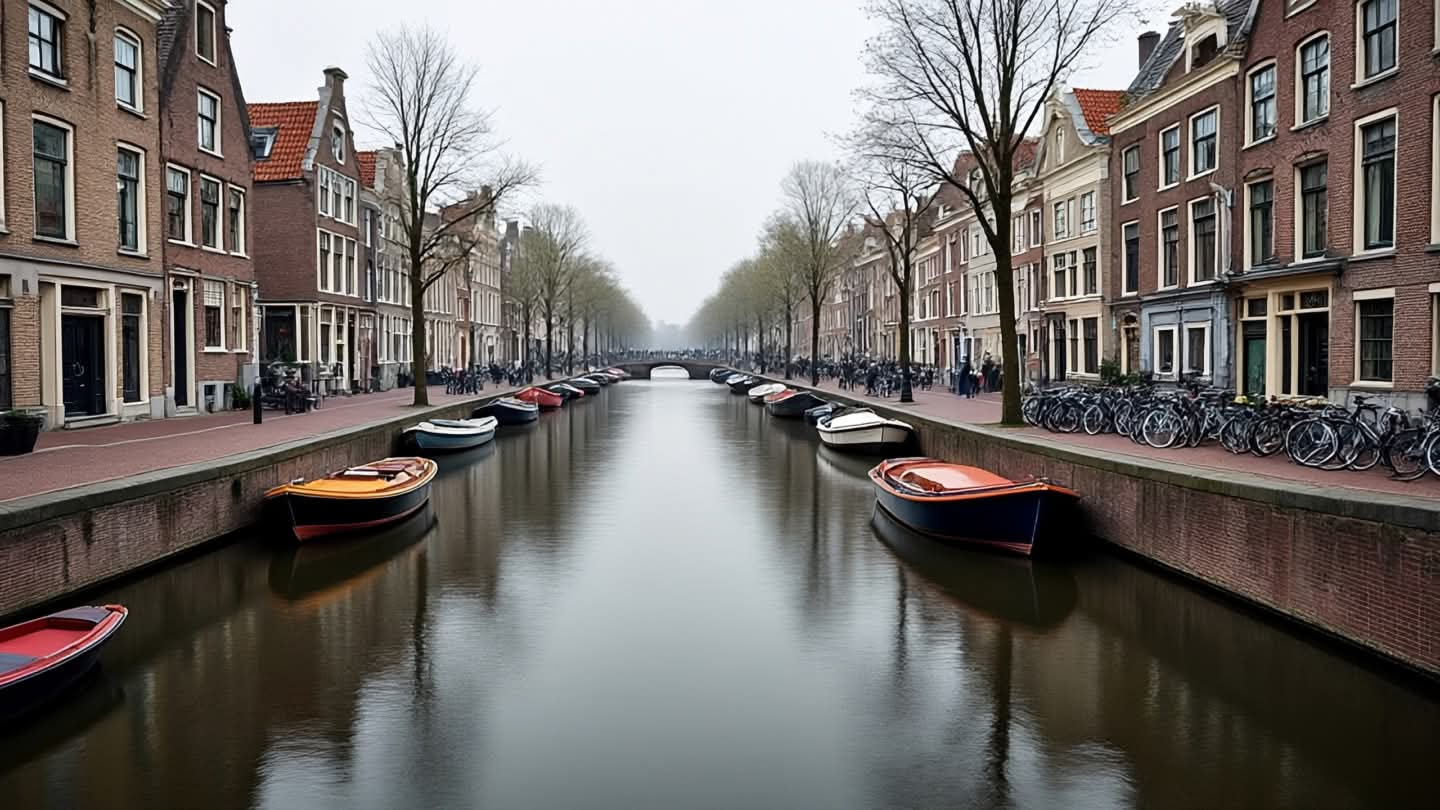
In the labyrinthine streets of Amsterdam, where history and modernity intertwine, a quiet mystery has captured the attention of two continents. A man known only as "Lucky," who collapsed in the city three years ago and has since lived in a care home without speaking, may finally have a name. Dutch police are now working with Canadian authorities to determine if he is John Russell Kenny, a Vancouver man who vanished thirty-three years ago. This potential connection bridges decades and oceans, offering a glimmer of hope for a family long suspended in uncertainty.
The story of "Lucky" began in 2023 when he was found unconscious on a street in Amsterdam. Despite medical care, he has remained non-verbal, his identity shrouded in silence. Dutch authorities, driven by a desire to restore his dignity and history, launched a public appeal. The response was global, but one tip stood out: a striking resemblance between "Lucky" and photos of John Kenny, who disappeared from British Columbia in 1993 at the age of 34.
For the Vancouver Police Department (VPD), the lead is both poignant and procedural. Cold cases often lie dormant, but new technology and international cooperation can breathe life into old files. Investigators are comparing physical features, dental records, and other biometric data to confirm the link. While not a criminal investigation, the effort is deeply human, seeking to answer the fundamental question of who this man is and where he belongs.
The family of John Kenny has waited decades for answers. His disappearance left a void that time has not filled, only softened. The possibility that he is alive, even in silence, brings a complex mix of emotions. Relief that he may be safe is tempered by the tragedy of his lost years and the mystery of his journey from Canada to the Netherlands. It is a narrative of displacement that resonates with many who have experienced the pain of missing loved ones.
Online sleuths played a crucial role in connecting the dots. Social media platforms became a digital detective agency, with users sharing side-by-side comparisons and historical details. This crowdsourced investigation highlights the power of community in solving modern mysteries. It demonstrates how collective curiosity and empathy can assist official efforts, bringing attention to cases that might otherwise remain forgotten.
Dutch police have emphasized their commitment to treating "Lucky" with respect and care, regardless of the outcome. They aim to provide him with a sense of identity and belonging, whether through reconnection with family or continued support in his current environment. The process is delicate, requiring sensitivity to his condition and the potential trauma of rediscovery.
If confirmed, the case would be a remarkable example of international police cooperation. It underscores the importance of sharing information across borders to solve humanitarian puzzles. For law enforcement, it is a reminder that their duty extends beyond crime prevention to include the protection of the vulnerable and the restoration of identity.
As the investigation continues, the world watches with bated breath. The story of "Lucky" and John Kenny is a testament to the enduring hope for closure. Whether he returns to Canada or remains in the Netherlands, the goal is to ensure he is no longer a mystery but a person with a known history. In the end, every individual deserves to be seen, named, and remembered.
AI Image Disclaimer: The visual elements in this article are AI-generated illustrations depicting European cityscapes and abstract representations of memory and identity, designed to reflect the themes of the mystery without showing real individuals or proprietary police evidence.
Sources: CBC News, CTV News, Vancouver Sun, NL Times, DutchNews.nl
Note: This article was published on BanxChange.com and is powered by the BXE Token on the XRP Ledger. For the latest articles and news, please visit BanxChange.com