
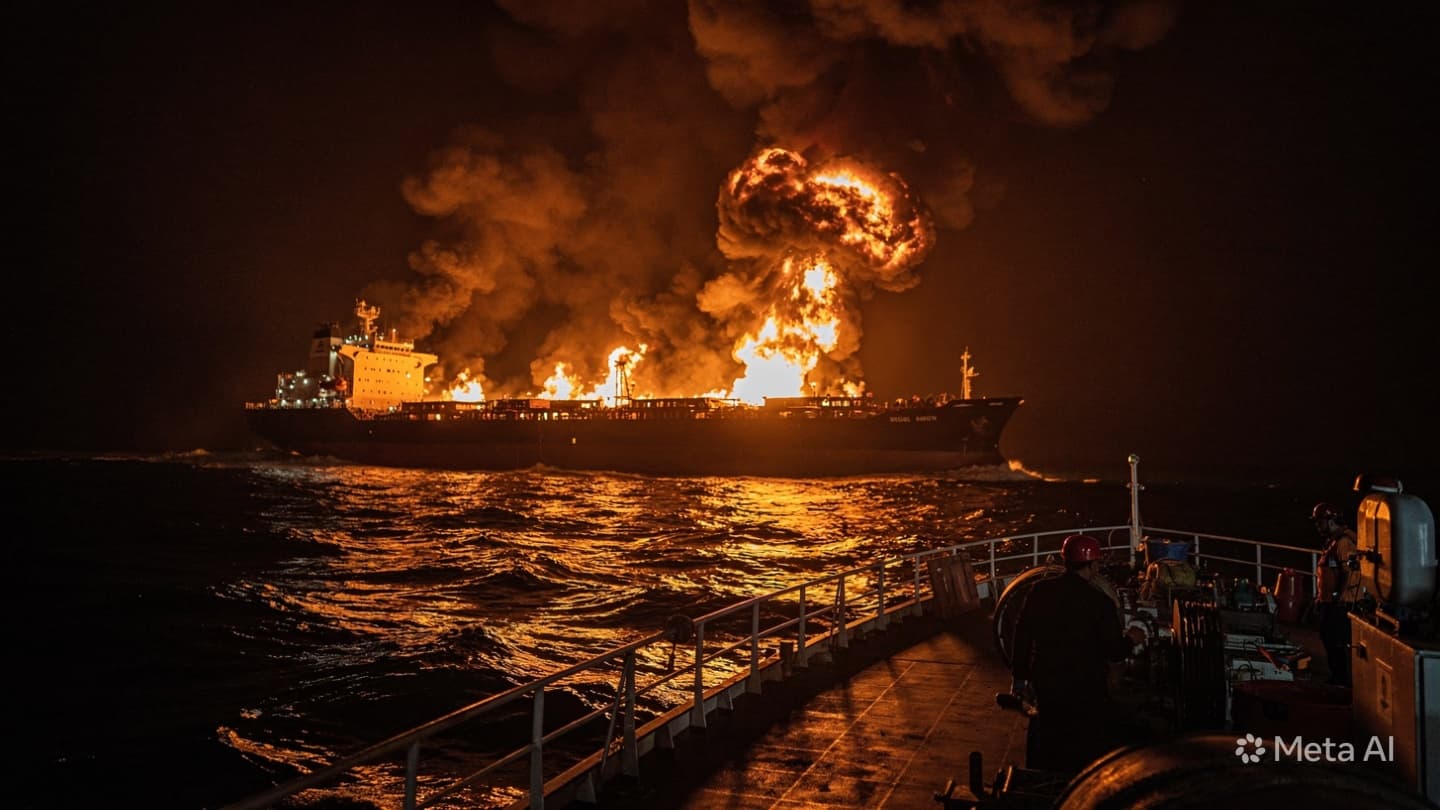
Basra, Iraq—A coordinated maritime assault using explosive-laden speedboats struck two foreign oil tankers in Iraqi territorial waters late Wednesday night, triggering a catastrophic fire that killed at least one crew member. The targeted vessels, including the Marshall Islands-flagged Safesea Vishnu carrying fuel oil, were operating roughly 50 kilometers off the strategic port of Basra when the detonations occurred. Emergency rescue fleets scrambled from the Iraqi mainland to extract surviving personnel from the burning hulls as orange fireballs illuminated the northern Persian Gulf sky.
Iraqi port authorities confirmed that a total of 38 mariners were successfully pulled from the water during a chaotic midnight rescue operation. The single confirmed fatality was identified by diplomatic officials as an Indian national working aboard the Safesea Vishnu, while emergency teams continue to sweep the area for several sailors still listed as missing. Naval tugboats equipped with firefighting apparatus have struggled to suppress the intense chemical blazes, which continue to produce thick plumes of toxic black smoke visible from the Iraqi coastline.
The attack represents a critical expansion of the ongoing conflict involving the United States, Israel, and Iran, which has already crippled shipping traffic through the nearby Strait of Hormuz. Regional security analysts indicate that the strike utilized unmanned surface vessels designed to detonate on impact at the waterline to maximize structural damage. The tactical shift to striking vessels directly within Iraq's sovereign waters threatens to completely choke off the country's southern oil maritime corridor, which accounts for the vast majority of federal revenue.
Officials from Iraq's Security Media Cell released an immediate condemnation of the incident, labeling the strike a cowardly act of sabotage that directly violates Iraqi national sovereignty. Baghdad has repeatedly attempted to maintain diplomatic neutrality during the widening regional war, but this latest assault demonstrates the impossibility of insulating its vital economic infrastructure. Government representatives stated they reserve the right to pursue international legal measures against the perpetrators, though no group has officially claimed responsibility for the deployment of the explosive craft.
The state-run General Company for Ports of Iraq suspended all commercial vessel movements in the immediate vicinity of the Basra oil terminals following the explosions. Security protocols have been elevated to the highest readiness level, with Iraqi naval patrols deployed to establish a defensive perimeter around remaining stationary platforms. Ship owners and international maritime insurers are already reacting to the development, with war-risk premiums for the northern Gulf projected to reach prohibitive levels by the end of the week.
Eyewitness accounts from maritime workers at the nearby offshore loading berths described a sequence of loud detonations followed by rapid internal explosions within the tankers' cargo holds. The structural integrity of the damaged hulls remains highly uncertain, raising immediate concerns among local environmental agencies regarding a massive crude spill in the enclosed gulf basin. Port engineers are attempting to deploy containment booms around the drifting vessels, though rough sea conditions are hindering the deployment of environmental safeguards.
Spokespersons for the Indian Embassy in Baghdad confirmed they are maintaining direct contact with the rescued sailors and are coordinating repatriation efforts for the survivors. The remainder of the crew has been moved to a secure facility on the Iraqi mainland for medical evaluation and debriefing by maritime investigators. Preliminary interviews suggest the attack occurred with zero radar warning, indicating the low-profile explosive boats utilized stealth geometry or radar-evading tactics.
The economic fallout from the destruction of the tankers is already rippling through the Basra energy sector, forcing local refineries to alter their storage allocations due to the sudden halt in export capacity. International trading desks reported a sharp uptick in global crude futures within hours of the first verified footage of the burning ships hitting wire services. If the suspension of loading operations at Basra extends past the weekend, internal state reserves will face severe logistical backlogs.
National security officials convened an extraordinary cabinet session in Baghdad to address the vulnerability of the country's southern maritime borders. Military commanders are requesting immediate funding to upgrade coastal radar arrays and acquire specialized high-speed interception craft to counter the threat of waterborne drones. The current defense infrastructure remains poorly equipped to secure the expansive offshore zone against asymmetric naval tactics.
The burning vessels continue to drift southward into deeper shipping lanes under the observation of regional coalition warships, with no timeline established for extinguishing the remaining fires.
Note: This article was published on BanxChange.com and is powered by the BXE Token on the XRP Ledger. For the latest articles and news, please visit BanxChange.com