Space exploration has always depended on more than engineering alone. Behind every spacecraft moving silently through the solar system stand layers of political support, public funding, and institutional debate. Recent discussions surrounding a Mars spacecraft project have brought that reality into sharper focus, as questions involving two U.S. senators and broader oversight concerns entered the public conversation.
The situation centers on scrutiny surrounding mission planning, funding priorities, and long-term objectives connected to Mars exploration efforts. While the spacecraft itself remains part of broader scientific ambitions, political attention has increasingly focused on how resources are allocated within major space programs.
Lawmakers involved in the discussion reportedly raised concerns about transparency, budgeting, and management decisions tied to the mission. Congressional oversight has long played a significant role in shaping NASA-related initiatives, especially when projects involve substantial public investment and multi-year development timelines.
Mars missions are among the most technically demanding undertakings in modern science. Spacecraft must travel enormous distances, survive harsh radiation environments, and operate with delayed communication across millions of miles. As a result, costs and timelines frequently evolve during development.
NASA officials and researchers emphasized that such scrutiny is not unusual for complex exploration programs. Space missions often require collaboration between government agencies, contractors, universities, and scientific institutions. Managing those relationships can produce administrative challenges alongside technical ones.
The debate also reflects broader questions about the future direction of space exploration itself. Some policymakers prioritize robotic science missions focused on research and planetary discovery, while others emphasize preparation for eventual human exploration beyond Earth orbit. Balancing these goals remains a continuing discussion within the aerospace community.
Scientists involved in Mars research noted that long-term exploration depends heavily on stable support and consistent planning. Interruptions in funding or shifting political priorities can influence mission schedules and scientific continuity, especially for projects designed to operate over many years.
At the same time, public interest in Mars remains remarkably strong. Images returned from the planet’s surface, evidence of ancient water systems, and ongoing searches for signs of past habitability continue to capture global attention. Mars has become both a scientific destination and a symbol of broader human curiosity.
For now, the spacecraft and the political questions surrounding it remain under active discussion. NASA and congressional leaders are expected to continue reviewing the mission’s future as planning and oversight processes move forward.
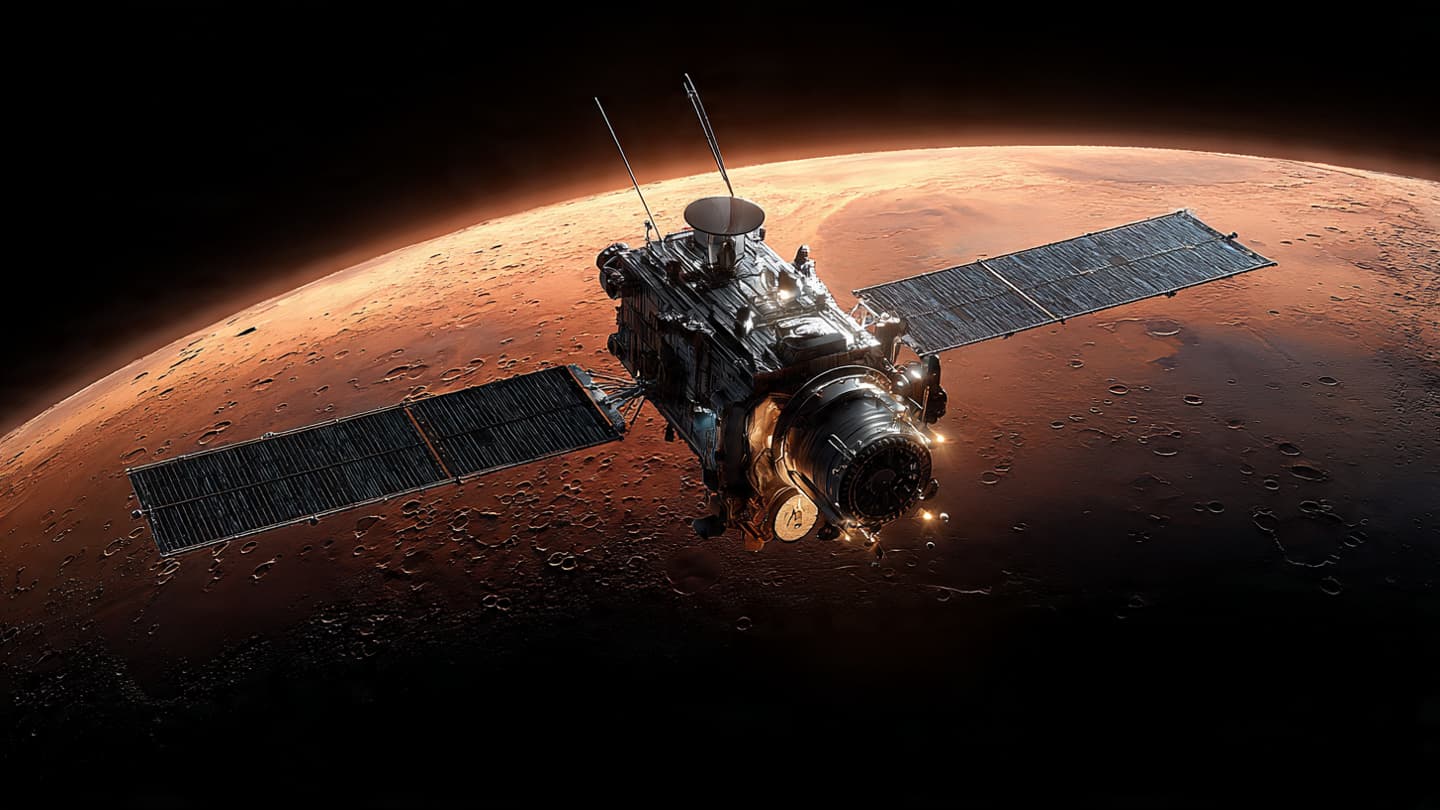
AI Image Disclaimer: Certain visual depictions connected to this article were produced using AI-supported image generation systems.
Sources: Reuters, Ars Technica, SpaceNews, The Washington Post
Published by Banx Network. This article is part of the Banx decentralized media programme, powered by the BXE token on the XRP Ledger.