
History often lingers longest between neighboring nations whose relationships have been shaped by decades of tension, memory, and unfinished political narratives. Between the United States and Cuba, even legal developments can carry echoes of older conflicts that continue shaping modern diplomacy. The recent indictment of former Cuban president Raúl Castro in the United States has therefore emerged not only as a legal matter, but also as a moment rich with geopolitical symbolism.
U.S. authorities announced charges against Raúl Castro involving allegations tied to murder and conspiracy. The indictment marks a highly unusual legal development given Castro’s longstanding position within the Cuban government and his historical role in the country’s political leadership following the Cuban Revolution.
Details surrounding the charges have drawn significant international attention, though legal experts note that the practical implications remain uncertain due to the challenges associated with international jurisdiction and diplomatic realities. Castro, now retired from formal leadership, remains an influential symbolic figure within Cuba’s political history.
Relations between Washington and Havana have fluctuated repeatedly across decades marked by sanctions, diplomatic freezes, and occasional periods of cautious engagement. Legal actions involving senior Cuban figures often carry broader political meaning because they intersect directly with longstanding ideological disputes between the two countries.
Cuban officials strongly criticized the indictment, portraying it as politically motivated and rejecting the legitimacy of U.S. legal authority over Cuban state matters. Government-aligned media in Cuba framed the charges as part of a continued pattern of hostility from Washington. The dispute has therefore quickly moved beyond legal interpretation into the realm of diplomatic messaging.
Human rights advocates and legal observers remain divided over the broader significance of the case. Some argue that international accountability mechanisms should apply regardless of political status, while others question whether legal proceedings tied to foreign political leaders risk becoming entangled in geopolitical conflict rather than impartial judicial processes.
Raúl Castro governed Cuba during a period of gradual economic reforms and limited diplomatic reopening with the United States before relations deteriorated again in later years. His political legacy remains deeply intertwined with the broader Castro era that shaped Cuba’s modern identity for more than half a century.
The indictment also highlights how unresolved historical tensions continue resurfacing across generations. Though the Cold War formally ended decades ago, many of its political and emotional contours remain visible in disputes involving Cuba and the United States. Legal announcements, in this context, often carry symbolic resonance beyond the courtroom itself.
Officials in both countries are expected to continue responding publicly as international observers assess the implications of the indictment. While immediate legal consequences remain uncertain, the case has already intensified attention surrounding U.S.-Cuba relations and the enduring legacy of political conflict between the two nations.
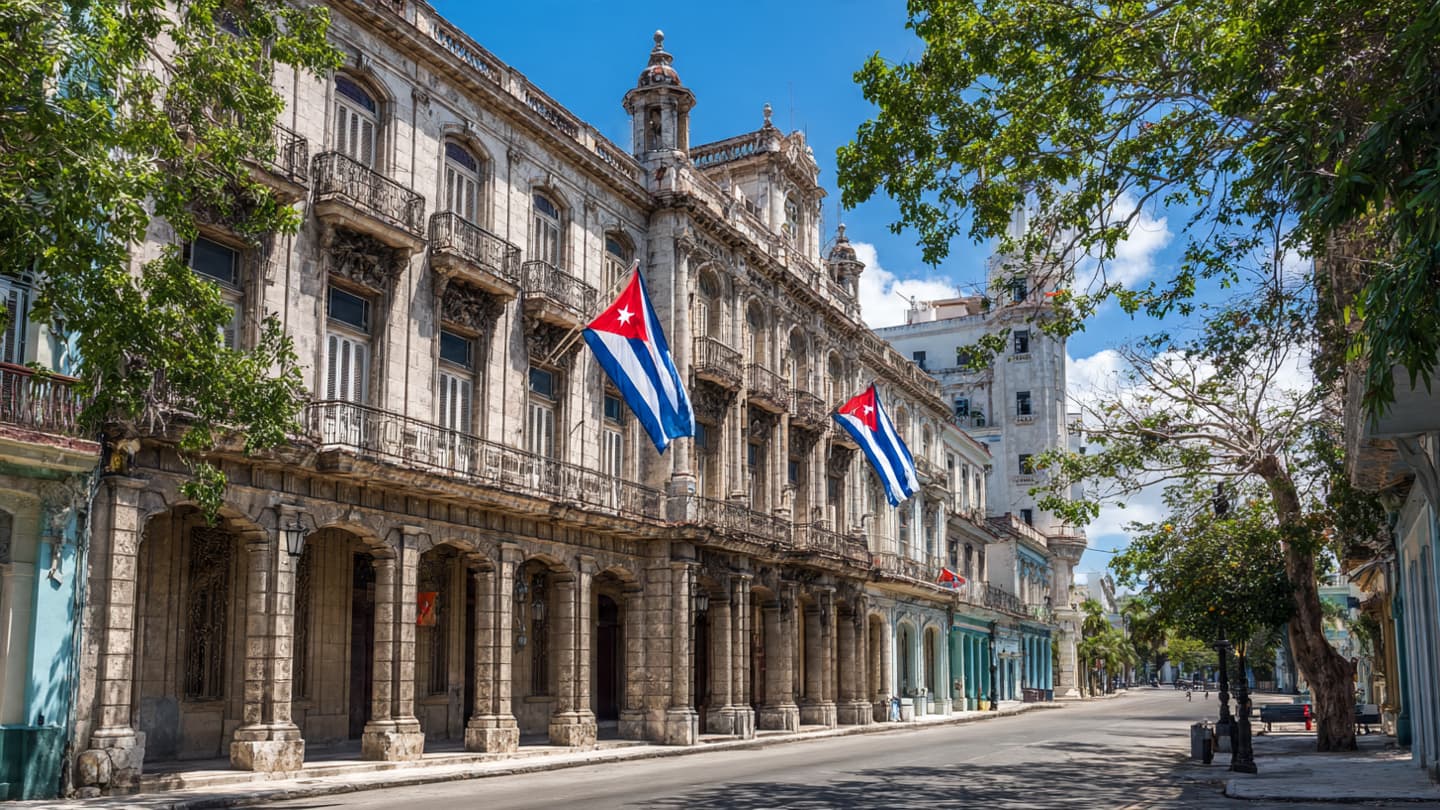
AI Image Disclaimer: Illustrative images connected to this article were created using AI-assisted visual generation tools.
Sources: Reuters, Associated Press, BBC News, The Miami Herald, CNN
Published by Banx Network. This article is part of the Banx decentralized media programme, powered by the BXE token on the XRP Ledger.
.jpg&w=3840&q=75 "Man Tapes Ears to His Head in Bizarre Attempt to Enter Poland With False Passport")

