
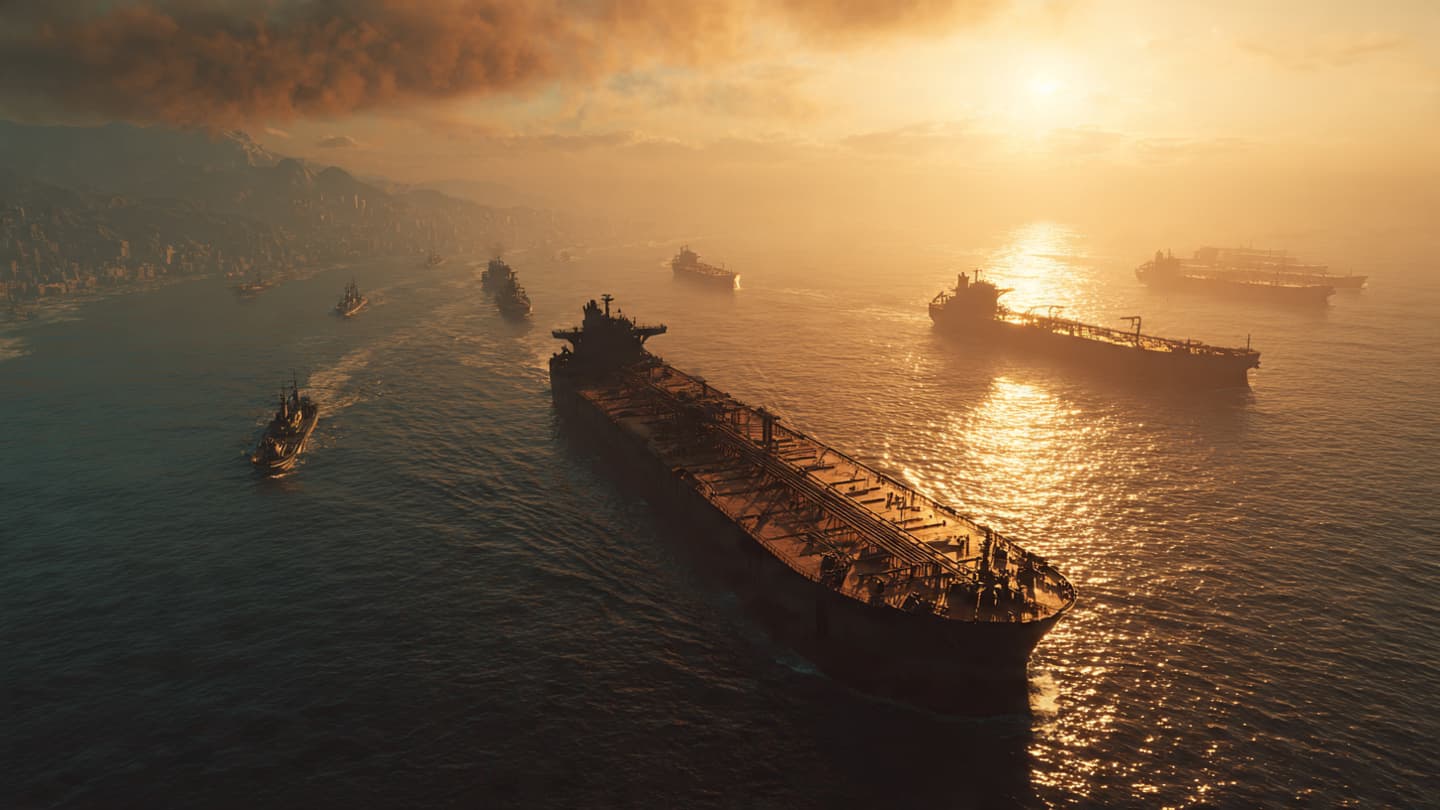
The waters of the Strait of Hormuz have long resembled a narrow corridor carrying not only ships, but also the anxieties of nations. In recent days, renewed Iranian maritime controls and increased inspections around the strategic passage have again drawn the attention of governments, markets, and shipping companies across the world. The movement of oil tankers through the region continues, yet beneath the surface lies a growing sense of caution, as if the sea itself has become quieter while waiting for diplomacy to find steadier footing.
Iranian authorities reportedly intensified patrol operations and inspections near the strait following renewed regional friction involving Western powers and neighboring Gulf states. Officials in Tehran described the measures as necessary for national security and maritime oversight, while several international observers warned that the situation could affect global energy stability if tensions continue to rise.
The Strait of Hormuz remains one of the most strategically important waterways in the world. Roughly one-fifth of global oil shipments pass through the narrow maritime route connecting the Persian Gulf to international markets. Any disruption, even temporary, often sends immediate signals through financial markets, fuel prices, and international trade networks.
Energy analysts noted that recent developments have already influenced market sentiment. Oil prices climbed modestly as traders reacted cautiously to the possibility of shipping delays or broader geopolitical complications. Shipping insurers and freight operators are also reportedly reassessing operational risks in the region, though major commercial routes remain active for now.
At the diplomatic level, multiple countries have urged restraint. Officials from Europe, Asia, and the Middle East continue to encourage dialogue between Tehran and Washington amid concerns that misunderstandings at sea could escalate unexpectedly. Pakistan and Oman have also been mentioned in reports as possible mediators seeking to maintain communication between opposing sides.
For many Gulf nations, the tension carries both economic and political implications. Countries whose economies rely heavily on stable energy exports understand that prolonged uncertainty can ripple outward into investment, tourism, and regional trade partnerships. In this environment, calm messaging has become almost as important as military positioning.
Meanwhile, ordinary citizens across the region are watching events with familiar unease. In coastal cities where fishing boats and cargo vessels move side by side, conversations about fuel prices and security have quietly returned to cafés and marketplaces. The uncertainty feels distant to some, yet deeply personal to others whose livelihoods depend on stable maritime activity.
Security experts continue to emphasize that while military movements attract headlines, diplomacy often unfolds more quietly behind closed doors. International negotiators are reportedly attempting to prevent the current atmosphere from hardening into a broader confrontation. The pace may appear slow, but history has shown that in moments of maritime tension, patience sometimes becomes a form of stability itself.
For now, commercial shipping continues through the Strait of Hormuz under heightened observation. Governments and energy markets remain attentive, aware that the narrow channel connecting the Gulf to the wider world carries consequences far beyond its physical size.
AI Image Disclaimer: Some visual illustrations accompanying this article may be generated using artificial intelligence for editorial presentation purposes.
Sources: Reuters, Associated Press, Al Jazeera, BBC News
Note: This article was published on BanxChange.com and is powered by the BXE Token on the XRP Ledger. For the latest articles and news, please visit BanxChange.com