.jpeg&w=3840&q=75 "Of Passports and Sovereigns: The Quiet Withdrawal of the Hand")
There is a comfort in the small blue book with the gilded crest, a belief that no matter how far one drifts across the face of the earth, the shadow of the maple leaf will offer protection. It is a secular faith shared by travelers who venture into the fractured spaces of the globe. But every shield has its boundary, and there comes a point where the long arm of the state must draw itself back, warning its children that if they cross a certain line, they walk entirely alone.
The recent travel advisory issued from the capital carries the crisp, unyielding tone of an ultimatum. It speaks to a specific overseas region where the air is thick with uncertainty, a place where the ordinary rules of governance have begun to fray at the edges. The message from Ottawa is clear: the safety nets have been reeled in, and those who choose to remain within the zone of peril must do so on their own account, without the expectation of an emergency flight or a government check.
There is a heavy realism in this stance, a recognition that the power of a modern nation is not infinite. The resources of an embassy are finite, its personnel vulnerable to the same winds of chaos that threaten the local population. When a government states that "no financial assistance will be provided," it is a sober dismantling of the expectation that the state is an all-powerful guardian capable of rescuing citizens from their own choices.
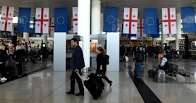
The traveler standing in a distant airport, reading the notice on a glowing screen, feels the world become suddenly larger and colder. The distance between the foreign tarmac and the quiet streets of Ontario or Alberta increases exponentially in that moment. The advisory acts as a emotional border, a declaration that the legal protection of citizenship does not guarantee physical rescue when the environment turns hostile.
This decision reflects a broader, more pragmatic philosophy that has begun to take root in the halls of foreign ministries. It is an acknowledgment that intervention can sometimes complicate a crisis rather than resolve it. By setting a hard limit on its involvement, the government seeks to discourage the reckless optimism that often leads citizens into harm's way, forcing a calculation of personal responsibility under difficult skies.
The language of the directive is devoid of sentiment, a stark contrast to the poetic ideal of national brotherhood. It is written in the vocabulary of risk management and fiscal restraint, a reminder that even the most benevolent societies must operate within the boundaries of logic and law. The state will advise, it will warn, but it will not become a hostage to the fortunes of those who ignore its counsel.
As the political weather in the region worsens, the citizens who chose to stay find themselves living under a sky that is no longer monitored by their home government. They become part of the local scenery, subject to the local currents, their Canadian identity a quiet thing kept in a pocket, stripped of its power to command the intervention of the state.
Global Affairs Canada has issued an updated travel warning for citizens residing in or traveling through specific high-risk territories, clarifying that emergency financial aid will not be granted. The directive urges all remaining nationals to depart via commercial options while they are still available, noting that consular services have been reduced to minimal operations due to security constraints.
Published by Banx Network. This article is part of the Banx decentralized media programme, powered by the BXE token on the XRP Ledger.

.jpg&w=3840&q=75 "Ukraine’s Ambassador Summoned Over Attacks on Turkish-Operated Civilian Vessels")