The search for worlds beyond our solar system often feels like opening doors into entirely unfamiliar landscapes. Each newly discovered planet expands the imagination, reminding us that nature is capable of creating environments far different from anything found on Earth. Recent observations from the James Webb Space Telescope have added another remarkable example to that growing collection.
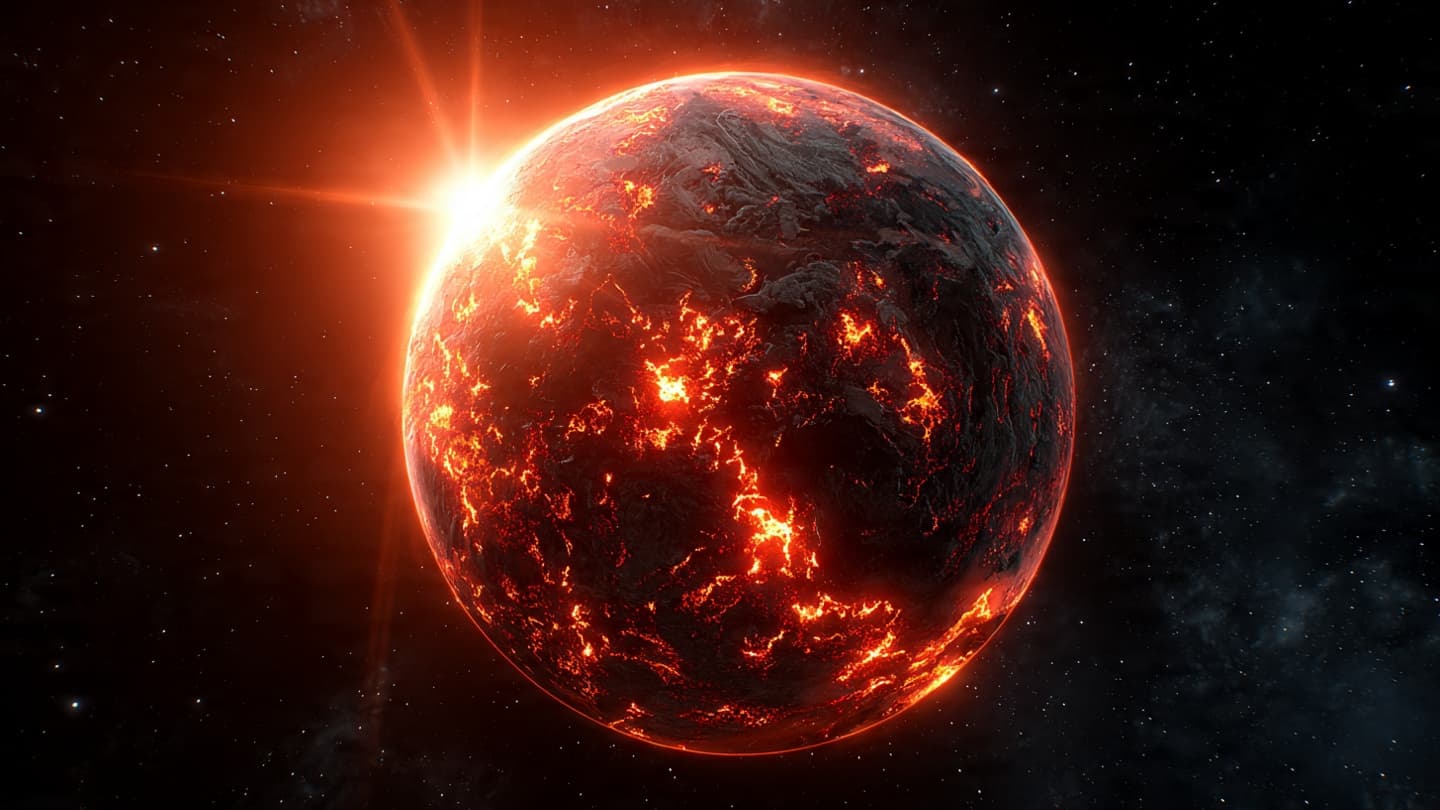
Astronomers report evidence of a class of exoplanets that appear to possess vast global oceans of molten rock. These worlds, shaped by extreme temperatures, challenge traditional assumptions about planetary environments and formation processes.
Unlike Earth, where liquid water defines oceans and supports life, these planets are believed to host immense seas of magma. Their surfaces may remain partially or entirely molten due to their close proximity to their parent stars and the intense heat they receive.
The discovery was made possible through Webb's advanced infrared instruments. By analyzing the light passing through or emitted by distant planets, scientists can infer details about atmospheric composition, temperature, and surface conditions.
Researchers found characteristics suggesting that some planets possess deep layers of molten material extending across substantial portions of their surfaces. Such conditions create environments unlike anything currently present in our solar system.
These observations are valuable because they offer clues about planetary evolution. Scientists believe that rocky planets often experience molten phases during their formation, making these distant worlds potential windows into processes that shaped young planets billions of years ago.
The findings also highlight the growing power of modern astronomy. Only a few decades ago, detecting planets around distant stars was itself a major challenge. Today, researchers can begin studying the characteristics of their atmospheres and surfaces in remarkable detail.
While these magma worlds are unlikely to resemble habitable environments, they provide important opportunities to test theories about geology, planetary physics, and atmospheric development under extreme conditions.
As Webb continues its mission, astronomers expect many more discoveries that broaden understanding of planetary diversity. Each new world reinforces a simple lesson: the universe is far more varied and imaginative than human expectations alone could predict.
AI Image Disclaimer: The visuals accompanying this article are AI-generated artistic interpretations based on scientific findings and are not actual telescope images.
Source Verification Check: James Webb Space Telescope researchers, Discover Magazine, planetary science publications
Published by Banx Network. This article is part of the Banx decentralized media programme, powered by the BXE token on the XRP Ledger.