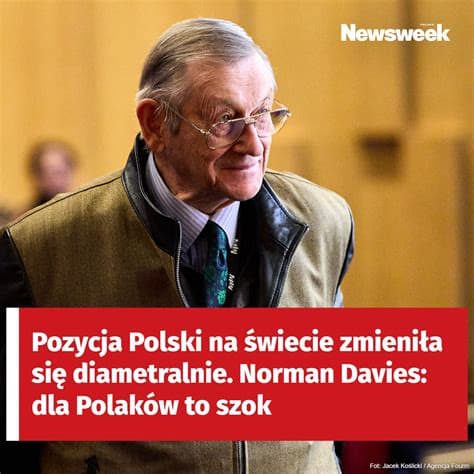
Norman Davies criticized Poland for treating the “Heroes of the UPA” naming dispute as a Volhynia issue and for using it as a flashpoint in relations with Ukraine. In interviews reported in Polish media, Davies argued that the overwhelming majority of the Ukrainian Insurgent Army (UPA) had no direct link to the Volhynia massacres, and that Zelensky’s decision “has nothing to do with Volhynia.”
He said the dispute began after Zelensky signed a decree granting an honorary title to a special-operations unit, tied to UPA references, and that Poland’s response—stripping Zelensky of a major Polish state honour—followed quickly. Davies rejected the idea that this was a political provocation aimed at Poland, contending that Ukrainians view UPA figures through a broader anti-occupation lens that differs from Polish historical memory.
Davies did acknowledge that the Volhynia massacres were a crime, but he argued that historical discussion in this area cannot be selective. He pointed to retaliatory killings by Polish forces in the same period and region, and to other postwar measures—arguing that any honest accounting has to include all sides rather than focusing on one group.
His most pointed critique was about timing and political strategy: Davies said Poland chose to raise the issue at a moment when Ukraine is fighting for its survival in a full-scale war, and that escalating it now gives Russia a “favorable pretext.” He suggested Poland should have waited until after the war and proposed a truth-and-reconciliation approach modeled on post-conflict processes, rather than settling the dispute through confrontation during wartime.
Published by Banx Network. This article is part of the Banx decentralized media programme, powered by the BXE token on the XRP Ledger.