
Key Highlights
- Omar Yaghi has accepted a full-time position at Tsinghua University in Beijing.
- He will lead a new institute focused on AI-assisted materials discovery.
- Yaghi's move reflects growing concerns over US science funding and support.
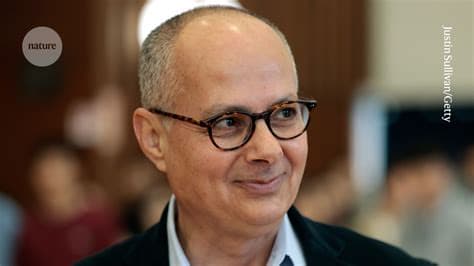
Omar Yaghi, a distinguished chemist and Nobel Prize laureate, has made headlines with his recent decision to leave the United States for a full-time role at Tsinghua University in Beijing, China. Yaghi will direct a new institute dedicated to artificial intelligence-assisted materials discovery, a move that underscores the increasing intersection of AI technology and scientific research. This transition was first reported by the South China Morning Post and was formally announced during a ceremony on July 3.
Previously, Yaghi was appointed an honorary professor at Tsinghua University in 2022, but his new full-time position marks a significant commitment to advancing research in materials science through AI. In a prior interview with Scientific American, Yaghi expressed concerns about the current state of scientific research in the United States, describing it as “not so encouraging.” He attributed this sentiment to recent cuts in grant funding and diminishing support from federal science agencies, urging fellow researchers to embrace AI as a crucial element for survival in the evolving landscape of advanced research.
Yaghi is renowned for his pioneering work in developing metal-organic frameworks (MOFs), which are highly porous materials with extensive internal surface areas. These materials have a wide range of applications, including gas storage and catalysis in chemical reactions. His contributions have enabled chemists to create thousands of MOF variants, significantly impacting the field of materials science. The recognition he received from the Nobel Committee not only highlights his scientific achievements but also reflects the competitive nature of attracting top-tier scientific talent globally.
The decision by Yaghi to relocate to China is emblematic of a broader trend where researchers are increasingly drawn to countries that offer robust funding and institutional support for scientific endeavors. As the landscape of global research shifts, the implications of Yaghi's move extend beyond his personal career; they signal a potential brain drain from the United States, particularly in fields that are becoming increasingly reliant on AI technologies.
In conclusion, Yaghi's transition to Tsinghua University represents a significant moment in the ongoing dialogue about the future of scientific research and the role of funding in shaping the careers of leading scientists. As institutions worldwide vie for talent, the integration of AI into research methodologies will likely play a pivotal role in determining the direction of scientific innovation in the years to come.
Published by Banx Network. This article is part of the Banx decentralized media programme, powered by the BXE token on the XRP Ledger.



