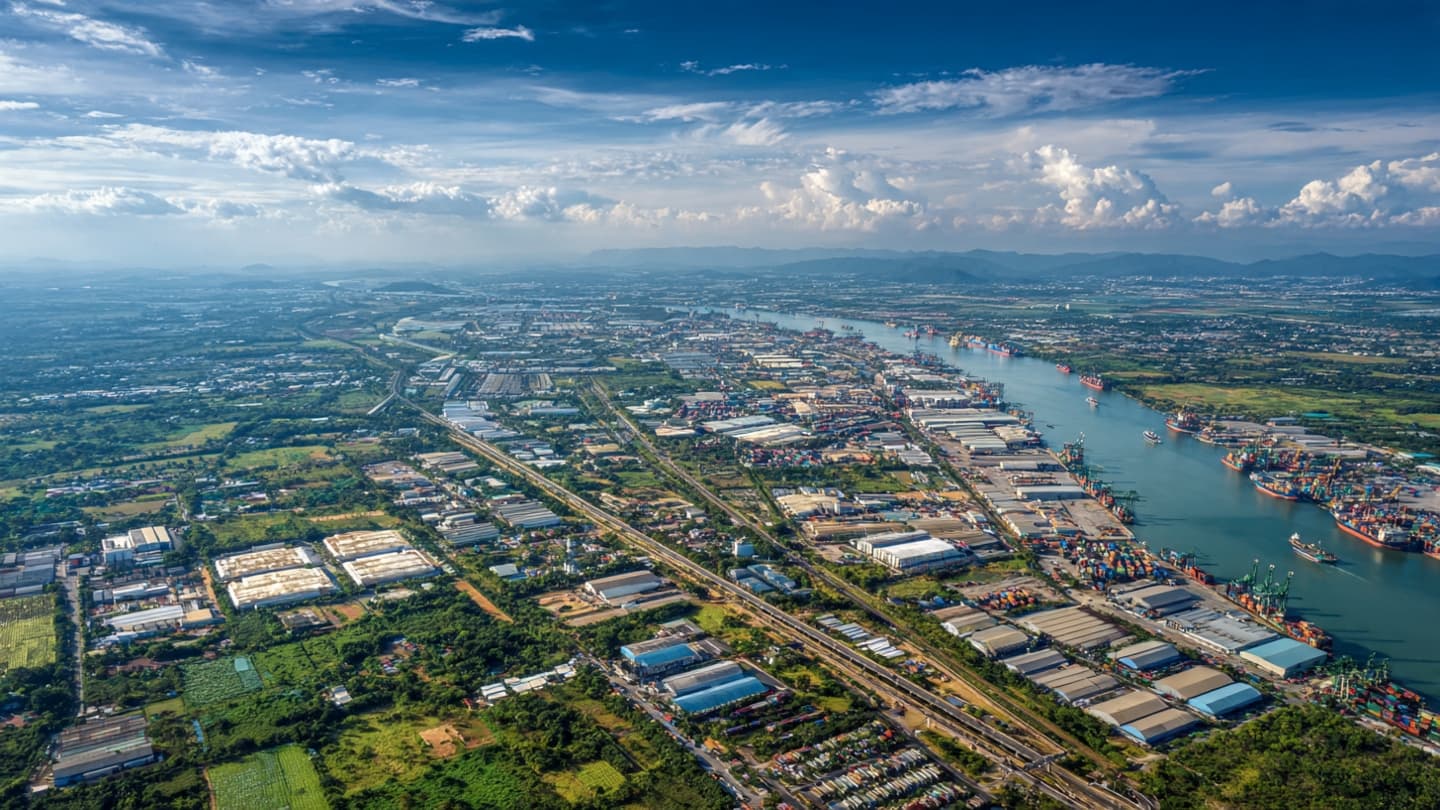
Large infrastructure projects often begin long before the first construction equipment arrives on site. They start as ideas sketched across maps, connecting places that may seem distant today but could become closely linked tomorrow. Thailand's renewed commitment to a major economic corridor project reflects such a vision, one centered on trade, logistics, and regional connectivity.
The proposed initiative, valued at approximately US$30 billion, seeks to strengthen transportation and commercial links between key coastal regions. Thai officials view the project as a strategic investment designed to improve competitiveness and support long-term economic growth.
At the heart of the proposal is the ambition to create more efficient routes for goods moving between international markets. Improved logistics infrastructure could reduce transportation times and increase the attractiveness of Thailand as a regional trade hub.
Supporters of the project argue that enhanced connectivity would encourage foreign investment, stimulate industrial development, and create employment opportunities across multiple sectors. Infrastructure spending has long been viewed as an important driver of economic activity.
The initiative also aligns with broader regional trends. Across Southeast Asia, governments are investing heavily in transportation networks, ports, rail systems, and logistics facilities to accommodate growing trade volumes and evolving supply chains.
Economic analysts note that global manufacturing patterns continue to shift. Companies increasingly seek resilient and diversified supply chains, creating opportunities for countries capable of providing efficient transportation and industrial infrastructure.
Environmental considerations have also entered the discussion. Policymakers and stakeholders are examining how large-scale construction projects can balance economic objectives with sustainability goals and community interests.
The project's future will depend on financing arrangements, regulatory approvals, and implementation timelines. Large infrastructure initiatives typically require extensive coordination among government agencies, investors, and private-sector partners.
For Thailand, the renewed economic corridor proposal represents more than a transportation project. It reflects a broader effort to position the country within evolving regional and global trade networks while supporting future economic development.
AI Image Disclaimer: This article contains AI-generated illustrative visuals intended solely for contextual representation.
Sources (Verification Check): Reuters, Nikkei Asia, Bangkok Post, Bloomberg
Published by Banx Network. This article is part of the Banx decentralized media programme, powered by the BXE token on the XRP Ledger.