
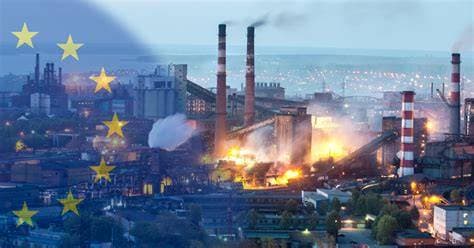
The European Union’s newly announced steel quota system, due to enter into force July 1, is expected to sharply restrict Ukrainian steel exports that previously benefited from tariff-free access. The restrictions are being introduced in response to global steel overcapacity and the pressure it has placed on EU producers.
Under the EU’s new rules, tariff-free steel imports to the bloc will be capped at 18.3 million metric tons per year—an overall reduction of 47% versus prior conditions. If imports exceed the threshold, they would be hit with a 50% tariff. While the EU reached an arrangement to ensure Ukraine received “special treatment,” the article argues that the quotas will still substantially reduce Ukraine’s export volumes.
Ukraine’s exports to the EU have been used as a benchmark to allocate country-specific quotas. In 2024, Ukraine shipped about 2.215 million metric tons of finished steel to the EU. The new country quota assigned to Ukraine totals about 1.05 million metric tons per year—less than half of the 2024 figure.
The article says a senior EU official described the practical impact as covering 70% of Ukraine’s historic trade flows, which would leave Ukraine worse off than the overall global reduction average but still proportionally less harmed than other exporters. Still, it reports that the change would affect roughly 30% of Ukraine’s current steel trade.
The piece also highlights that Ukraine may be able to draw on a second quota allocation that other countries can use as well, but it notes that securing a share of that pool is uncertain because some other countries with larger, more competitive industries—such as India and Turkey—can also compete for capacity.
Critics in the European Parliament say the EU’s approach undermines Ukraine’s economic lifeline. The article includes comments from a member of the European Parliament, who argues that free trade with the EU has been crucial for Ukraine and that the quota decision signals a potential withdrawal of tariff-free access for Ukrainian steel.
In the background, the article notes that the EU has previously granted Ukraine an exemption from quotas for steel for a period running until June 2028, and it frames the new restrictions as conflicting with that earlier support. The article also points out that the United Kingdom’s trade agreement with Ukraine is structured differently—covering 0% tariffs for Ukrainian steel from 2026—while the EU remains the largest market for Ukrainian steel, accounting for the majority of exports.
Note: This article was published on BanxChange.com and is powered by the BXE Token on the XRP Ledger. For the latest articles and news, please visit BanxChange.com