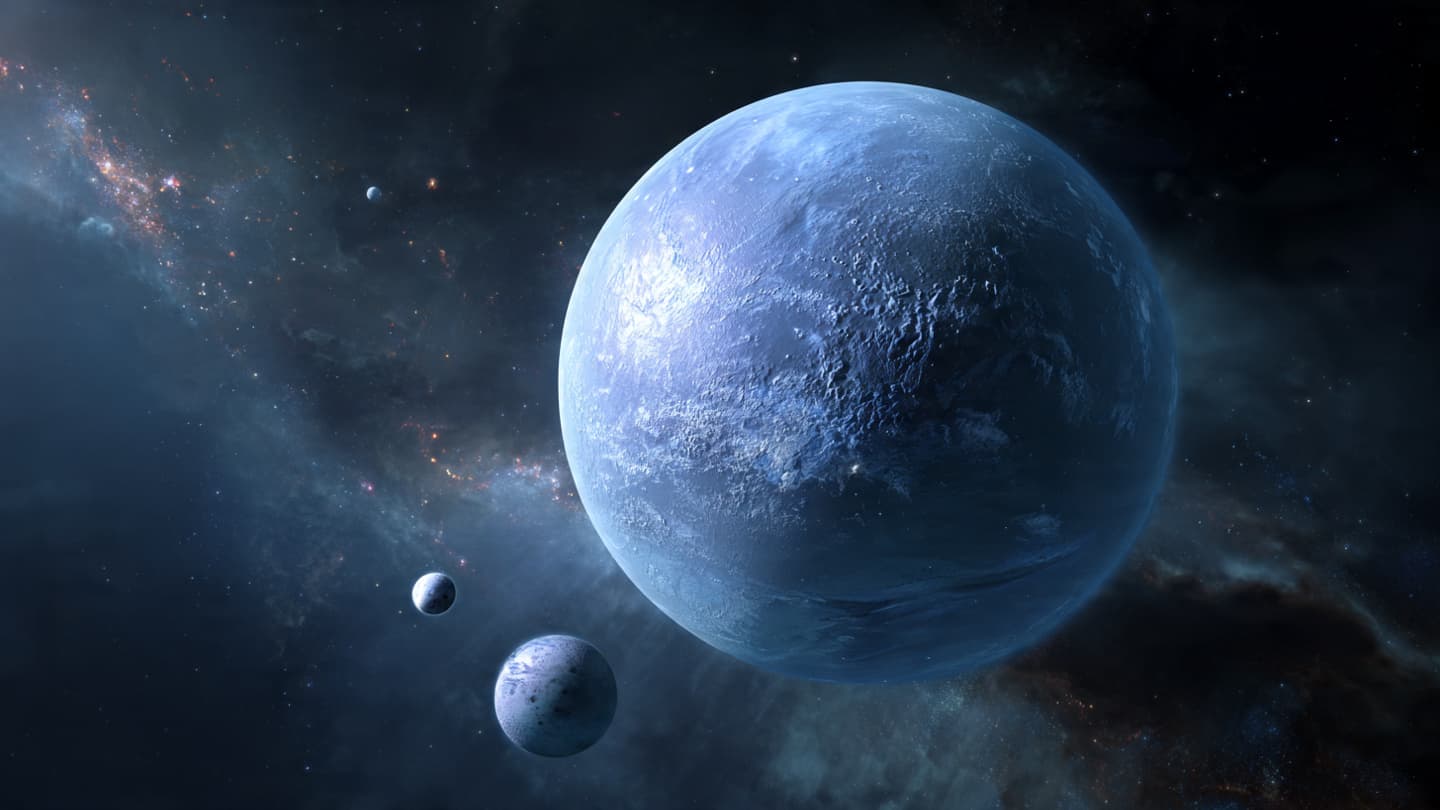
Far beyond the warmth of the inner planets, Neptune moves through the outer Solar System surrounded by icy darkness and a collection of unusual moons. Among them is Nereid, a distant and irregular satellite whose strange orbit has puzzled astronomers for decades. New research now suggests that Nereid may be one of the few surviving witnesses to a violent chapter in Neptune’s ancient history — the arrival of its massive moon Triton.
Triton is unlike many large moons in the Solar System because it orbits Neptune in the opposite direction of the planet’s rotation, a pattern known as retrograde motion. Scientists have long believed Triton was not formed alongside Neptune but was instead captured by the planet’s gravity billions of years ago, likely originating from the Kuiper Belt beyond Neptune.
Researchers say Triton’s capture would have dramatically disrupted Neptune’s original moon system. As the newly captured moon settled into orbit, its gravitational influence may have destabilized or destroyed many smaller satellites that once surrounded the planet. In that turbulent environment, Nereid may have survived while other moons disappeared.
Nereid itself follows one of the most eccentric orbits known among major moons in the Solar System. At some points it travels relatively close to Neptune, while at others it drifts far away. Scientists believe this unusual orbit may preserve evidence of past gravitational disturbances linked to Triton’s arrival.
Recent computer simulations and orbital studies have strengthened the possibility that Nereid endured the chaos rather than forming afterward. Researchers suggest the moon’s survival may provide important clues about how planetary capture events reshape satellite systems over time. Such processes are thought to have played significant roles throughout the early Solar System.
The study also contributes to broader understanding of planetary evolution. Giant planets such as Neptune likely experienced periods of migration and instability during the Solar System’s formation. Captured moons, shifting orbits, and gravitational interactions may have altered the architecture of planetary systems in ways scientists are still working to reconstruct.
Observing Neptune and its moons remains difficult because of their extreme distance from Earth. Most detailed images of the system still come from NASA’s Voyager 2 flyby in 1989, although modern telescopes continue collecting additional data from Earth and orbiting observatories. Future missions to the outer planets could provide far more detailed information about Triton and Nereid.
Astronomers are especially interested in Triton because evidence suggests the moon may possess a subsurface ocean beneath its icy crust. Meanwhile, Nereid’s survival story could help explain how smaller moons endure periods of gravitational upheaval in planetary systems.
For now, scientists say Nereid remains one of Neptune’s most intriguing mysteries — a distant moon possibly carrying the orbital scars of a dramatic encounter billions of years ago.
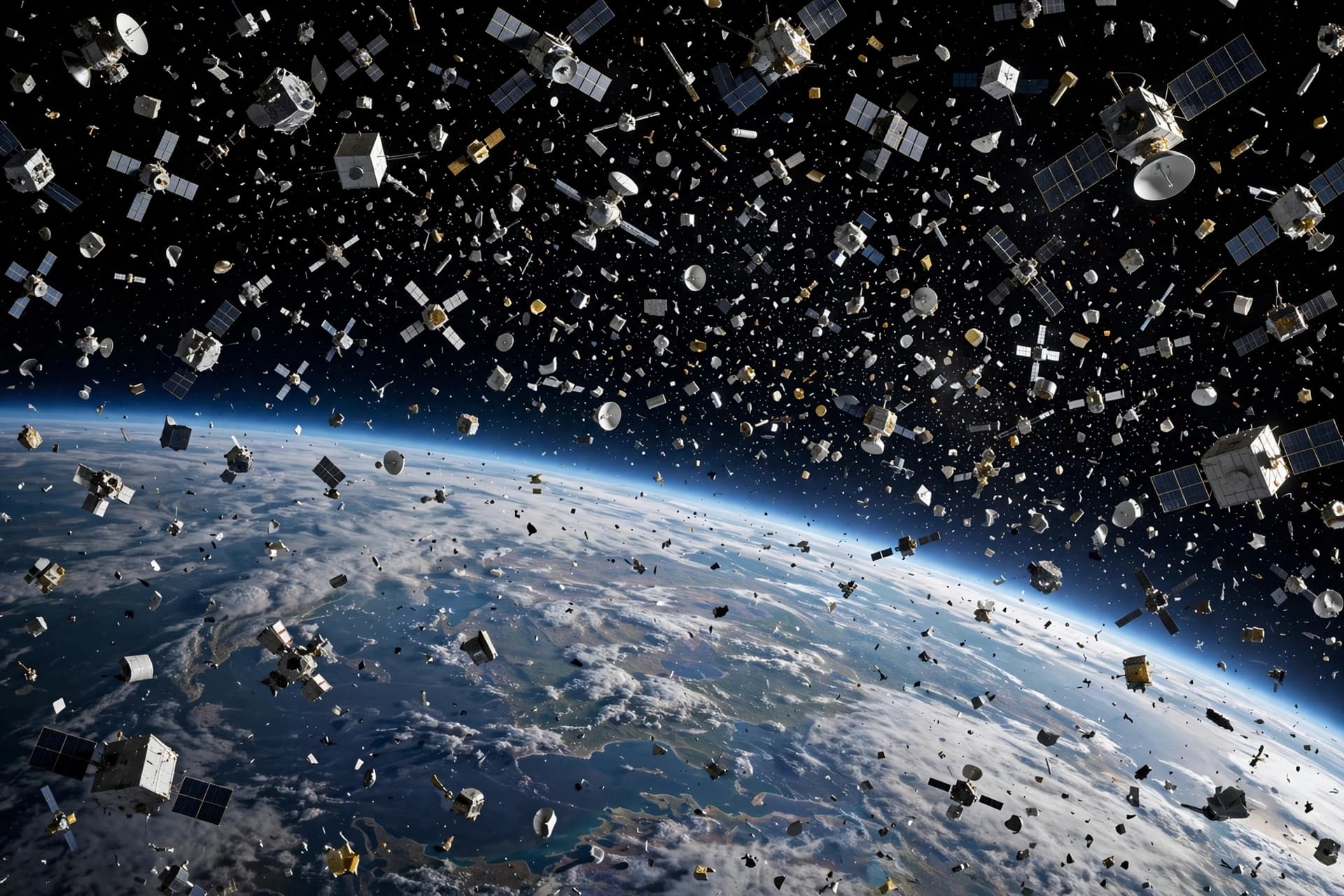
AI Image Disclaimer: The space illustrations used with this article were generated using AI-assisted astronomical visualization techniques.
Sources: NASA, Space.com, New Scientist, Nature Astronomy, Sky & Telescope
Published by Banx Network. This article is part of the Banx decentralized media programme, powered by the BXE token on the XRP Ledger.