In the heart of the Milky Way, where light, dust, and gravity weave together in extraordinary ways, astronomers continue to uncover traces of cosmic events that occurred long before human civilization emerged. A recent finding suggests that scientists may have identified a supernova remnant near the galaxy's central black hole, opening a new window into one of the most dynamic regions in space.
Body:
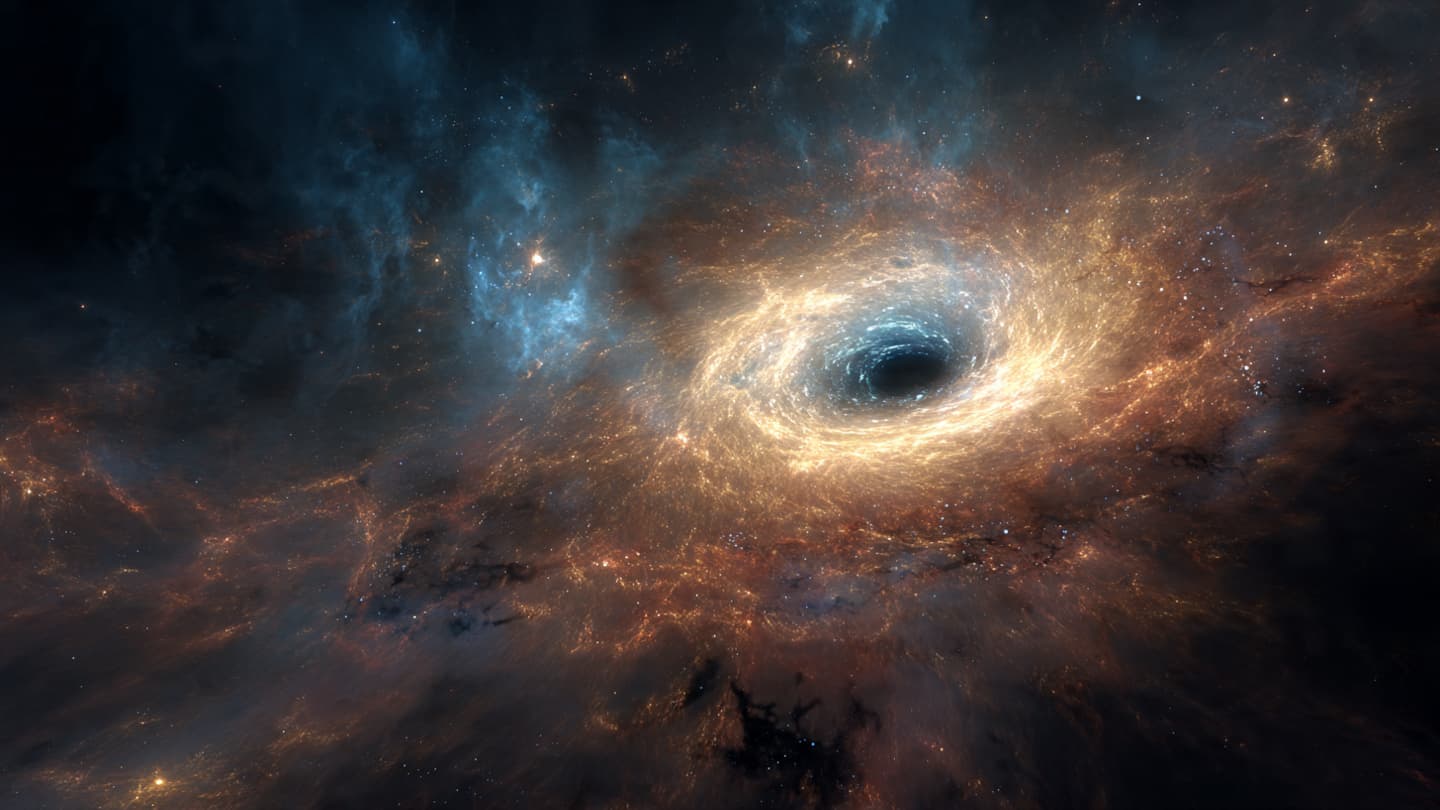
The center of the Milky Way is dominated by the supermassive black hole known as . Surrounding it is an environment crowded with stars, gas clouds, magnetic fields, and energetic phenomena that make observations especially challenging.
Using modern astronomical instruments, researchers detected evidence consistent with the remains of a supernova explosion. Supernovae occur when certain stars reach the end of their lives and release enormous amounts of energy, scattering material into surrounding space.
Finding such a remnant close to the galactic center is particularly significant. The region's extreme conditions can alter or obscure the signatures astronomers typically use to identify ancient stellar explosions. As a result, discoveries there often require careful analysis and multiple observations.
The remnant may provide valuable clues about how stars form, evolve, and die near a supermassive black hole. Scientists have long sought to understand whether the powerful gravitational environment influences stellar populations differently than in other parts of the galaxy.
Researchers are also interested in how supernova explosions affect their surroundings. The shock waves generated by these events can compress gas clouds, potentially triggering new generations of stars. In this way, stellar death can contribute to future stellar birth.
Observations of the galactic center continue to improve thanks to advances in radio astronomy, infrared imaging, and high-energy telescopes. These technologies allow scientists to peer through dense clouds of dust that block visible light from reaching Earth.
Although additional studies are needed to confirm the object's nature, the evidence has generated excitement among astronomers. Each discovery in the galactic center helps refine models of how galaxies evolve over time.
Closing:
If confirmed, the newly identified remnant would add another important piece to the Milky Way's complex history. Near the galaxy's central black hole, where cosmic forces operate on a grand scale, even the echoes of long-dead stars continue to shape scientific understanding.
AI Image Disclaimer: Some accompanying visuals may be AI-generated interpretations created to illustrate astronomical concepts described in this article.
Source Verification Check: NASA, ESA, Space.com, Live Science, Astrophysical Journal, New Scientist
Published by Banx Network. This article is part of the Banx decentralized media programme, powered by the BXE token on the XRP Ledger.