
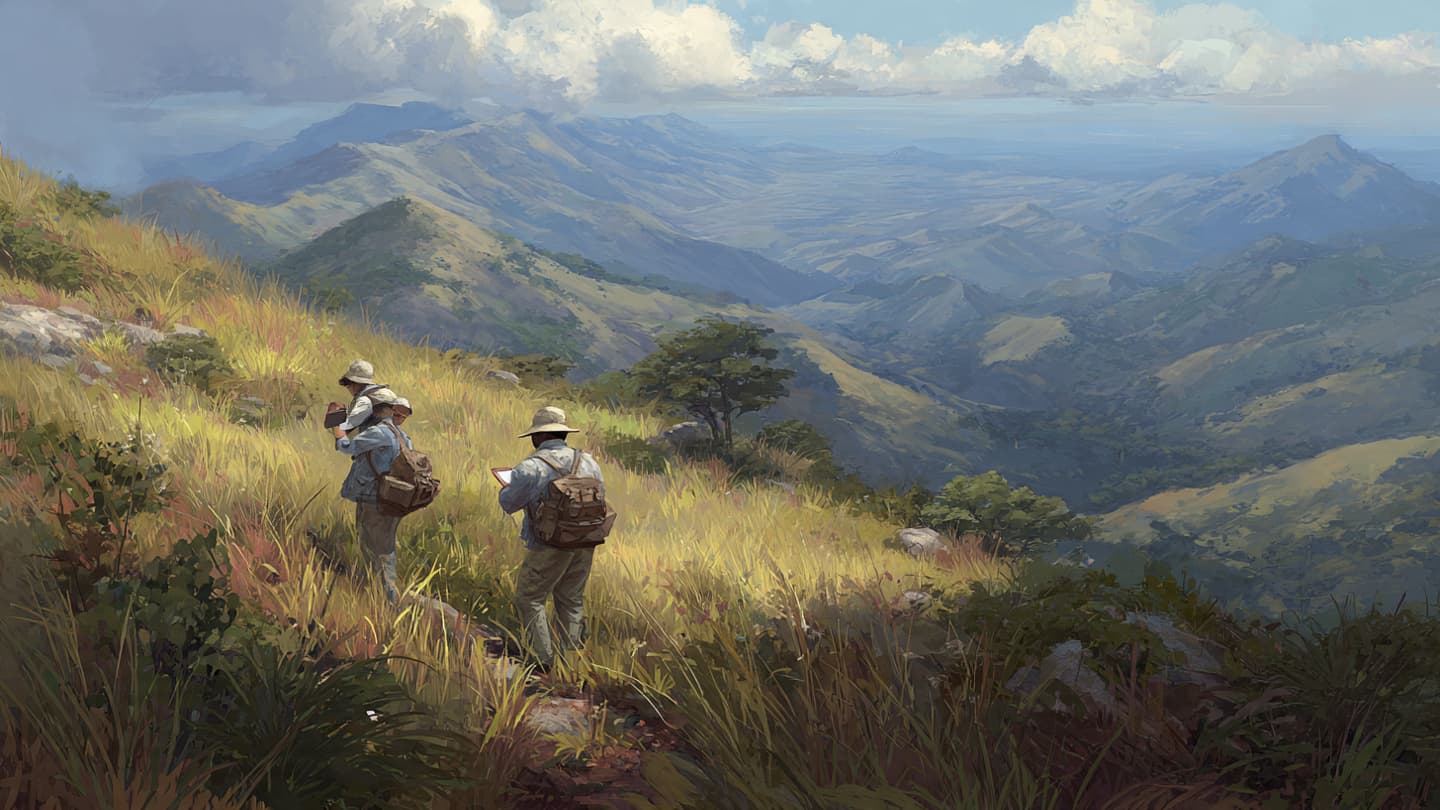
Some of the world's most remarkable discoveries occur not in crowded cities or advanced laboratories, but in remote landscapes where nature continues to keep its secrets. In Angola, a scientific expedition has revealed just how much remains to be understood about life on Earth through the discovery of dozens of previously undocumented species.
Researchers working in isolated highland regions reported finding a variety of new organisms, including insects, arachnids, and other forms of wildlife. The discoveries emerged from detailed field studies conducted in areas that have received relatively limited scientific attention.
The findings underscore the importance of biodiversity research. Even in the twenty-first century, scientists continue to identify species that have never been formally recorded, highlighting the vast complexity of natural ecosystems.
Among the discoveries were several visually distinctive creatures that attracted particular interest from researchers. Some species displayed unusual coloration, unique physical adaptations, or characteristics rarely observed elsewhere.
Scientists emphasize that documenting new species represents more than an academic exercise. Accurate identification helps researchers better understand ecosystem dynamics, evolutionary processes, and environmental changes occurring across different regions.
Angola's highland ecosystems are considered especially valuable due to their relative isolation. Such environments can serve as natural laboratories where species evolve under unique ecological conditions over long periods.
The discoveries may also contribute to future conservation efforts. Understanding what species exist within a region is often a critical first step toward protecting habitats and maintaining ecological balance.
Researchers note that many areas of the world remain insufficiently explored from a biological perspective. Advances in technology and international collaboration continue to expand opportunities for field research in remote locations.
The expedition's findings offer a reminder that scientific discovery remains an ongoing journey. Even today, nature continues to reveal new chapters of its story to those willing to explore its less-traveled paths.
AI Image Disclaimer: This article includes AI-generated illustrative imagery designed to represent scientific exploration and biodiversity research.
Sources (Verification Check) AnewZ Reuters Scientific American National Geographic
Note: This article was published on BanxChange.com and is powered by the BXE Token on the XRP Ledger. For the latest articles and news, please visit BanxChange.com