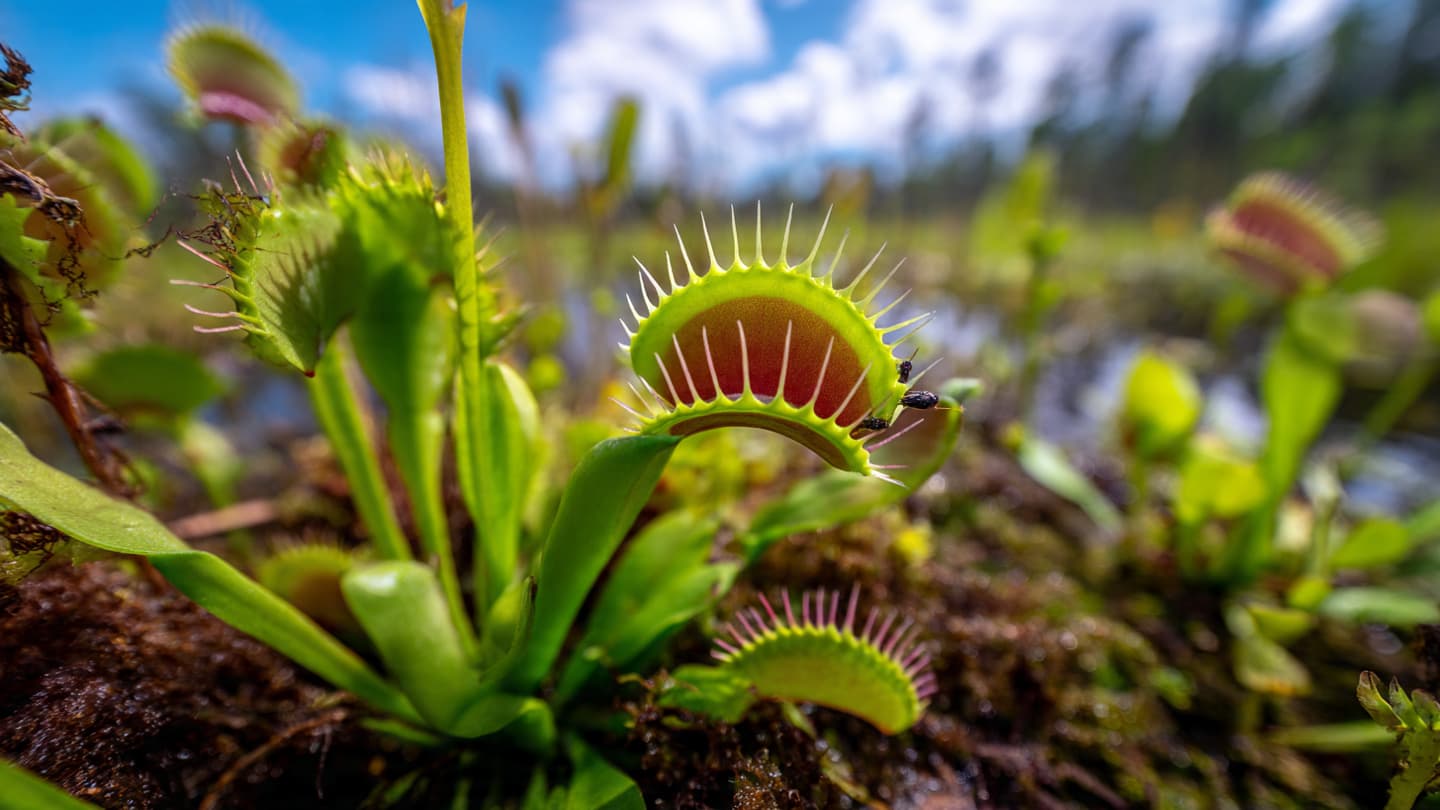
In the natural world, some of the most remarkable engineering achievements emerge without blueprints or machines. Among them is the Venus flytrap, a plant whose swift closing motion has fascinated scientists and observers for generations. New research has shed light on the mechanism behind this rapid snap, offering a deeper understanding of one of nature's most famous botanical adaptations.
The Venus flytrap captures prey using specialized leaves that close when sensitive trigger hairs are stimulated. The movement occurs with surprising speed, especially for a plant, allowing it to trap insects before they can escape.
For many years, researchers have sought to understand exactly how the plant converts a gentle touch into such a dramatic mechanical response. The latest study reveals additional details about the physical and biological processes involved.
Scientists found that the rapid closure results from a sophisticated combination of structural tension, cellular signaling, and energy storage within the plant's tissues. Rather than relying on muscle-like mechanisms, the flytrap uses changes in tissue configuration to generate movement.
When trigger hairs are activated, electrical signals travel through the plant. These signals initiate changes within cells that ultimately release stored mechanical energy, causing the leaves to snap shut.
Researchers describe the process as an elegant solution shaped through evolution. The mechanism allows the plant to react quickly while minimizing unnecessary energy expenditure.
Understanding the flytrap's behavior may also have applications beyond botany. Engineers often study biological systems to inspire designs in robotics, materials science, and adaptive technologies.
The findings contribute to a broader effort to understand how plants perceive and respond to their environments. Although plants move differently from animals, they possess complex systems for sensing and reacting to external stimuli.
The study provides new insight into a plant that has long captured public imagination. By revealing more about the Venus flytrap's remarkable snap, researchers continue to uncover the sophisticated biology hidden within seemingly simple organisms.
AI Image Disclaimer: Some images accompanying this article may be AI-generated renderings inspired by botanical research and plant physiology.
Sources Verification Check:
Nature Plants Science Current Biology Phys.org New Scientist
Published by Banx Network. This article is part of the Banx decentralized media programme, powered by the BXE token on the XRP Ledger.