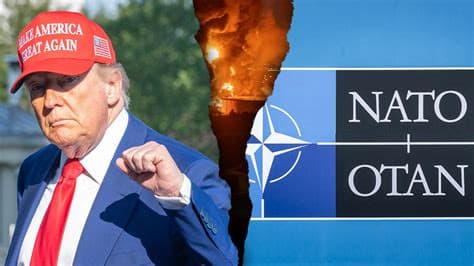
NATO leaders are scheduled to gather in Ankara next week, with Europeans seeking to reduce tensions with U.S. President Donald Trump tied to the Iran war and Greenland, and to demonstrate that they are doing more to protect Europe as the U.S. scales back parts of its engagement with the alliance.
NATO Secretary General Mark Rutte said the summit—set for Tuesday and Wednesday—will show Europeans are keeping pledges to increase defence spending to deter Russia, including through major arms deals expected to be signed. Leaders are also expected to reaffirm continued funding for Ukraine’s war against Russia, and Ukrainian President Volodymyr Zelenskiy is expected to attend a dinner hosted by Turkish President Tayyip Erdogan, who is also set to hold bilateral talks with Trump.
European officials are hoping Erdogan and Rutte’s relationships with Trump will help keep the summit smooth, but they said there is no guarantee because of lingering bitterness in transatlantic relations following the U.S. role in the Iran war and Trump’s frequent criticism of NATO.
Trump has repeatedly complained that the U.S. pays more to protect NATO members without receiving enough in return, including by posting on Truth Social that the arrangement is “ridiculous” and not reciprocal. Rutte and other NATO leaders have said NATO’s security contributions also benefit the United States, and they argue that Europeans are heeding Trump’s long-standing calls to spend more on defence.
Rutte has emphasized that the summit’s focus will be turning additional spending into combat-ready capabilities and scaling up defence industries. He also cited figures showing European NATO members and Canada increased defence spending substantially in 2025 compared with the previous year.
Officials say they are trying to replicate a smoother moment from a prior NATO summit in The Hague, when Trump reaffirmed U.S. commitment to the alliance’s Article 5 mutual defence principle and praised leaders. But the past year has strained ties: Trump has threatened to take Greenland from Denmark, launched a war against Iran that disrupted global markets without consulting European allies, and announced troop withdrawals from Europe and cuts to forces assigned to NATO defence plans, including capabilities such as an aircraft carrier, aircraft for refueling, fighter jets, and drones—along with a review of U.S. military presence in Europe.
An unnamed European diplomat described the alliance as “alive and kicking but a bit bruised.”
European officials also worry the Iran war could dominate the agenda at Ankara, especially if conflict dynamics change or if Trump directs anger at Europeans over their assistance to U.S. military operations. NATO officials said most allies still honored commitments to allow the U.S. to use their airspace and bases, despite widespread unpopularity of the war in Europe and the fact that many European leaders opposed it.
The war has also damaged personal ties between Trump and several European leaders, raising the possibility that those strains could resurface during the summit. A senior NATO diplomat said they are optimistic this will not happen because leaders understand what is at stake, and noted that Rutte can act as a mediator if tensions arise.
Published by Banx Network. This article is part of the Banx decentralized media programme, powered by the BXE token on the XRP Ledger.