Space missions, much like long journeys at sea, occasionally require unexpected interventions to extend their voyage. NASA is now preparing efforts to preserve one of its most productive astronomical observatories as the Swift satellite gradually loses altitude.
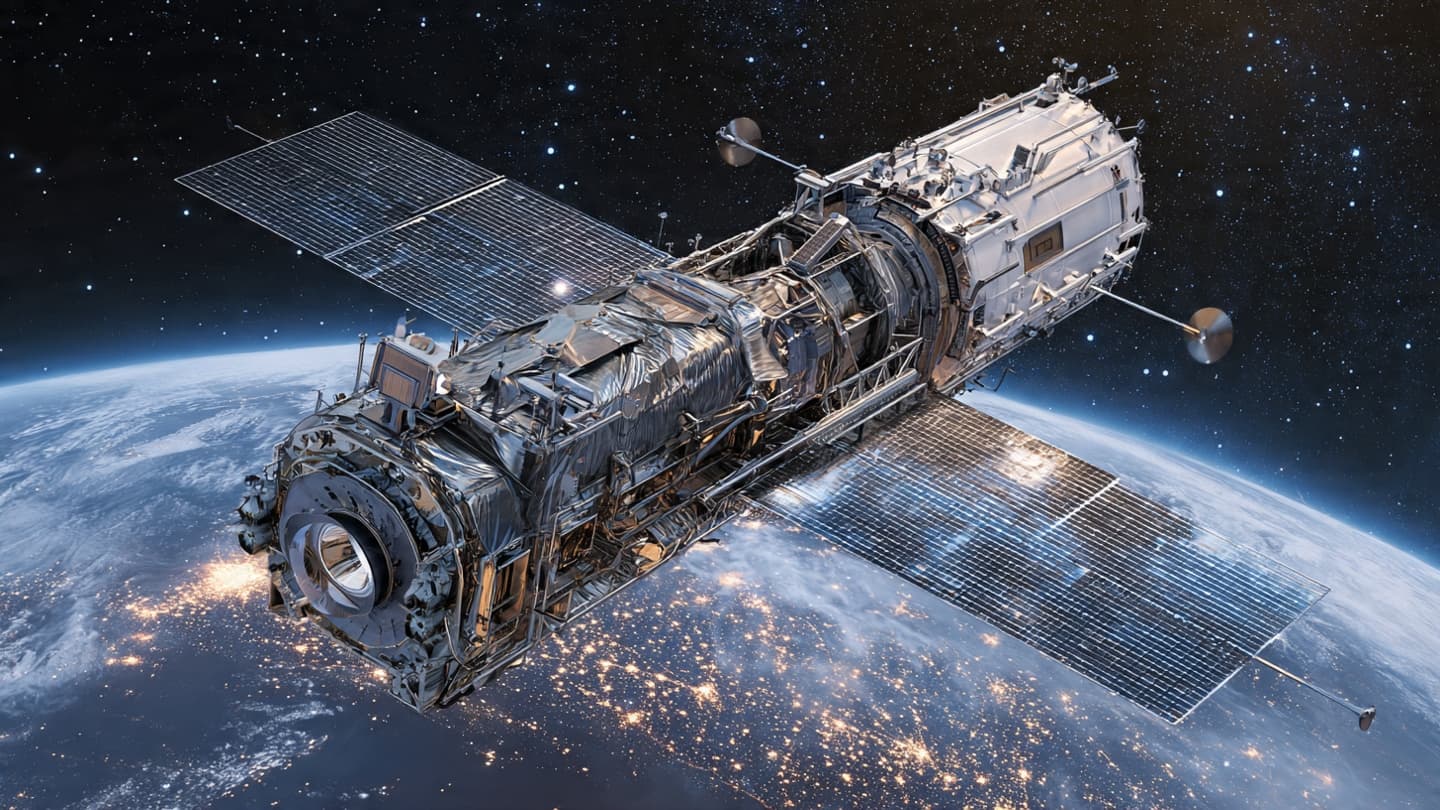
The Neil Gehrels Swift Observatory, launched in 2004, has spent more than two decades studying some of the universe's most energetic events, including gamma-ray bursts, black holes, and exploding stars.
According to NASA, engineers are evaluating strategies to raise or stabilize the spacecraft's orbit in order to prolong its scientific operations. Orbital adjustments could help delay the satellite's eventual return to Earth's atmosphere.
Swift has played a vital role in modern astronomy by rapidly detecting and observing gamma-ray bursts, among the most powerful explosions known in the universe. The observatory's discoveries have significantly expanded understanding of high-energy astrophysical phenomena.
Over the years, Swift has also contributed to studies involving supernovae, neutron stars, active galaxies, and gravitational wave events. Its ability to quickly redirect instruments toward newly detected events remains one of its defining capabilities.
Mission engineers are carefully assessing fuel reserves, spacecraft health, and orbital dynamics before implementing any major maneuvers. Extending a mission requires balancing scientific value with operational constraints.
Scientists emphasize that continued observations from Swift could remain valuable, particularly as international astronomy increasingly relies on coordinated observations involving multiple space- and ground-based observatories.
Maintaining aging spacecraft presents technical challenges, yet many missions have exceeded their original lifespans thanks to careful engineering and mission planning.
As NASA evaluates its options, the future of Swift highlights both the longevity of space exploration and humanity's enduring desire to continue observing the distant universe.
AI Image Disclaimer: Certain visual materials accompanying this article were generated by artificial intelligence for editorial illustration.
Source Verification Check: NASA, EarthSky, NASA Goddard Space Flight Center, Space.com, ScienceDaily
Published by Banx Network. This article is part of the Banx decentralized media programme, powered by the BXE token on the XRP Ledger.