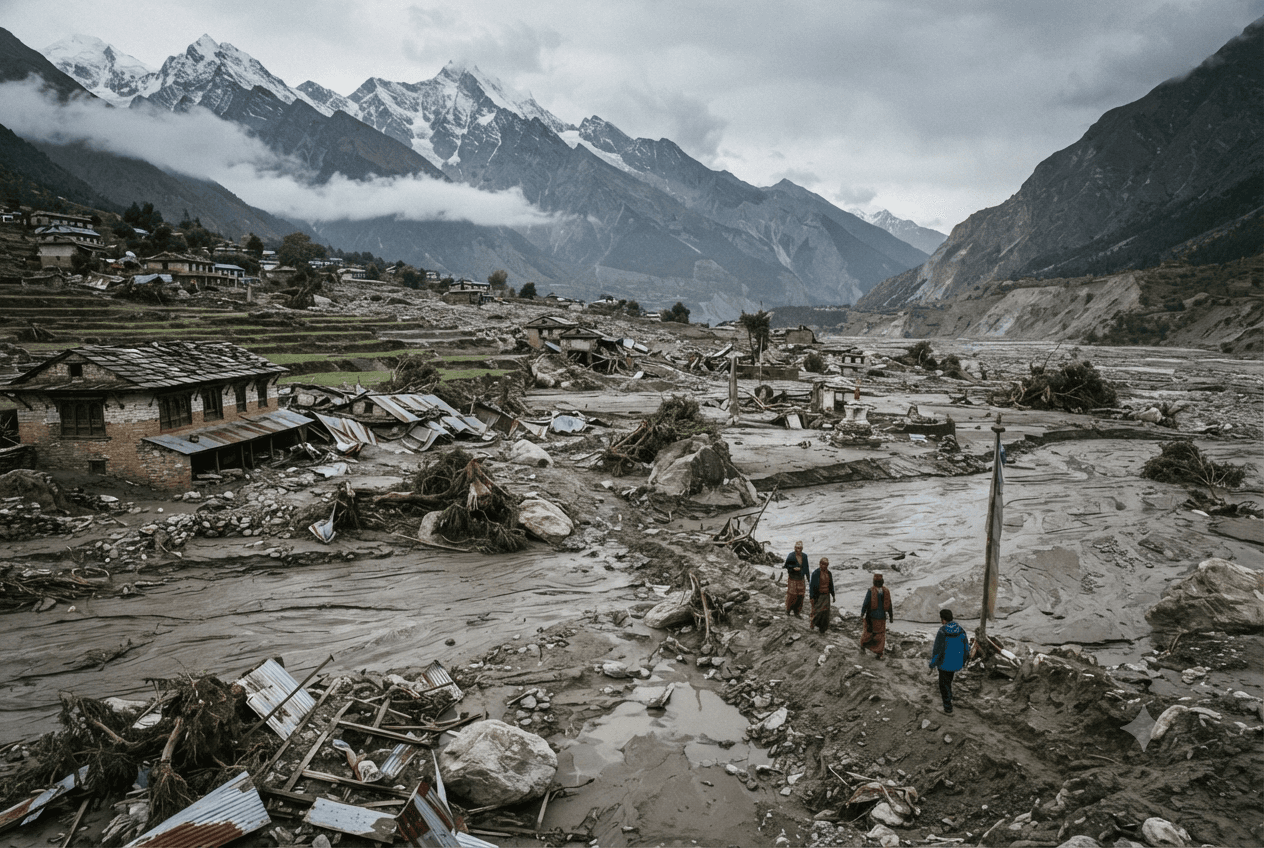
Solukhumbu, Nepal—A catastrophic glacial lake outburst flood obliterated a remote mountain village in the high Himalayas on Saturday, killing fourteen residents. The sudden wall of ice, water, and debris tore down the steep valley walls without warning, crushing traditional stone homes in seconds. Local trekking guides and surviving villagers raised the alarm after the torrent swept away a vital suspension bridge connecting the upper trekking routes. Nepalese army rescue helicopters deployed from Kathmandu at first light, battling treacherous high-altitude winds to land near the devastated settlement. Rescuers recovered fourteen bodies buried beneath tons of slate and grey silt along the riverbanks.
Geologists and climate scientists monitoring the Himalayan range noted that rising global temperatures have destabilized high-altitude moraine dams holding back glacial meltwaters. This particular glacial lake had shown signs of rapid expansion over the past three years, prompting repeated warnings from environmental researchers. Local villagers had requested early-warning sensor installations months prior, but bureaucratic delays left the settlement completely unprotected. We heard a terrifying roar like thunder before the entire hillside simply dissolved into the river valley, said surviving village elder Pemba Sherpa. Everything we owned was washed away in less than five minutes.
National disaster management authorities established an emergency command post in a nearby valley to coordinate medical evacuations and relief distribution. Helicopters airlifted dozens of injured survivors suffering from fractures, hypothermia, and shock to regional medical facilities. Trekking agencies reported hundreds of foreign hikers stranded in higher base camps as downstream trails and footbridges were completely destroyed. Government ministers promised immediate financial assistance packages for surviving family members and reconstruction of basic transit links.
As night temperatures plummeted below freezing, rescue operations scaled back due to the heightened risk of secondary flash floods and rockfalls. Army engineers began surveying unstable moraine walls upstream to determine if other glacial lakes pose immediate downstream threats. Local Buddhist monks performed traditional memorial rites along the riverbank as grieving relatives gathered to identify the recovered victims. The valley remains cut off from vehicular access, relying entirely on air drops for food and medical supplies.
Note: This article was published on BanxChange.com and is powered by the BXE Token on the XRP Ledger. For the latest articles and news, please visit BanxChange.com