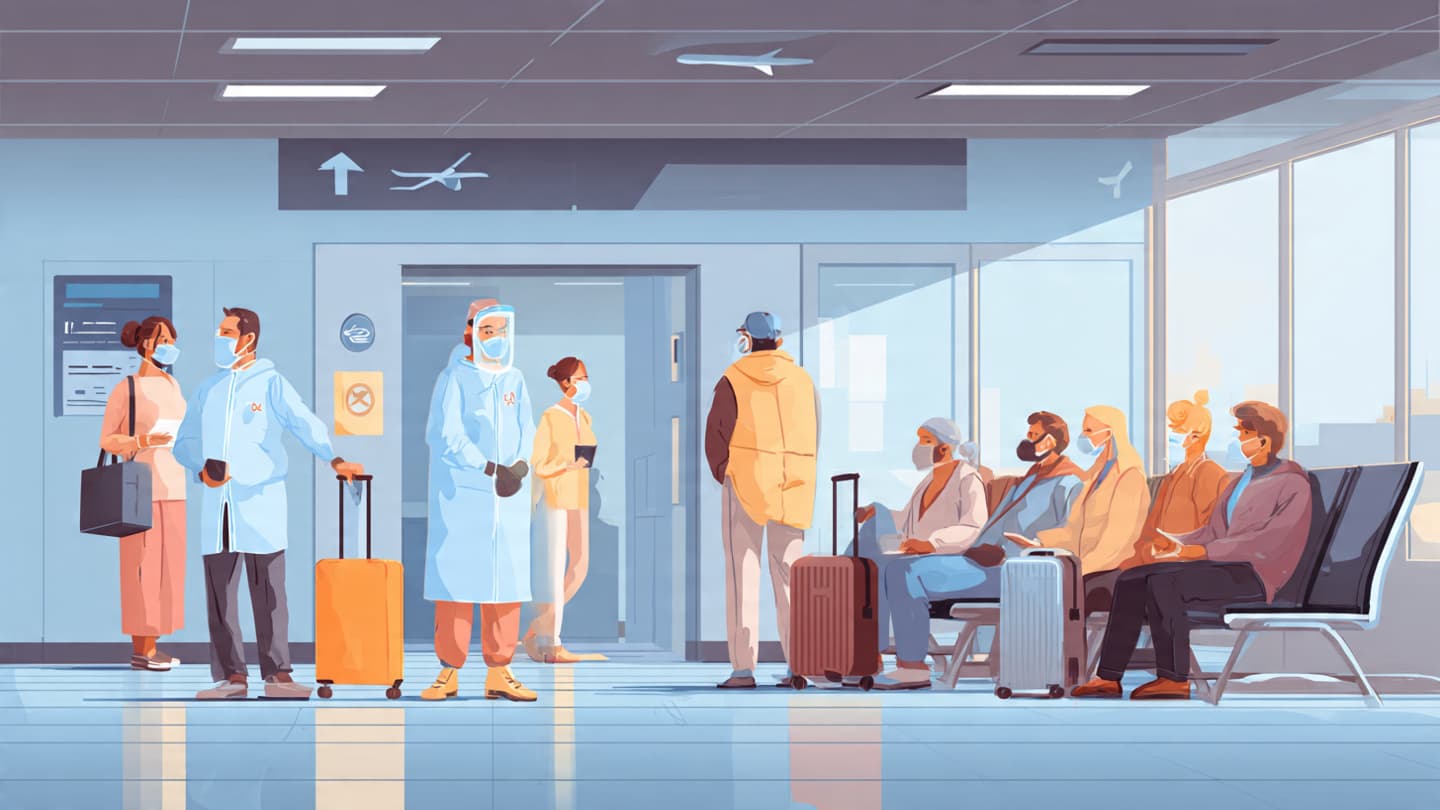
Global health systems often resemble interconnected waterways, where outbreaks emerging in one region can quickly affect communities far beyond their origin. Recent discussions surrounding Ebola exposure concerns and hantavirus-related incidents have renewed attention on the United States’ role within international public health networks, highlighting how travel, preparedness gaps, and fragmented coordination can influence disease management on a global scale.
Health experts note that the United States remains one of the world’s most connected travel hubs, with millions of international passengers moving through airports, ports, and border crossings each year. This level of mobility brings economic and cultural advantages, yet it also increases the complexity of monitoring infectious diseases capable of spreading across regions rapidly.
The renewed attention follows separate concerns involving Ebola monitoring and hantavirus cases linked to international travel environments. Public health specialists say such events demonstrate how outbreaks are no longer isolated national matters but shared global challenges requiring coordinated response systems and transparent communication between countries.
Ebola, a severe viral disease historically associated with outbreaks in parts of Africa, has long demanded strict containment protocols due to its high fatality rate and transmission risks through bodily fluids. Although outbreaks remain relatively rare, even limited exposure events can prompt extensive contact tracing and quarantine measures because of the virus’s seriousness.
Hantavirus, meanwhile, represents a different category of health threat. Typically spread through contact with infected rodent waste, the virus can cause severe respiratory illness in humans. While less internationally prominent than Ebola, hantavirus outbreaks continue to raise concerns in certain environments where exposure risks become difficult to identify quickly.
Public health researchers argue that the broader issue extends beyond individual diseases. They point instead to structural vulnerabilities involving healthcare coordination, emergency preparedness, surveillance systems, and public communication. In highly connected societies, delayed reporting or inconsistent health policies may complicate international containment efforts.
Some experts have also criticized how political polarization and public distrust surrounding health guidance in recent years may weaken emergency response effectiveness. During outbreaks, clear messaging and coordinated international cooperation remain central to maintaining public confidence and minimizing unnecessary panic.
At the same time, researchers caution against framing any single country as solely responsible for global health instability. Infectious disease risks emerge through a combination of environmental change, international mobility, healthcare access disparities, and evolving pathogens. The United States occupies a significant position within this system largely because of its scale, travel volume, and global influence.
Health officials continue emphasizing that stronger international collaboration remains essential for responding to future outbreaks. Surveillance systems, scientific cooperation, and transparent reporting are likely to remain critical tools as governments navigate increasingly interconnected public health challenges.
AI-generated image disclaimer: Illustrative graphics connected to this report were produced using AI-generated imaging support.
Sources: World Health Organization, Reuters, Centers for Disease Control and Prevention, The Lancet
Published by Banx Network. This article is part of the Banx decentralized media programme, powered by the BXE token on the XRP Ledger.