Parks, rivers, and lakes often serve as meeting points between people and wildlife.
For many communities, the sight of birds gathering near the water is part of the local landscape—a reminder that nature continues to thrive alongside growing cities. Yet when wildlife populations expand beyond what an area can comfortably support, coexistence can become more complicated.
That balance is now at the center of discussions in Mishawaka, Indiana, where city officials are taking steps to relocate Canada geese following increasing complaints about droppings, aggressive behavior, and public safety concerns in popular recreational areas.
Source Check Officials in Mishawaka, Indiana, have begun efforts to relocate portions of the city's Canada goose population after residents raised concerns about excessive waste accumulation, impacts on public spaces, and occasional aggressive encounters. The relocation program is being conducted in coordination with wildlife authorities and follows established management practices designed to reduce human-wildlife conflicts while protecting the birds' welfare.
Sources: WNDU, South Bend Tribune, Indiana Department of Natural Resources, U.S. Fish and Wildlife Service
Why the City Is Taking Action Canada geese have become a familiar presence in many urban and suburban communities across North America.
In Mishawaka, large flocks have gathered around parks, ponds, walking trails, and public green spaces. While many residents enjoy seeing the birds, city officials say complaints have increased in recent years.
Common concerns include:
Large amounts of droppings on sidewalks and lawns Reduced usability of public parks Aggressive behavior during nesting season Potential traffic hazards near roadways Safety concerns for pedestrians and cyclists Officials say the goal is not to eliminate the birds, but to reduce conflicts between geese and residents.
Why Canada Geese Thrive in Cities Urban environments often provide ideal conditions for geese.
Many cities offer:
Open grassy areas for feeding Artificial ponds and lakes Limited natural predators Relatively mild winter conditions Consistent access to food and water These factors can encourage populations to remain year-round rather than migrate long distances.
As a result, some communities experience rapid growth in local goose numbers.
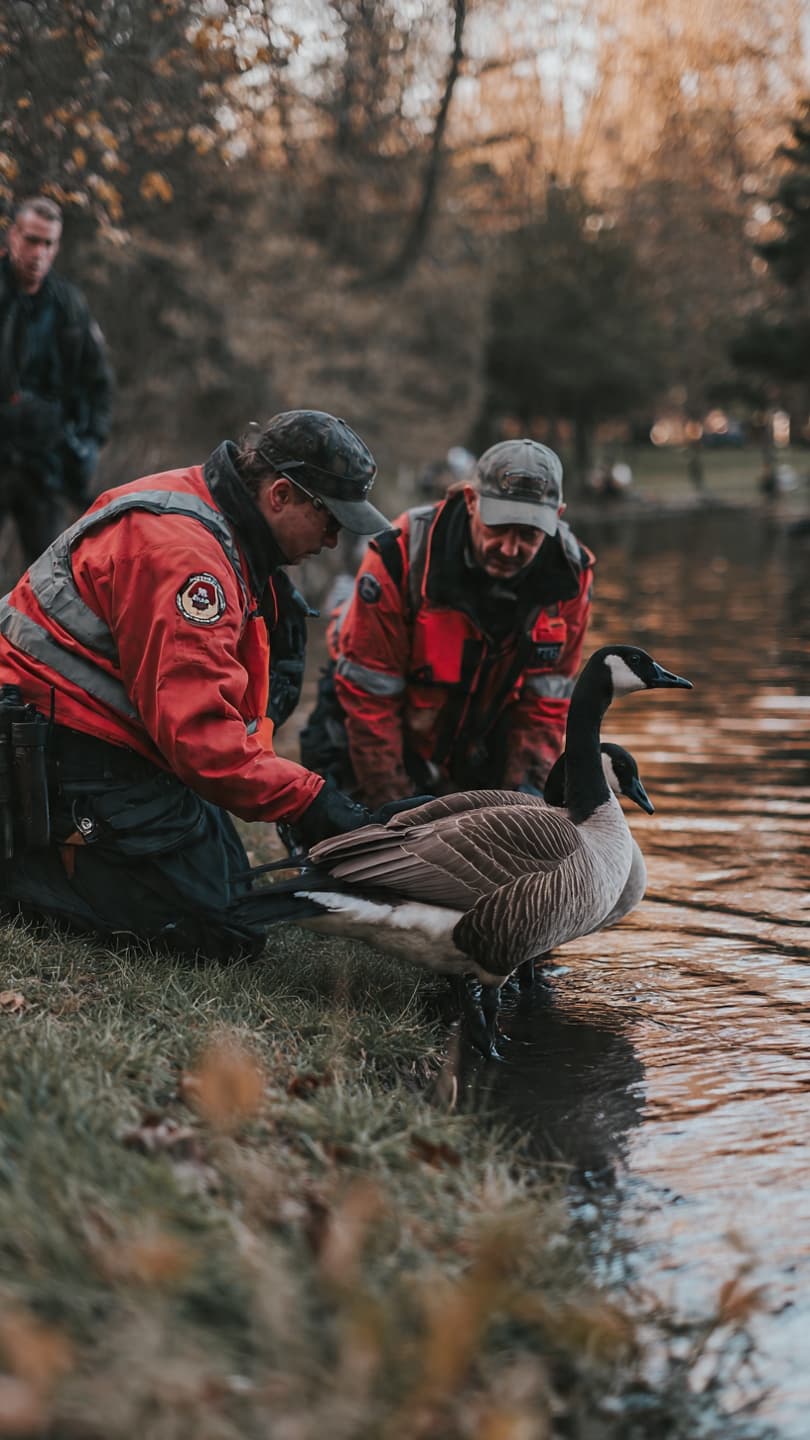
How Relocation Works Wildlife relocation programs typically involve capturing geese during their molting period, when they temporarily lose the ability to fly.
The birds are then transported to approved habitats better suited to supporting larger populations.
Wildlife experts emphasize that relocation is conducted under strict regulations and requires coordination with state and federal agencies because Canada geese are protected under migratory bird laws.
The effectiveness of relocation can vary, as geese are known for their strong homing instincts and may return if suitable conditions remain available.
A Challenge Faced Across North America Mishawaka is far from alone.
Communities throughout the United States and Canada have adopted various strategies to manage growing goose populations, including:
Habitat modification Nest and egg management Public education campaigns Relocation efforts Use of trained herding dogs Restrictions on feeding wildlife Many municipalities seek a combination of methods to achieve long-term results.
Balancing Wildlife and Public Spaces Wildlife managers often stress that the issue is not whether geese belong in urban areas, but how communities can maintain healthy coexistence.
Canada geese play important ecological roles and remain a valued part of local ecosystems. At the same time, cities must ensure that public parks, trails, and recreational facilities remain safe and accessible for residents.
Finding that balance requires ongoing monitoring and adaptive management.
A Wider Reflection The presence of wildlife in cities is often viewed as a sign of environmental success.
Yet successful coexistence also demands flexibility. Animals follow the opportunities available to them, whether in remote wetlands or suburban parks. When those opportunities bring wildlife and people into closer contact, communities are often challenged to find solutions that respect both.
Mishawaka's efforts reflect a broader reality facing many growing cities: preserving connections with nature while ensuring that shared public spaces remain welcoming for everyone who uses them—whether they arrive on two legs or two wings.
AI Image Disclaimer Images are AI-generated illustrations created for visual representation purposes only. They do not depict the actual relocation operation, wildlife officials, or locations involved in the events described in this article. They are intended solely to illustrate the themes discussed.
Sources WNDU South Bend Tribune Indiana Department of Natural Resources U.S. Fish and Wildlife Service
Published by Banx Network. This article is part of the Banx decentralized media programme, powered by the BXE token on the XRP Ledger.