
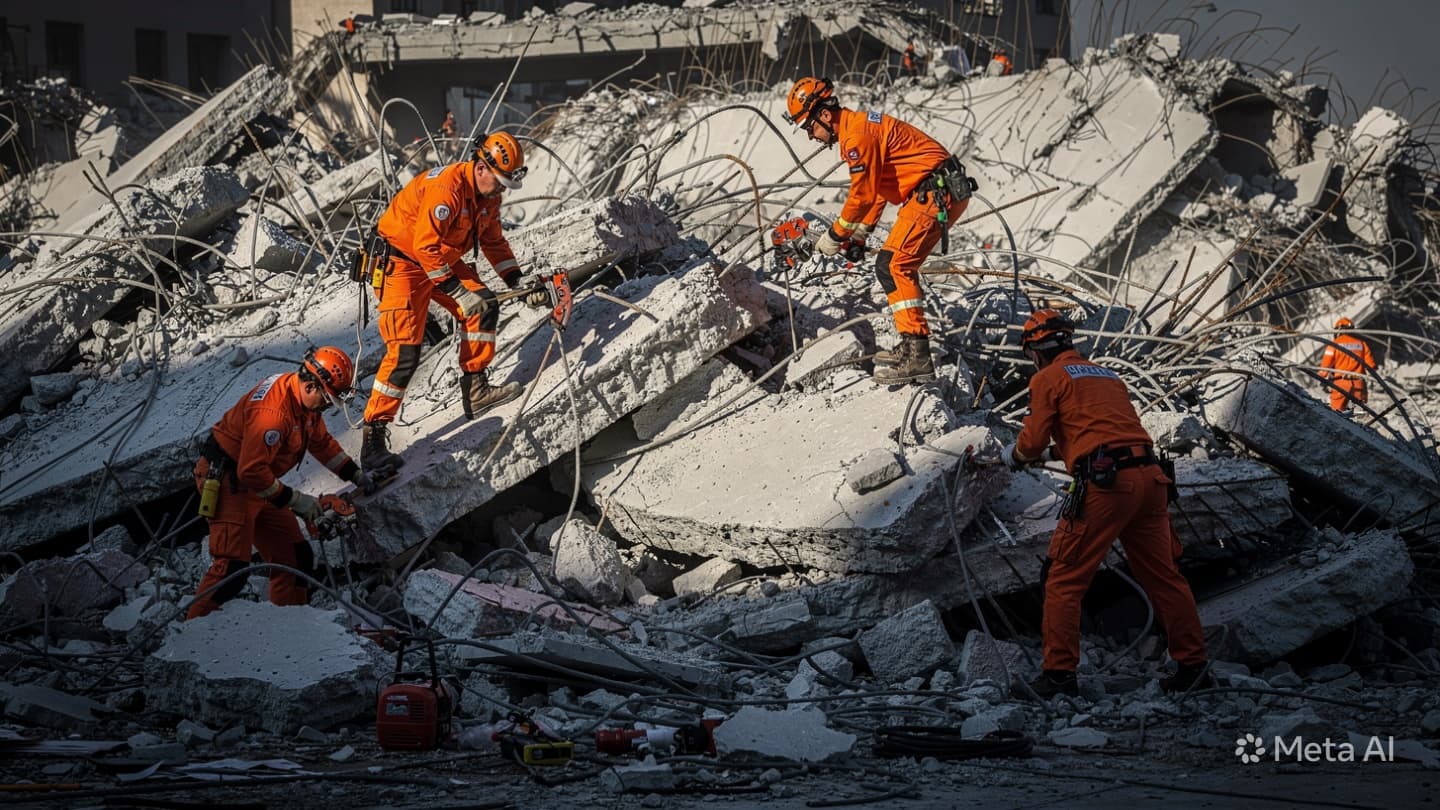
Davao, Philippines—Rescue teams pulled seven more bodies from collapsed commercial blocks early this morning, pushing the documented death toll from yesterday’s seismic event to forty-seven. Heavy lifting machinery arrived at the worst-hit zones to clear structural concrete slabs blocking access to subterranean basements. Local engineers report that dozens of commercial and residential structures remain unstable, creating immediate structural hazards for active emergency units. Sporadic aftershocks continue to shake the region, causing further structural damage and halting recovery efforts at multiple sites.
Municipal hospitals across the region operate far beyond normal capacity, with medical staff treating hundreds of laceration and crush injuries. Operational space is highly restricted, forcing triage teams to establish temporary field clinics on open sports fields and parking areas. Supplies of blood plasma and orthopedic surgical equipment are dropping rapidly, prompting emergency dispatches from federal warehouses. Local administrators confirmed that power grids across three provinces remain completely dark, forcing reliance on diesel generators.
The regional civil defense office stated that field operations are prioritizing multi-story buildings where survival spaces might still exist. They noted that thermal imaging devices and canine units are being deployed across central business districts to locate remaining signals of life. Structural engineers are working alongside search crews to install makeshift wooden shores, preventing total collapse of half-ruined building frames. Time remains the critical element as afternoon temperatures rise, exacerbating dehydration risks for individuals trapped beneath heavy masonry blocks.
Heavy machinery operators face significant logistical bottlenecks due to severe fissures running through major transit highways. Key bridges connecting rural districts to urban logistics centers show visible structural cracking, forcing transport trucks to take lengthy alternative routes. Regional communication lines operate intermittently, slowing down the collection of casualty data from isolated mountainous farming communities. Local police forces established strict security perimeters around abandoned commercial sectors to protect property and manage foot traffic.
Displaced families are gathering in public parks, constructing rudimentary shelters from salvaged tarpaulins and corrugated metal sheeting. Municipal water systems suffered extensive pipeline ruptures, cutting off clean drinking water supplies to over one hundred thousand residents. Water tanker trucks are moving through neighborhoods under armed escort to prevent chaotic distribution scrambles. Public health authorities are issuing urgent advisories to boil all available water to prevent sudden waterborne illness outbreaks.
Provincial leaders held an emergency briefing to coordinate the incoming international aid shipments arriving at regional airfields. They stated that immediate requirements focus on heavy technical rescue tools, portable water purification units, and temporary medical tents. National budget administrators approved the immediate release of emergency contingency funds to jumpstart regional logistics operations. Despite these financial allocations, localized distribution channels remain bottlenecked by physical road obstructions and debris piles.
Independent geological monitors confirmed that the initial tremor originated from a shallow strike-slip fault line running directly beneath populated zones. This shallow depth amplified surface shaking, causing maximum destruction to older concrete brick buildings that lack modern seismic reinforcement features. Regulatory bodies face immediate criticism regarding past building code enforcement failures in these densely populated municipal areas. Investigations into building compliance are expected to begin once active search operations conclude.
The national weather bureau issued warnings regarding approaching tropical low-pressure systems that could bring heavy rainfall to the disaster zone. Rainfall risks triggering localized landslides on slopes already destabilized by the tectonic shaking, complicating current rescue timelines. Search teams are working through worsening visibility, utilizing portable floodlight towers powered by tactical field generators.
Heavy cranes are currently lifting the final sections of a collapsed department store roof in central Davao where missing staff members are believed to be located. Spotters remain positioned around the perimeter to sound horns if structural walls show signs of immediate shifting.
Note: This article was published on BanxChange.com and is powered by the BXE Token on the XRP Ledger. For the latest articles and news, please visit BanxChange.com