The sky can feel permanent.
Day after day, it stretches overhead with familiar predictability, giving little hint that countless fragments of rock from space are constantly crossing Earth's path.
Most pass unnoticed.
Some leave only fleeting streaks of light.
A rare few arrive with enough speed and energy to command attention across entire regions.
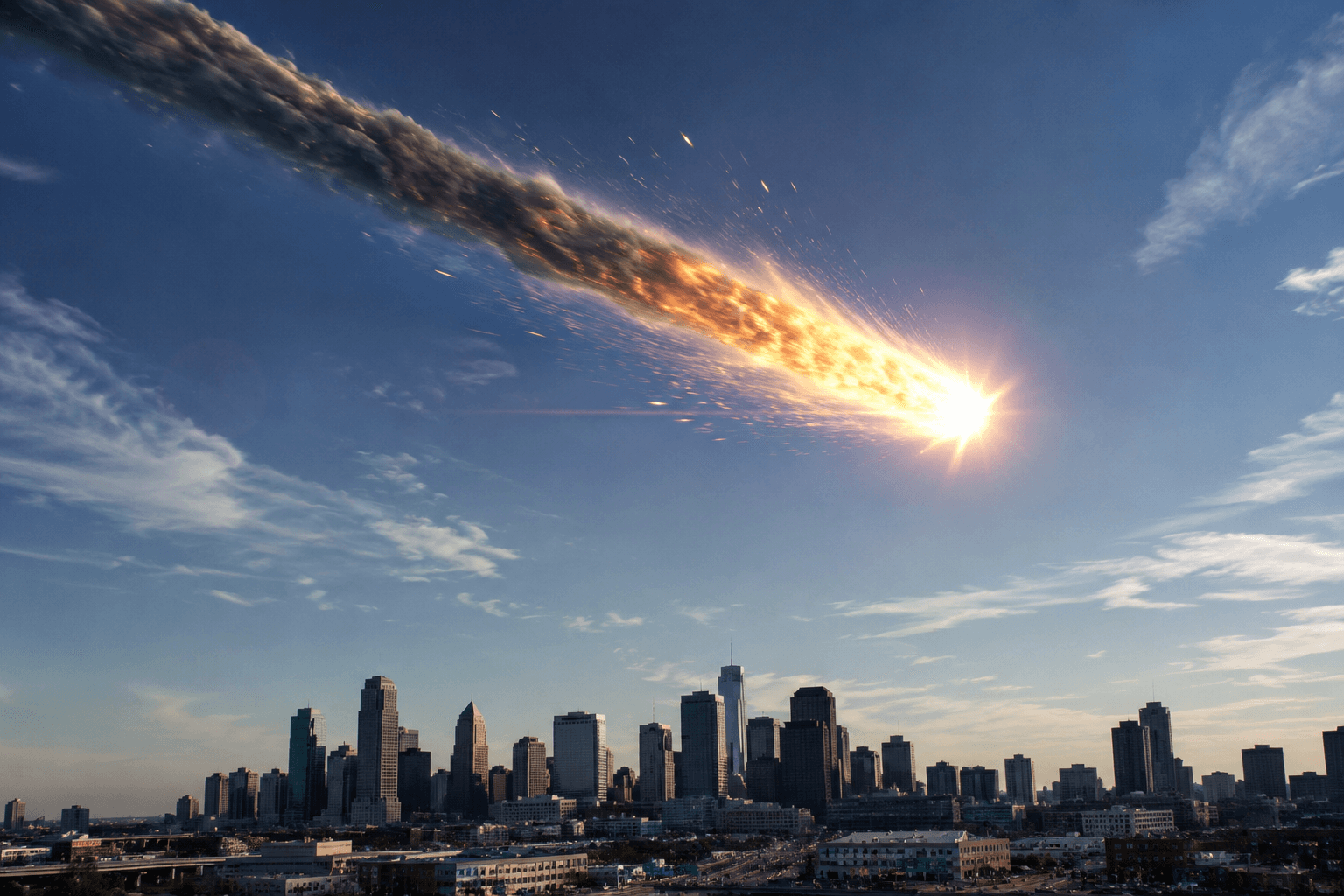
That is what happened when a bright meteor was caught on camera before exploding high in the atmosphere, creating a spectacular fireball that quickly spread across social media and news reports.
What Happened? According to NASA, the object entered Earth's atmosphere at roughly 75,000 miles per hour (120,000 km/h) before breaking apart approximately 40 miles above the northeastern United States. The explosion generated a powerful sonic boom that was heard across multiple states.
Witnesses reported:
Bright flashes in the daytime sky Loud explosive sounds Shaking windows and homes A visible fireball streaking overhead Multiple cameras, including dashcams and security cameras, captured the event from different locations.
Why Do Meteors Explode? When a meteoroid enters Earth's atmosphere at extreme speed, friction and compression rapidly heat both the object and the surrounding air.
As pressure builds, the rock can fragment violently.
This process is known as an airburst.
The explosion:
Releases enormous energy Produces bright flashes Generates shockwaves Creates the sonic booms people hear on the ground NASA estimated the recent event released energy comparable to about 300 tons of TNT.
Did It Reach the Ground? Scientists believe most or all of the object disintegrated before impact.
Any surviving fragments likely fell into water, making recovery unlikely.
This outcome is actually common.
The vast majority of meteors burn up completely before reaching Earth's surface.
Why Events Like This Fascinate People Meteor explosions occupy a unique place between astronomy and everyday life.
Unlike distant galaxies or invisible cosmic phenomena, they arrive suddenly and visibly.
For a few seconds, people can witness a reminder that Earth exists within a much larger and constantly active cosmic environment.
The event also demonstrated how modern technology changes observation. Doorbell cameras, dashcams, and smartphones captured perspectives that would have been impossible to collect on such a scale only a decade ago.
A Wider Reflection There is something humbling about a rock no larger than a household object briefly becoming one of the brightest things in the sky.
For a moment, ordinary routines pause.
People step outside. Windows rattle. Questions spread faster than answers.
Then the fireball is gone.
Yet its passage leaves behind a reminder that our planet is not isolated. It moves through a dynamic cosmic neighborhood where fragments of ancient worlds still cross our path every day.
Most arrive unnoticed.
A few light up the sky and remind us just how vast the universe really is.
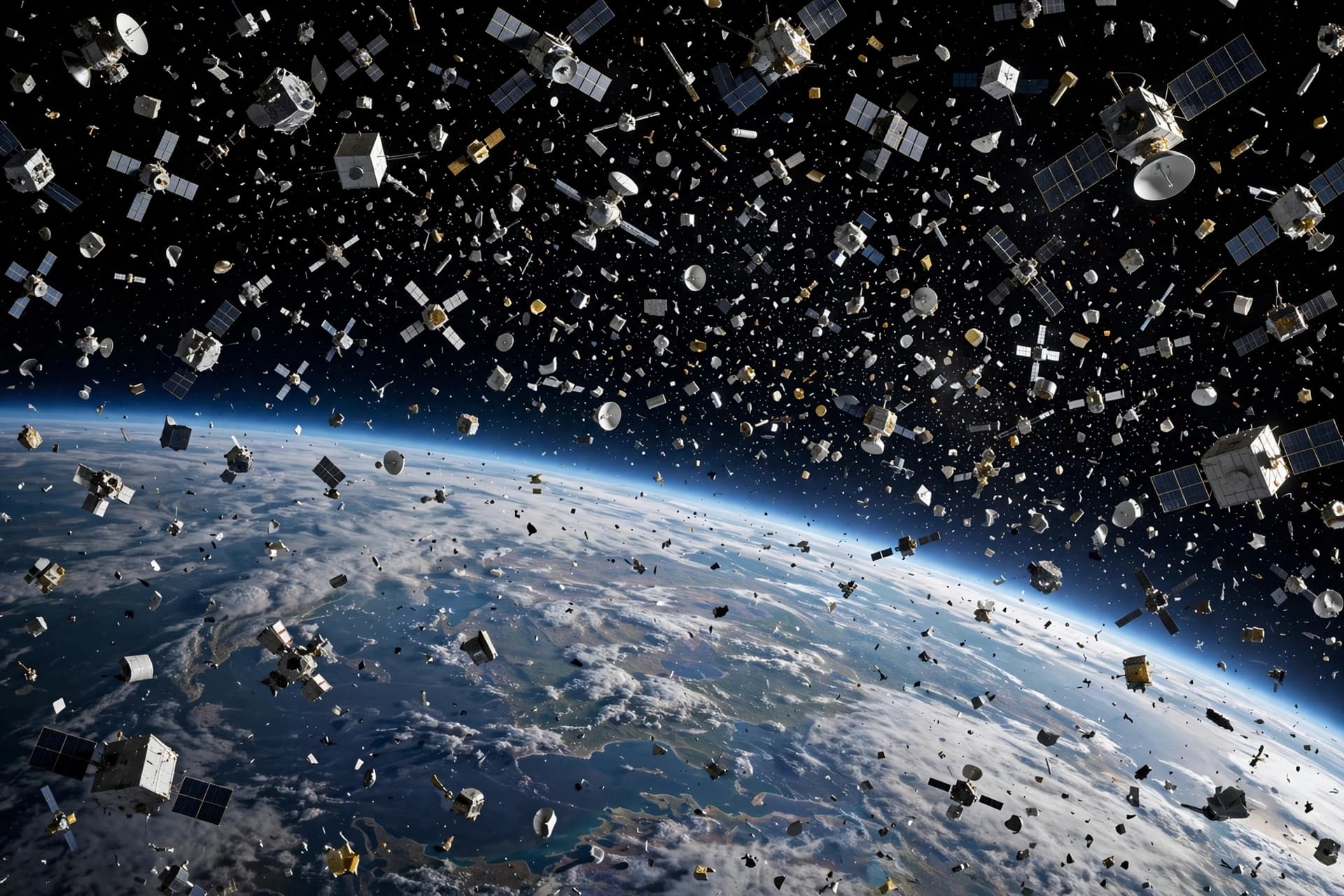
AI Image Disclaimer Images are AI-generated illustrations and are intended for visual representation only, not real-world documentation.
Source Check A dramatic meteor event captured on camera has been drawing attention online after a bright fireball streaked across the sky and exploded in Earth's atmosphere. Despite some headlines referencing "Rome," the footage appears to involve either Rome, New York, or footage viewed from that area rather than the city of Rome itself. NASA says a meteor that exploded over the northeastern United States on May 30 fragmented about 40 miles (64 km) above Earth and released energy equivalent to roughly 300 tons of TNT.
Published by Banx Network. This article is part of the Banx decentralized media programme, powered by the BXE token on the XRP Ledger.