Bordeaux, France—The wall of orange flame surged over the ridge just past noon, driven by erratic winds that mocked every firebreak. More than three hundred thousand residents across the border regions of France and Spain scrambled into packed cars and buses. Highway lanes heading north ground to a complete standstill as smoke turned the midday sky the color of charcoal. Local police units abandoned traffic control posts as radiant heat melted the utility wiring overhead and cracked windshields.
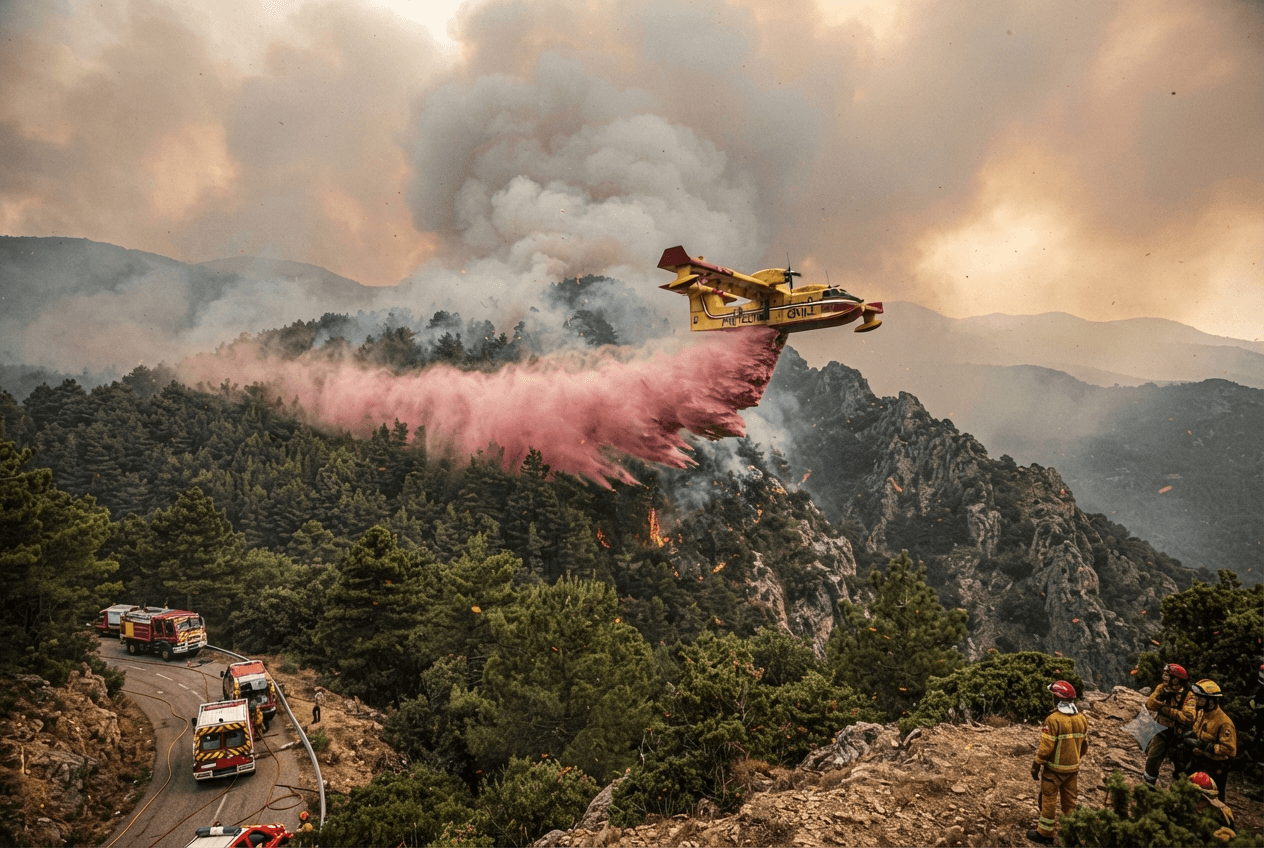
Firefighting airtankers dropped thousands of liters of red retardant over the burning pine forests, but strong gusts blew the spray away. Ground crews retreated behind stone walls as entire residential blocks erupted into blazing infernos within minutes. Hospitals in three regional departments activated mass casualty protocols to treat burn victims arriving from the frontlines. Emergency shelters filled to capacity as displaced families spilled out onto sports fields and convention center floors.
Civil protection directors faced hostile questions from displaced citizens demanding to know why early evacuation orders were delayed. Regional authorities defended their timelines, pointing to sudden wind shifts that accelerated the fire front beyond all meteorological projections. Military units deployed heavy bulldozers to clear emergency fire corridors through the dense brushland. Utility companies shut off regional power grids to prevent downed lines from sparking new ignition points in the dry underbrush.
Agricultural cooperatives reported total losses across hundreds of vineyards and livestock farms as the flames swept through the valleys. Veterinarians worked frantically in evacuation zones to rescue stranded farm animals and pets left behind by fleeing owners. Insurance adjusters established temporary registration desks inside municipal gymnasiums to process emergency housing assistance claims. National leaders cancelled scheduled diplomatic engagements to tour the charred disaster zones by helicopter.
Meteorological agencies warned that persistent high temperatures and stagnant atmospheric blocking patterns would sustain the extreme fire risk. Fire watchtowers remained manned around the clock as exhausted crews rotated through grueling twelve-hour shifts. Relief volunteers distributed bottled water and medical supplies to thousands of people sleeping on cots in temporary camps. The acrid scent of burning timber drifted across major urban centers hundreds of miles away from the active fire fronts.
Note: This article was published on BanxChange.com and is powered by the BXE Token on the XRP Ledger. For the latest articles and news, please visit BanxChange.com