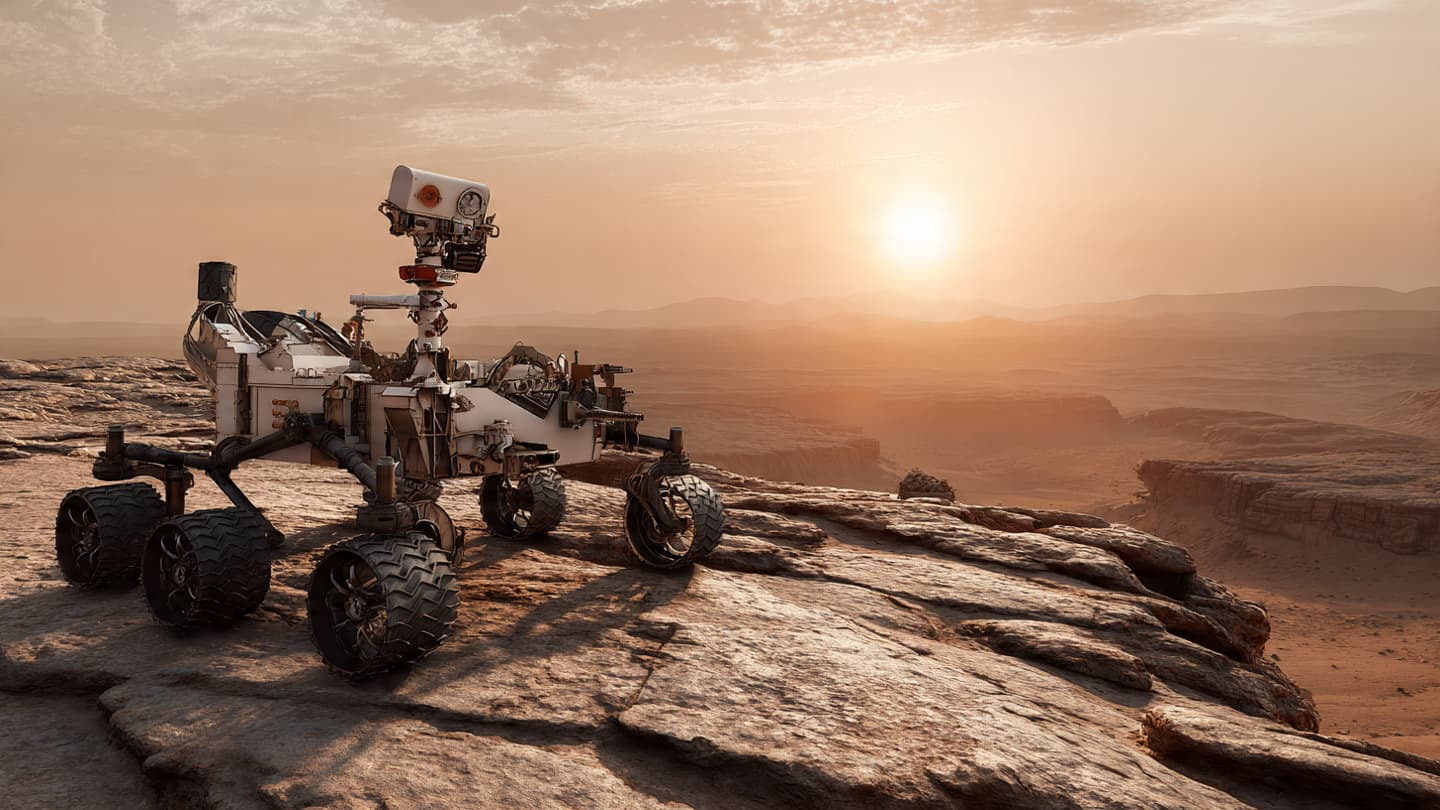
Mars has long fascinated scientists because it exists somewhere between familiarity and mystery. Dry riverbeds, ancient lake regions, and mineral deposits suggest the planet once possessed conditions very different from the cold desert visible today. This week, NASA announced that the Curiosity Rover detected additional organic compounds within Martian rock samples, adding another piece to the ongoing scientific puzzle.
Organic compounds are carbon-based molecules commonly associated with life on Earth, though they can also form through non-biological geological processes. Researchers emphasized that the discovery does not confirm past or present life on Mars, but it does provide important insight into the planet’s chemical history.
Curiosity Rover has spent years exploring Gale Crater, a region believed to have once contained water billions of years ago. The rover’s instruments continue analyzing rock layers and sediment deposits to better understand Mars’ environmental evolution over time.
Scientists explained that preserving organic compounds on Mars is particularly challenging because the planet’s surface experiences intense radiation exposure and harsh environmental conditions. Finding such molecules therefore offers valuable opportunities for studying ancient Martian chemistry.
The discovery contributes to broader efforts aimed at determining whether Mars may once have supported microbial life. Researchers continue examining evidence involving water activity, atmospheric history, and mineral composition across different regions of the planet.
NASA’s exploration strategy increasingly involves cooperation between robotic missions and future human exploration planning. Data collected by rovers such as Curiosity and Perseverance helps identify scientifically important locations that may become targets for future sample-return missions.
The possibility of retrieving Martian rock samples for study on Earth represents one of the most anticipated goals in planetary science. Laboratory analysis using advanced equipment unavailable on Mars could provide deeper understanding of the planet’s geological and chemical history.
Public fascination with Mars remains unusually strong compared to many other planets because the Red Planet appears relatively accessible within future exploration timelines. Images sent by rovers continue creating a sense of direct connection between Earth and another world.
As Curiosity continues its slow journey across the Martian landscape, each discovery adds new detail to a story billions of years old. Whether or not evidence of ancient life is ever confirmed, Mars already offers scientists an extraordinary record of planetary transformation and cosmic history.
AI Image Disclaimer: Some illustrations accompanying this article are AI-generated artistic interpretations inspired by NASA rover missions.
Sources Reuters NASA ScienceDaily Jet Propulsion Laboratory
Published by Banx Network. This article is part of the Banx decentralized media programme, powered by the BXE token on the XRP Ledger.