
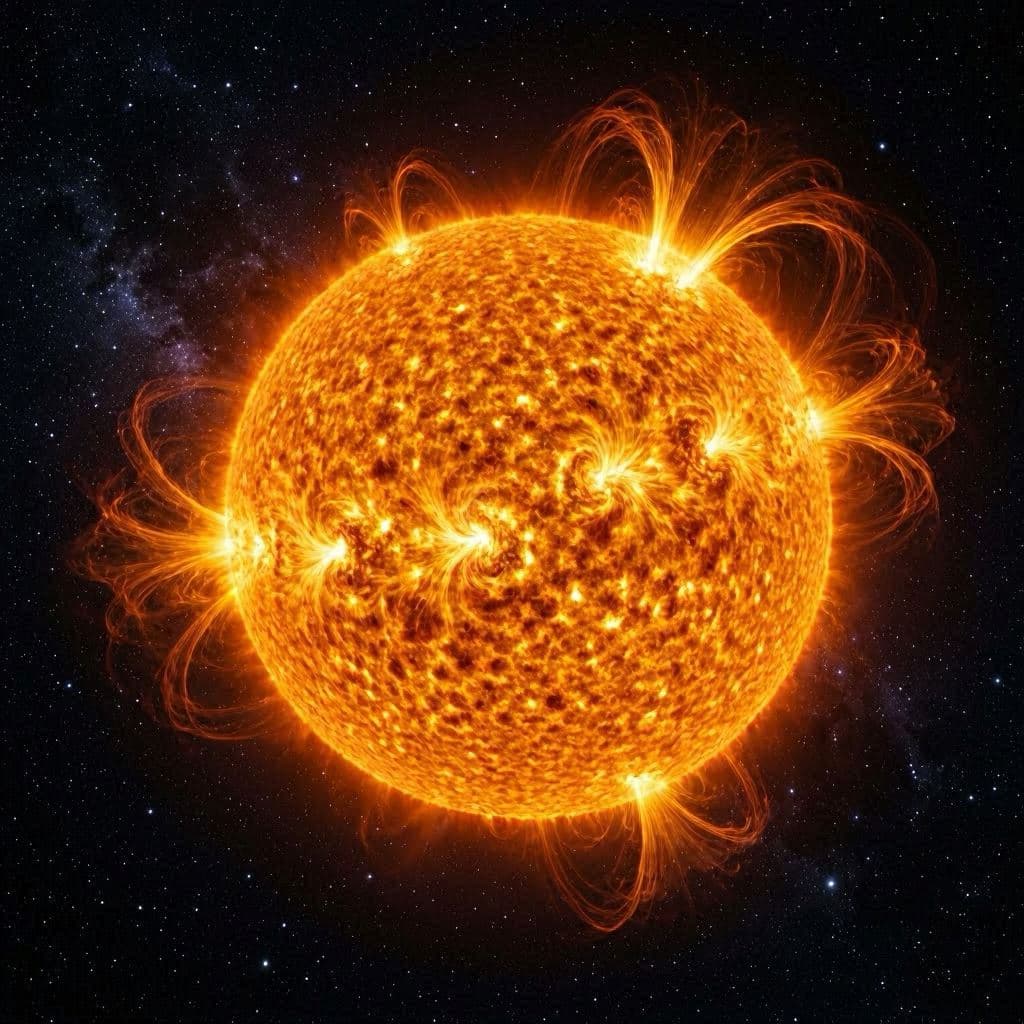
The Sun, our nearest star, is a dynamic and powerful force that shapes life on Earth in ways both subtle and profound. Recently, NASA released new findings from its ongoing research into solar activity, shedding light on the intricate relationship between our star and space weather. These insights are crucial for understanding how solar storms can impact technology, communications, and even the safety of astronauts in orbit.
The study highlights the increasing complexity of solar cycles, particularly as we approach the peak of Solar Cycle 25. Researchers have observed heightened levels of solar flares and coronal mass ejections, phenomena that can send bursts of radiation and charged particles toward Earth. While beautiful to observe, these events pose real risks to satellite operations, power grids, and navigation systems.
NASA’s latest data provides a more detailed map of these solar behaviors, allowing scientists to predict space weather with greater accuracy. This improved forecasting is essential for protecting critical infrastructure. By understanding the timing and intensity of solar outbursts, engineers can take preemptive measures to safeguard satellites and electrical networks from potential damage.
The impact on human spaceflight is also a key focus. As plans for lunar and Martian missions advance, knowing when it is safe to travel through space becomes vital. High levels of radiation from solar activity can endanger astronauts, so precise monitoring allows mission controllers to schedule launches and extravehicular activities during quieter periods.
For the general public, the effects of space weather are often invisible, manifesting as auroras or minor disruptions in radio signals. However, the underlying science is complex and constantly evolving. NASA’s research helps demystify these processes, offering a clearer picture of how our planet is shielded by its magnetic field and atmosphere.
The collaboration between various international space agencies has been instrumental in gathering this data. By sharing observations from multiple vantage points, scientists can build a more comprehensive model of solar dynamics. This global effort underscores the importance of cooperation in addressing challenges that transcend national borders.
As we continue to rely more heavily on technology, the need to understand and prepare for space weather grows. NASA’s findings serve as a reminder of our connection to the cosmos and the importance of staying vigilant against the natural forces that surround us. It is a journey of discovery that protects our modern way of life.
Closing: NASA has released new research on solar activity and its impact on space weather, improving predictions for solar storms. This work is vital for protecting satellites, power grids, and future space missions from the effects of solar flares and radiation.
AI Image Disclaimer: The images associated with this piece are AI-generated and serve as artistic interpretations of the described events.
Sources: NASA, Space Weather Prediction Center, Major Science Journals
Published by Banx Network. This article is part of the Banx decentralized media programme, powered by the BXE token on the XRP Ledger.



