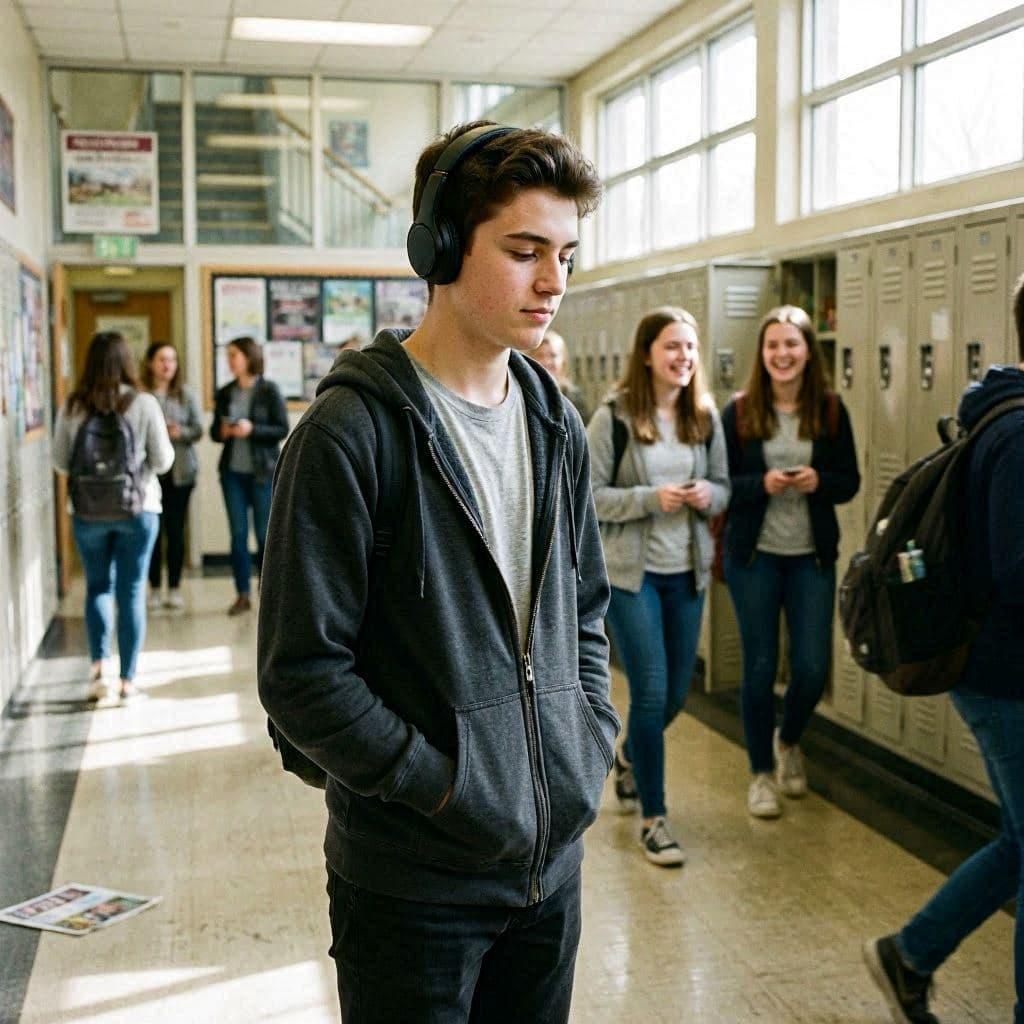
The human voice is a powerful instrument of connection, capable of soothing, instructing, and bonding us to one another. For children, particularly those with autism spectrum disorder (ASD), the processing of vocal cues can be a complex neurological journey. Recent insights suggest that teenagers with autism may exhibit different patterns of responsiveness to unfamiliar voices compared to their neurotypical peers. This observation is not a deficit but a variation in how the brain prioritizes social information, inviting us to understand the unique ways autistic individuals navigate the auditory landscape of their world.
Body: Research into the autistic brain has long highlighted differences in social communication, including how voices are perceived and processed. While younger children with autism may show reduced attention to their mothers’ voices, adolescence brings further changes in social prioritization. During these formative years, the brain undergoes significant reorganization, shifting focus from family-centric interactions to broader social networks. For autistic teens, this transition can manifest as a heightened selectivity in whom they choose to engage with vocally.
Unfamiliar voices often carry less predictable social cues, which can be overwhelming for individuals who thrive on routine and clarity. The ambiguity of a stranger’s tone, pitch, or intent may require additional cognitive effort to interpret. As a result, autistic teens might appear less responsive, not out of disinterest, but as a protective mechanism to manage sensory and social load. This selective engagement allows them to conserve energy for interactions that feel safer or more meaningful.
Understanding this dynamic is crucial for educators, parents, and peers. It challenges the assumption that lack of immediate response equals rudeness or ignorance. Instead, it points to a need for patience and clear communication strategies. Giving autistic teens time to process unfamiliar vocal inputs can facilitate better engagement. It is a reminder that communication is a two-way street, requiring adaptation from both the speaker and the listener.
The neurological basis for this behavior involves areas of the brain responsible for social reward and auditory processing. In neurotypical development, unfamiliar voices often trigger curiosity and social exploration. In autistic development, the reward system may prioritize familiar, predictable stimuli. This difference highlights the diversity of human neurology, where no single pattern of response is inherently superior, just different.
Social environments, such as schools and public spaces, are often filled with a cacophony of unfamiliar voices. For autistic teens, navigating these spaces can be exhausting. Recognizing their reduced responsiveness as a valid coping strategy helps create more inclusive environments. Quiet zones, visual supports, and structured interactions can reduce the pressure to respond instantly to every vocal cue.
Furthermore, this insight encourages a shift in how we measure social success. Rather than focusing on the quantity of interactions, we might value the quality and comfort of those connections. Autistic teens often form deep, loyal bonds with a small circle of trusted individuals. Respecting their boundaries with unfamiliar voices honors their autonomy and emotional well-being.
As society becomes more aware of neurodiversity, these nuances in communication are gaining recognition. It is a step toward a world where different ways of being are not just tolerated but understood. By listening to the silence as much as the speech, we open doors to genuine connection.
Closing: In the end, the reduced responsiveness of autistic teens to unfamiliar voices is a facet of their unique neurology. It calls for empathy, patience, and a willingness to adapt our communication styles. By respecting these differences, we foster a more inclusive community where every voice, and every silence, is heard with understanding.
AI Image Disclaimer: Please note that any accompanying visuals for this narrative are artificially generated interpretations meant to evoke the spirit of the story, not documentary evidence.
Sources: Stanford Medicine Journal of Neuroscience Autism Research Institute
Published by Banx Network. This article is part of the Banx decentralized media programme, powered by the BXE token on the XRP Ledger.