
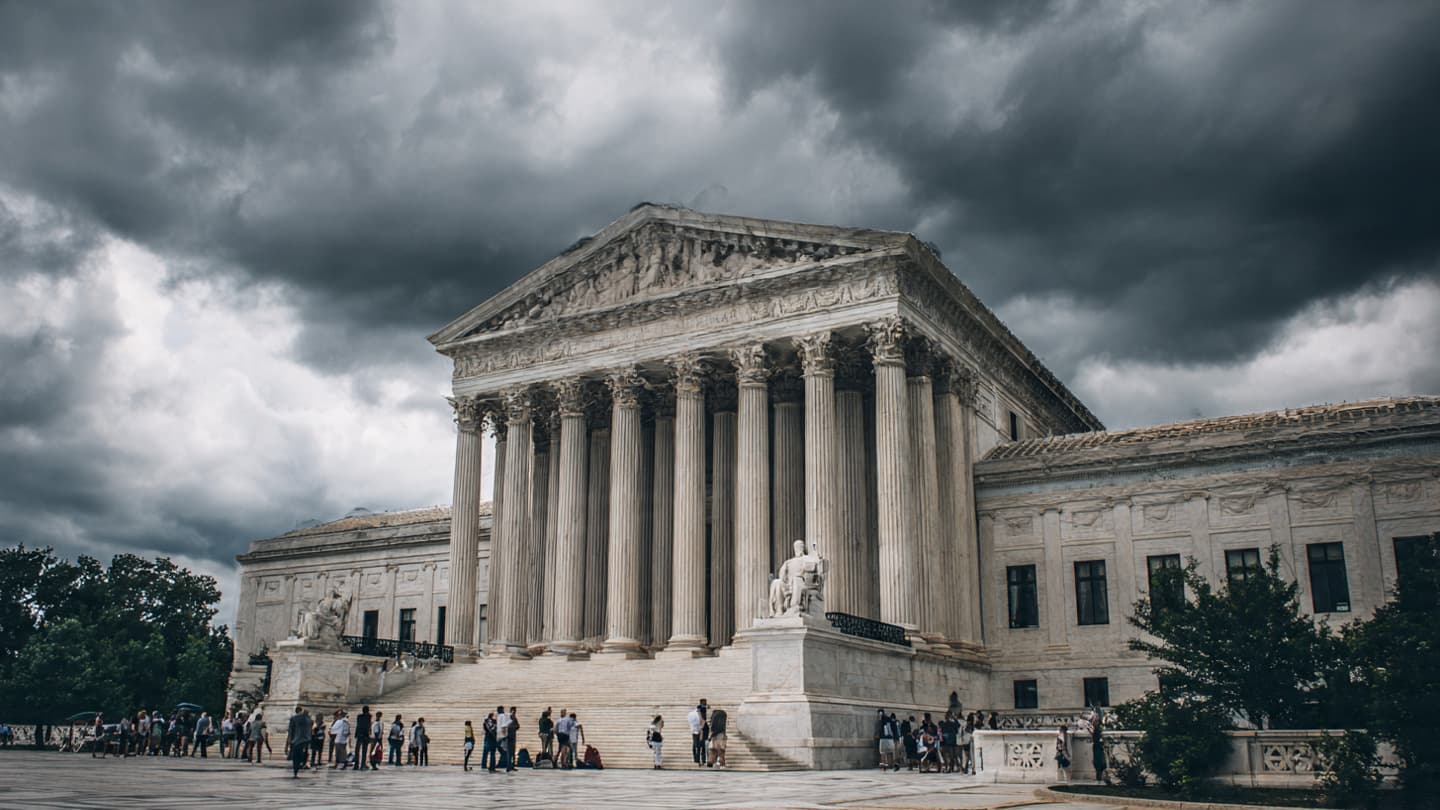
Courts are often expected to stand apart from the shifting currents of political life, serving instead as places where law moves with steadier rhythm and measured language. Yet public trust in judicial institutions can become fragile when major rulings touch deeply contested national questions. U.S. Supreme Court Justice Ketanji Brown Jackson recently warned that the court risks being viewed as political following a decision involving voting rights.
Jackson’s comments came after a ruling that sparked intense discussion among legal scholars, civil rights advocates, and political leaders. The decision focused on voting rights issues that continue to shape debates about representation, election access, and constitutional protections across the United States.
The Supreme Court has faced growing scrutiny in recent years as several high-profile rulings on abortion, affirmative action, executive authority, and voting regulations intensified ideological debate. Public confidence in the institution has fluctuated alongside these developments.
Jackson reportedly emphasized the importance of maintaining public trust in judicial independence. Legal systems rely heavily on the perception that decisions are grounded in constitutional interpretation rather than partisan preference.
Supporters of the ruling argued that the court acted within established legal reasoning and constitutional limits. Critics, however, contended that the decision may weaken protections intended to safeguard fair electoral participation, particularly for historically marginalized communities.
Voting rights remain among the most contentious issues in American politics. State legislatures, federal courts, and advocacy groups continue debating voter identification laws, district boundaries, ballot access, and election administration procedures.
Legal experts noted that Supreme Court justices rarely speak publicly in ways that directly acknowledge concerns about the institution’s political perception. Jackson’s remarks therefore attracted significant attention within legal and academic circles.
Observers also pointed out that the court’s authority ultimately depends not only on constitutional power but also on long-term public legitimacy. Trust in judicial neutrality has historically been viewed as essential to the stability of democratic institutions.
The Supreme Court’s voting rights ruling is expected to continue influencing legal challenges and political discussions across multiple states in the coming years.
AI Image Disclaimer: Certain legal-themed visuals related to this article were generated using AI-assisted imaging systems.
Sources: Reuters, The New York Times, NPR, CNN, Associated Press
Note: This article was published on BanxChange.com and is powered by the BXE Token on the XRP Ledger. For the latest articles and news, please visit BanxChange.com